

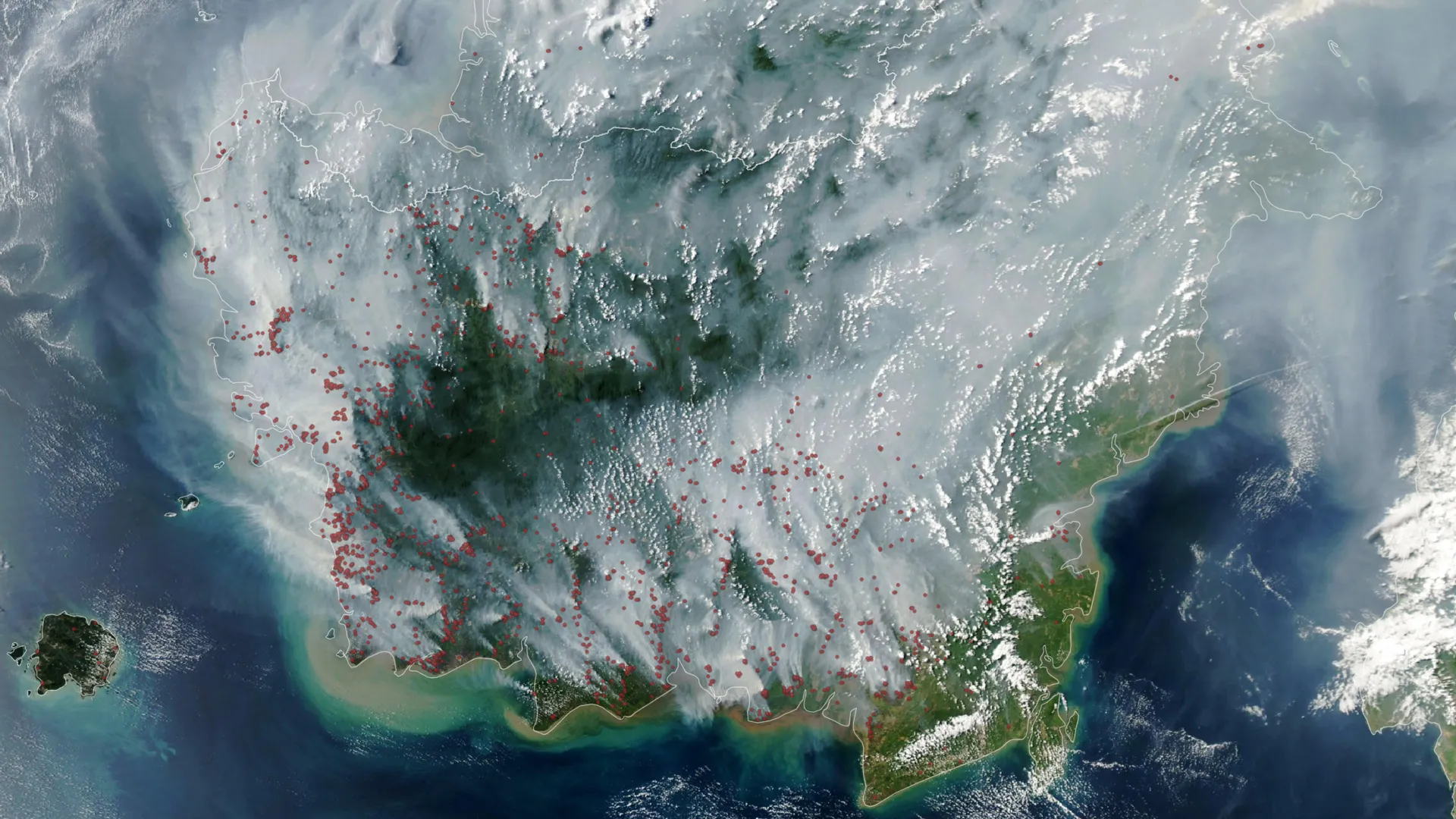
Indonesia is experiencing an intensifying fire season marked by dangerous underground peat fires that are difficult to detect and extinguish. These fires burn through dried wetland soils at relatively low temperatures, making them exceptionally stubborn and highly polluting. According to research, peat fires produce substantially more fine particulate matter, sulfur dioxide, organic carbon, methane, and carbon monoxide compared to conventional tropical forest fires.
The country contains approximately 36 percent of the world’s tropical peatlands, making it particularly vulnerable to such fires during drought periods. A strengthening El Niño pattern, combined with a positive phase of the Indian Ocean Dipole, has significantly reduced rainfall across Indonesia, creating ideal conditions for fire activity. Satellite data from NASA’s Aqua satellite captured active fire detections across the region on September 1, 2026. By late August, Indonesia’s fire-monitoring system had recorded 946 hotspots, with fire activity escalating sharply and tracking similarly to the destructive 2015 fire season.
One month into the current fire season, the fires had already released approximately 10 percent of the greenhouse gas emissions produced during the entire 2015 crisis, which totaled 1.75 billion tons. Severe drought conditions affected roughly 90 percent of Indonesia in early August, with some areas receiving little or no rainfall. When peatlands dry sufficiently, fire can move underground and continue smoldering until rains arrive, potentially lasting several months through October or November.
Satellite monitoring systems face limitations in detecting fires obscured by thick smoke, clouds, or hidden beneath the forest canopy. Paradoxically, the most intense fire events can be harder to observe from space because smoke itself blocks the satellites’ view. Historical land management decisions, including the construction of drainage canals and irrigation systems during the 1990s to support rice cultivation, lowered water tables and increased landscape combustibility. Following the 2015 fire season, authorities implemented various restoration projects and firefighting improvements.
The current fire season is serving as a significant test of protective measures implemented over the past decade. Meanwhile, hazardous smoke is already disrupting daily life across Indonesia and neighboring regions, with schools shifting to remote learning, national parks closing, and flight delays occurring due to heavy smoke exposure.
Article Attribution | Read More at Article Source
Article summary produced by Claude AI