

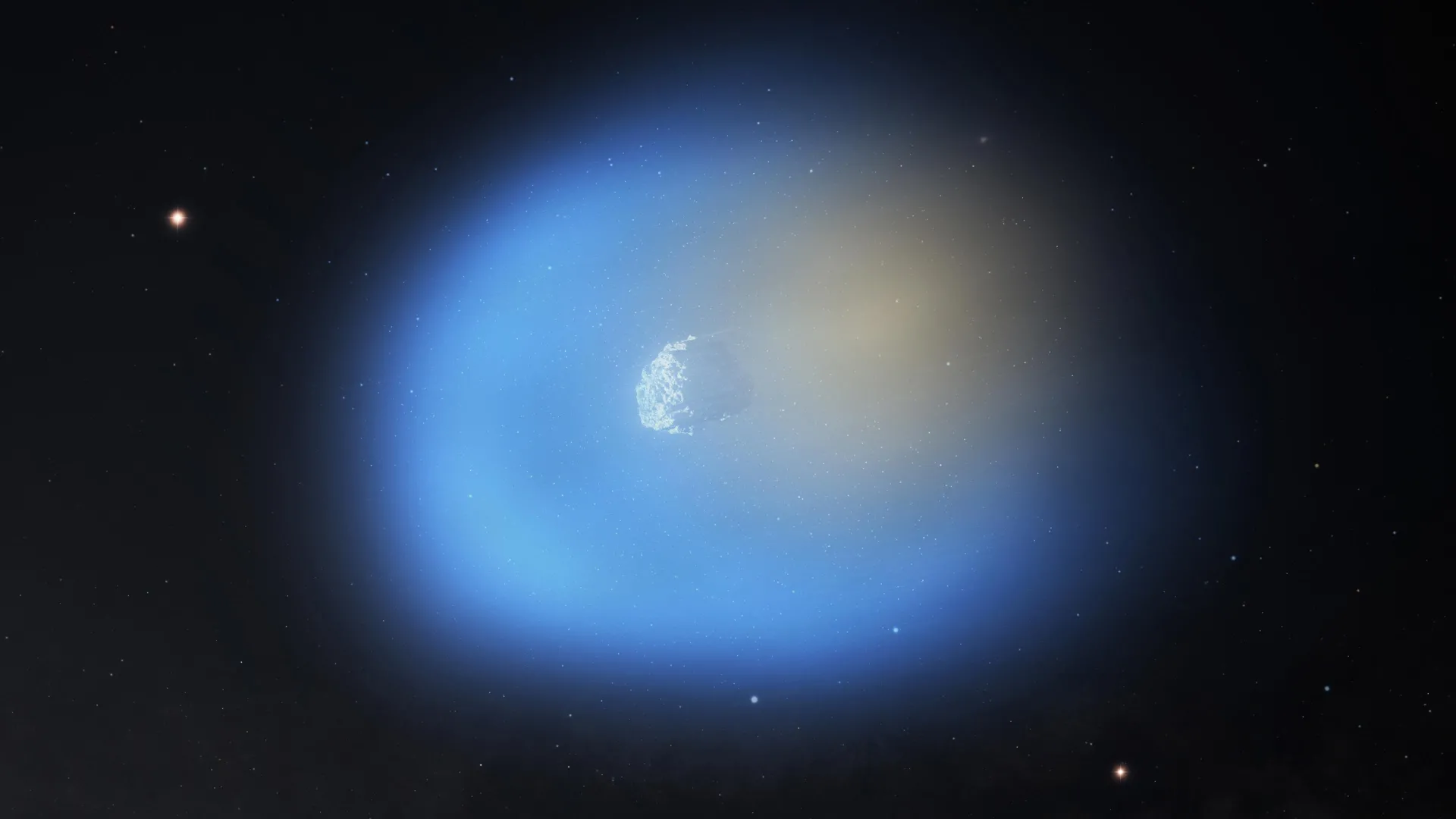
Astronomers have detected unusually high concentrations of methanol in comet 3I/ATLAS using the Atacama Large Millimeter/submillimeter Array (ALMA) in Chile. The methanol abundance in this interstellar visitor exceeds levels observed in nearly all known comets originating from within our solar system, according to research led by Nathan Roth of American University.
The research team conducted observations in late 2025 as 3I/ATLAS approached the Sun. As solar heating vaporized the comet’s icy surface, gas and dust formed a luminous cloud surrounding its nucleus. By analyzing the molecular composition of this expanding cloud, scientists determined the chemical makeup of material transported by the comet. The team focused on two molecular signatures: methanol, an organic alcohol, and hydrogen cyanide, a nitrogen-bearing compound commonly detected in comets.
ALMA measurements revealed methanol-to-hydrogen cyanide ratios of approximately 70 and 120, placing 3I/ATLAS among the most methanol-rich comets ever investigated. This distinctive chemical profile suggests that ice within the comet formed under significantly different conditions than those experienced by most solar system comets. Previous observations from the James Webb Space Telescope had already identified carbon dioxide as the dominant component in the comet’s coma when it was at greater distances from the Sun.
Detailed imaging showed contrasting behavior between the two molecules. Hydrogen cyanide primarily originates from the comet’s central nucleus, consistent with typical cometary activity. Methanol, however, appears to be released from both the nucleus and from tiny ice particles dispersed throughout the coma. These miniature ice grains effectively function as diminutive comets themselves, releasing additional methanol as temperatures increase during solar approach.
3I/ATLAS represents only the third confirmed interstellar object observed entering our solar system, following 1I/’Oumuamua and 2I/Borisov. Each interstellar visitor provides comparative data on planetary and cometary formation in distant star systems, with 3I/ATLAS contributing unique chemical signatures to the expanding understanding of how planetary systems develop throughout the galaxy.
Article Attribution | Read More at Article Source
Article summary produced by Claude AI