

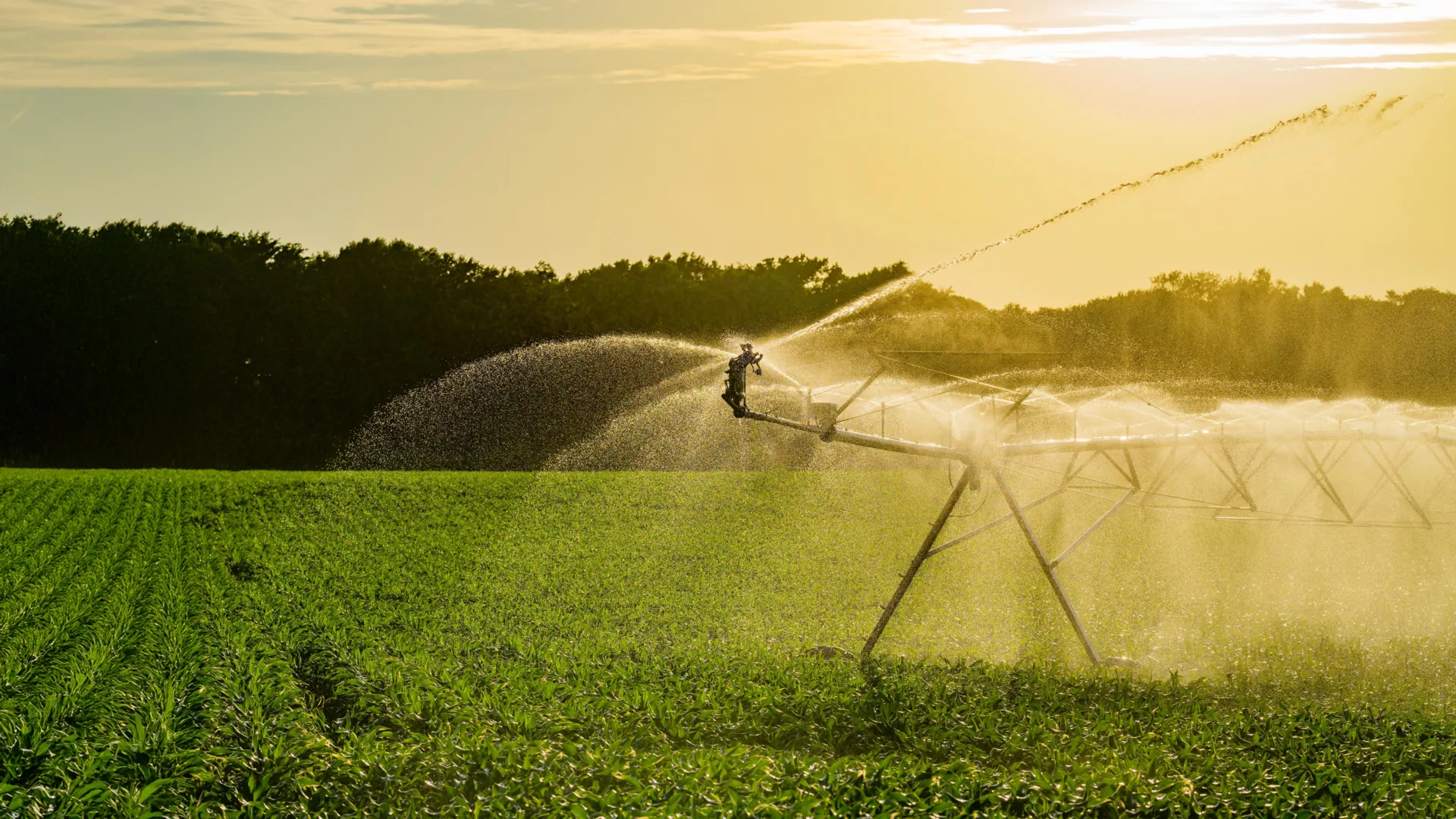
A study from Colorado State University published on September 14 in the Proceedings of the National Academy of Sciences concludes that irrigation of American crops provides substantial climate benefits by enabling farmers to produce food more efficiently. The research indicates that if irrigation were eliminated, replacing lost agricultural output would require converting natural land to farmland, resulting in greenhouse gas emissions far exceeding those produced by irrigation operations themselves.
The researchers calculated that irrigation prevents approximately 6.86 gigatons of greenhouse gas emissions through avoided land conversion. This figure surpasses all U.S. greenhouse gas emissions in 2024 and represents roughly 13% of global emissions that year. The analysis highlights why natural ecosystems store significant carbon, and converting forests, grasslands, and other landscapes into agricultural land releases stored carbon into the atmosphere. Land use changes for agriculture account for nearly one quarter of global greenhouse gas emissions globally.
Direct emissions from irrigation stem primarily from energy required to pump water on farms and between river basins. The researchers note this source could be reduced through electrification of fossil fuel-powered pumping systems, particularly as electricity grids become cleaner. Additional direct emissions include nitrous oxide releases from microbial activity and carbon dioxide dissolved in groundwater that is released during field irrigation. The study represents the first comprehensive comparison of these direct irrigation emissions against indirect benefits from reduced land conversion needs.
The research team used machine learning models analyzing agricultural survey data to measure yield improvements from irrigation across U.S. counties. They then applied a global economic model simulating agricultural production, consumption, and international trade to estimate farming shifts if U.S. crops depended entirely on rainfall. Results were combined with carbon storage data to calculate potential greenhouse gas emissions from required land conversion. The analysis did not include emissions from nitrogen fertilizer application or livestock methane production.
Researchers acknowledge that irrigation creates broader trade-offs, particularly in the western United States where agricultural systems heavily depend on irrigation. Water supplies must support farms, communities, ecosystems, and other demands, making the greenhouse gas benefits identified in the study one component of complex societal cost-benefit discussions surrounding water allocation and use.
Article Attribution | Read More at Article Source
Article summary produced by Claude AI