

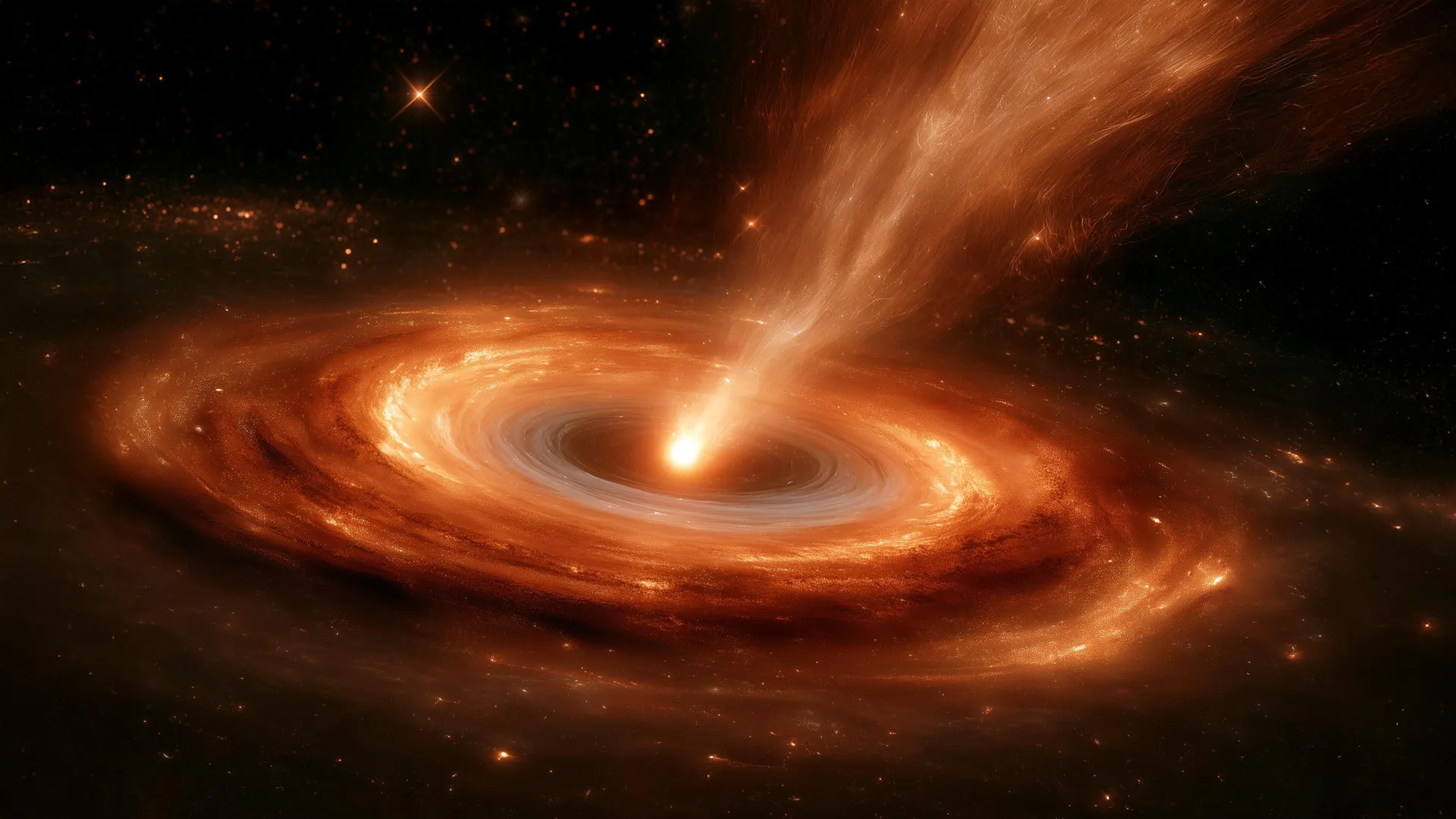
Researchers using NASA’s James Webb Space Telescope have documented how gas dispersal mechanisms change as planetary systems mature, according to a study examining 72 young, Sun-like stars and their protoplanetary disks. Led by Naman Bajaj of the University of Arizona and including SETI Institute scientist Uma Gorti, the investigation represents one of the largest examinations of planet formation conducted with JWST and has been published in The Astronomical Journal.
The research demonstrates that planet formation operates under significant time constraints. Gas is essential for forming giant planets such as Jupiter and Saturn, but protoplanetary disks lose their gas supplies through various mechanisms. When gas dispersal occurs too rapidly, developing planets may lack sufficient time to accumulate the massive atmospheres required to become gas giants. Understanding the timing and methods of gas loss therefore proves critical to comprehending how planetary systems develop.
Using archival observations from JWST’s Mid-Infrared Instrument, the team examined molecular hydrogen and ionized neon to track escaping material across systems at different developmental stages. In younger systems still accumulating material onto the central star, the researchers detected powerful jets and broad winds generated by magnetic fields threading through the disk. As systems mature and material flow decreases, these jets weaken and high-energy radiation from the young star increasingly drives gas escape through photoevaporation—a process where stellar radiation heats disk material until it escapes into space.
The findings indicate that no single mechanism dominates throughout a disk’s lifetime. Instead, planetary systems begin with magnetically driven jets and winds before transitioning to atomic winds and photoevaporative processes. Extended emissions from molecular hydrogen and ionized neon appeared in 66 of the 72 observed disks, with conical molecular hydrogen winds detected in 46 systems and fast-moving neon jets in 40. Researchers now aim to quantify precisely how much gas these winds remove over time and identify where within disks escaping material originates, potentially revealing which regions produce different planetary types before gas supplies become depleted.
Article Attribution | Read More at Article Source
Article summary produced by Claude AI