

The Ig Nobel Prize ceremony, which celebrates unconventional scientific research, has been relocated to Zurich, Switzerland, marking the first time in the event’s 35-year history that it will be held outside the United States. Marc Abrahams, founder of the Ig Nobels in 1991, cited increasingly hostile conditions toward science and foreign nationals as the primary reason for the move. He noted that attendance from international award winners has declined significantly, with only six of ten winners attending the previous ceremony. The missing winners cited safety concerns related to unpredictable immigration and visa protocols, including fears of deportation and detention.
Abrahams acknowledged the relocation as bittersweet but also an opportunity to reinvigorate the event after 35 years. Kees Moeliker, a retired museum director and former Ig Nobel winner, stated that while the move away from its origins is disappointing, it opens new possibilities and audiences in Europe. Holden Thorp, editor-in-chief of the Science family of journals, characterized the decision as rational and reflective of a broader trend in which international scientists are becoming less inclined to pursue opportunities in the United States, noting that this represents a departure from the principle of welcoming global scientific talent that once defined American scientific excellence.
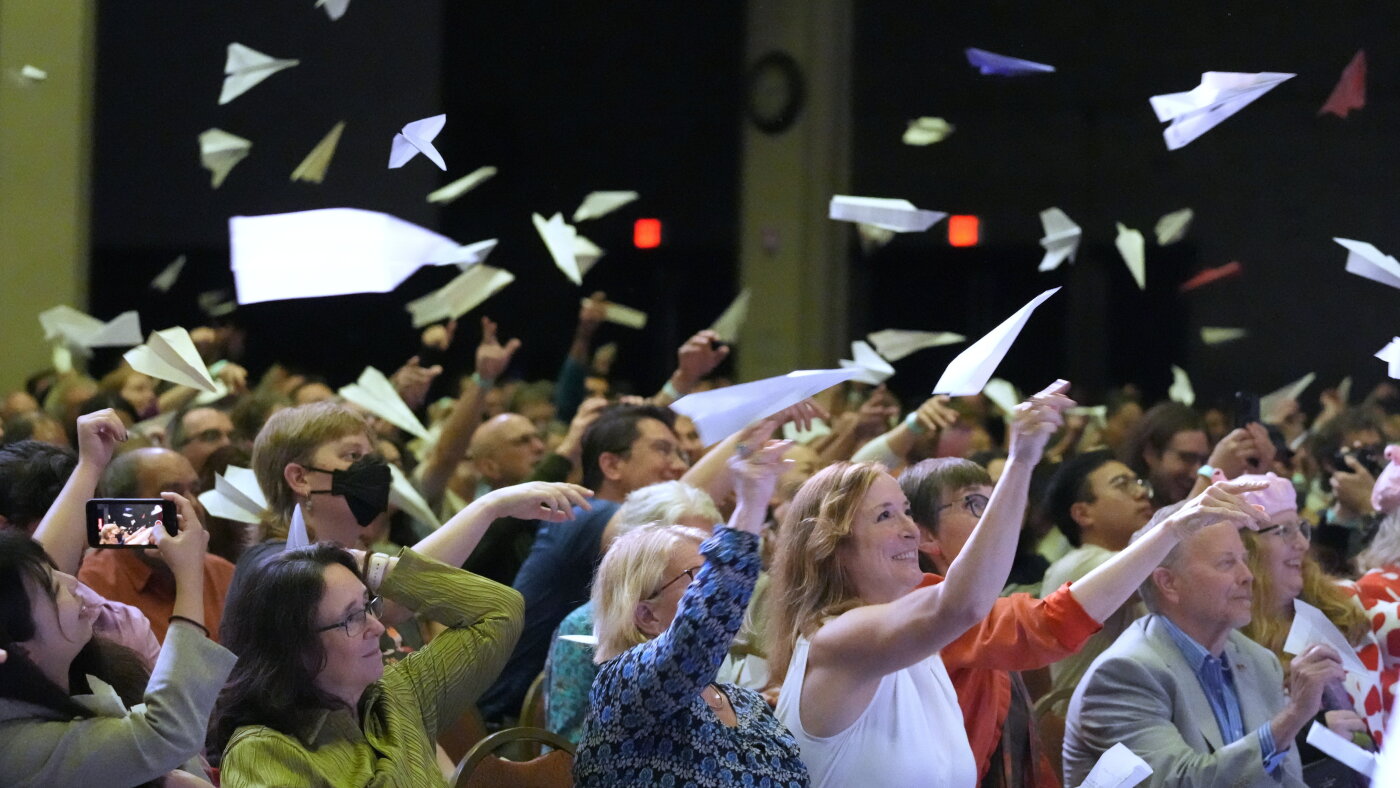
This year’s awards recognized diverse research achievements across multiple disciplines. A physics prize went to researchers who developed a splash-free urinal by determining that stream angles below 30 degrees eliminate splashback. The biomechanics award honored a team that established a rigorous scientific definition of kissing, enabling them to study the behavior across species and propose that the practice may date back 21.5 million years and potentially occurred between humans and Neanderthals. Additional awards went to research on candy-stealing behavior among higher social classes and analysis of nose-blowing aerodynamics. All winners received a blue cheese-topped statuette and 10 trillion Zimbabwean dollars, a playfully worthless prize given the currency’s historical collapse. The ceremony concluded with the traditional volley of paper airplanes cast by audience members.
Article Attribution | Read More at Article Source
Article summary produced by Claude AI