

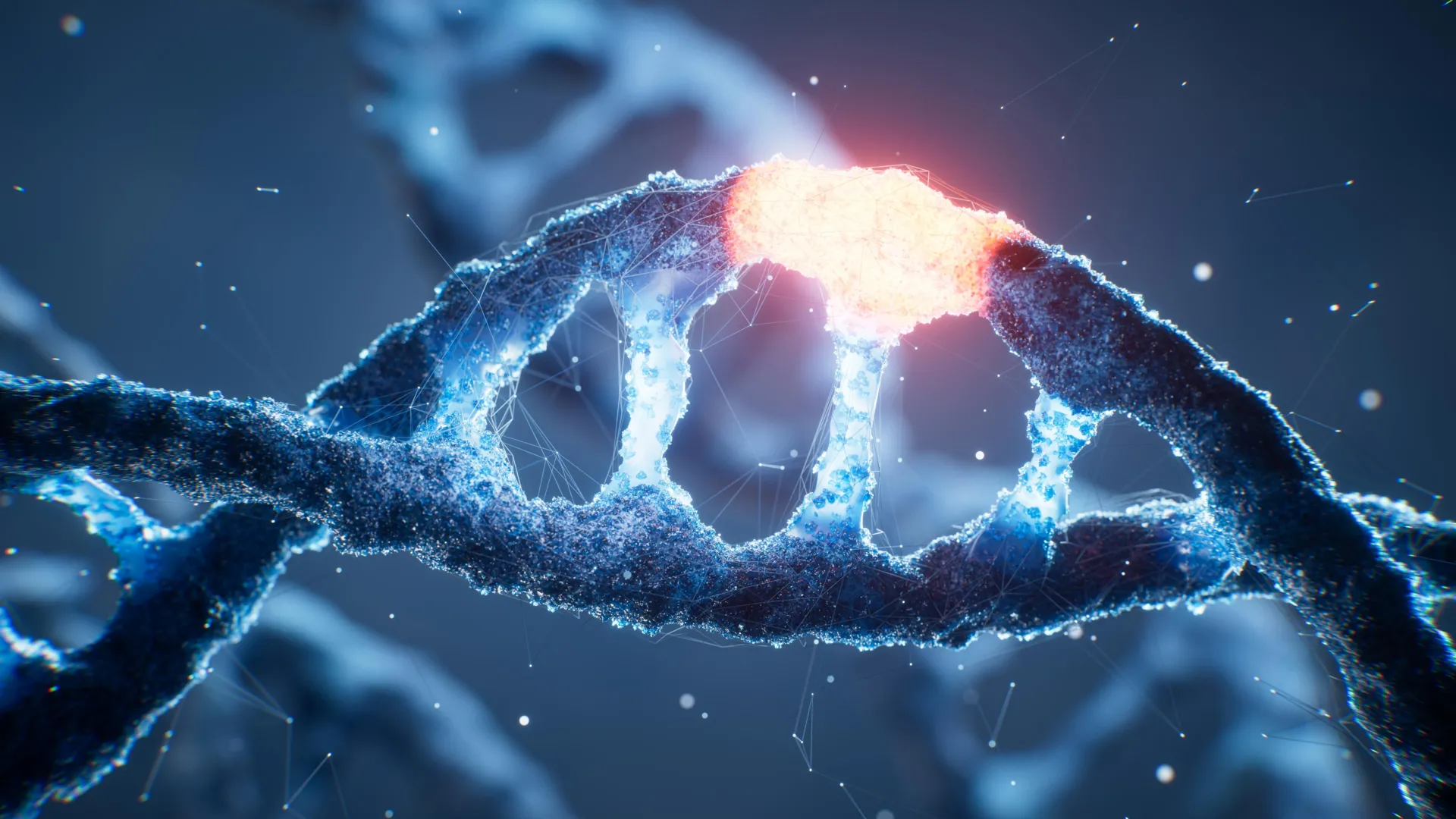
Scientists at the University of California San Diego have demonstrated that RNA polymerase, a fundamental enzyme responsible for reading DNA and producing RNA during gene expression, can effectively process genetic information written using an expanded alphabet containing eight letters rather than the four found in all known organisms on Earth.
The research team employed high-resolution cryo-electron microscopy alongside biochemical experiments to visualize and analyze the enzyme’s interactions with synthetic genetic material at atomic-level resolution. Their observations revealed that RNA polymerase employs the same biochemical and structural recognition mechanisms for synthetic base pairs as it does for naturally occurring ones, explaining the enzyme’s ability to accurately transcribe the expanded genetic code. In a companion study, researchers also found that the enzyme could recognize synthetic base pairs lacking the hydrogen bonds typically essential to maintaining DNA structure.
The findings establish a molecular foundation for technologies leveraging expanded genetic alphabets. The research team’s work indicates that existing cellular machinery possesses the capacity to process and utilize non-natural genetic information, removing a significant technical barrier in the field of synthetic biology.
These discoveries open pathways toward applications including enhanced diagnostic tools and therapeutic approaches not possible with naturally occurring genetic systems. Prior research has already demonstrated that expanded genetic alphabets could enable the development of synthetic DNA capable of identifying liver cancer cells, suggesting the breadth of potential clinical and industrial applications.
The findings come from two separate peer-reviewed publications led by UC San Diego researcher Dong Wang. One appeared in Nature Communications on Sept. 2, 2026, while the other was published in PNAS on Aug. 12, 2026.
Article Attribution | Read More at Article Source
Article summary produced by Claude AI