

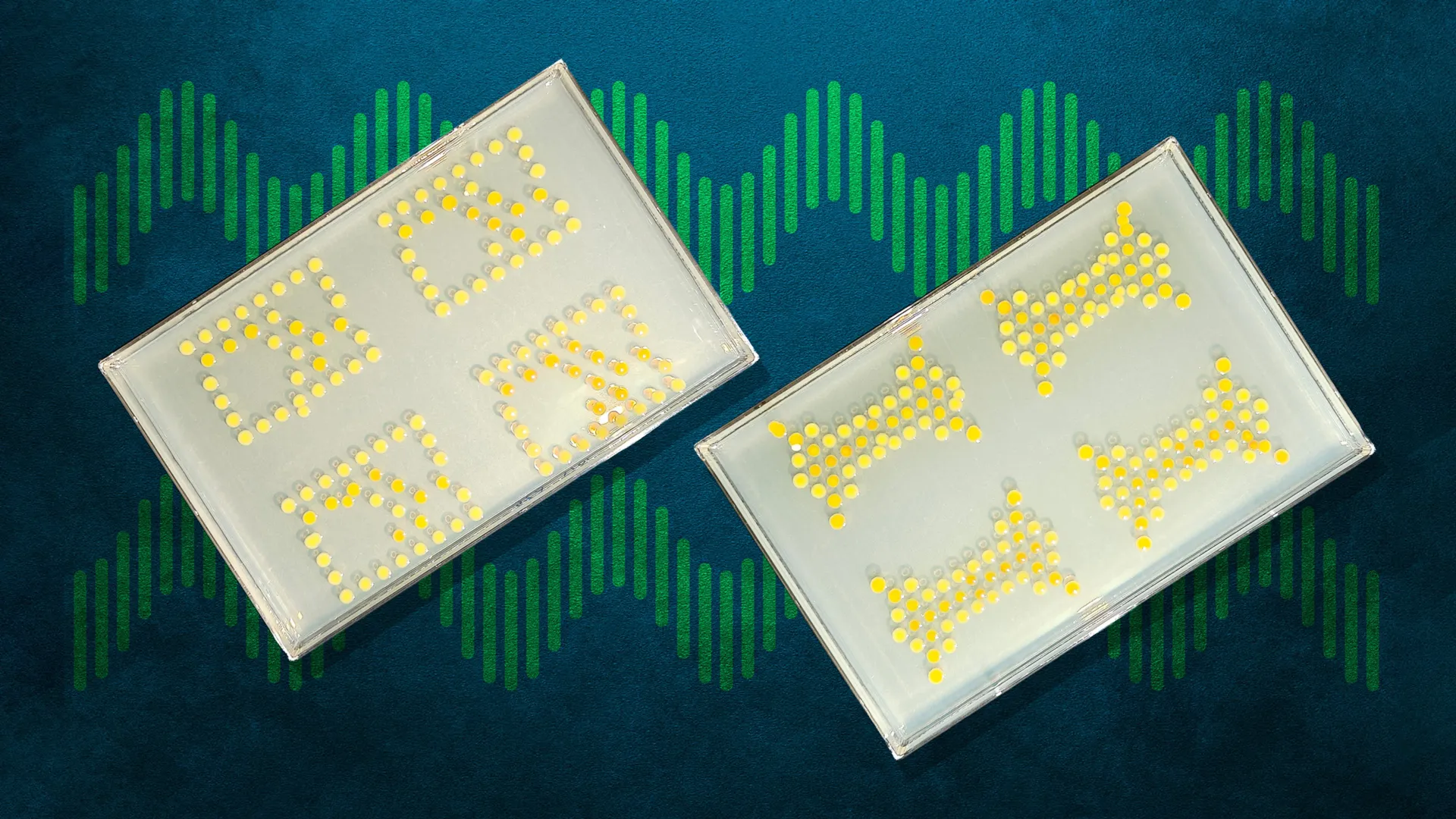
Researchers at MIT have developed a novel approach to synthetic biology by engineering bacterial cells to operate as transistor-like components. The system uses Pantoea agglomerans bacteria, which commonly grow on plant surfaces, modified to regulate the movement of signaling molecules in a manner analogous to how transistors control electrical current in conventional circuits.
The team created two types of bacterial transistors and three additional bacterial strains that serve as relays, providing a modular toolkit capable of constructing nearly any type of circuit. Individual bacterial colonies were positioned on growth plates approximately 5 millimeters apart, allowing chemical signals to propagate sequentially through the system. The researchers demonstrated that a single bacterial transistor could perform multiple logic operations depending on its position within a circuit, including multi-input gates, OR gates, and imply gates.
The study showcased increasingly complex circuits, with the largest system containing 24 interconnected bacterial colonies designed to add two inputs together. The work also demonstrated circuits capable of processing multiple signals simultaneously and functioning as demultiplexers, which route incoming signals to different destinations based on control inputs. According to the research team, the computational capabilities of these biological systems are theoretically limitless at the functional level.
A significant practical limitation is processing speed, with each bacterial calculation requiring approximately eight hours. However, researchers noted this timeframe remains suitable for agricultural applications, where overnight computations are fast relative to plant growth cycles. The potential uses include deploying these circuits on plant roots or leaves to detect environmental stresses such as drought or pest attacks, with programmed responses such as fungicide production. The research was supported by funding from the U.S. Defense Advanced Research Projects Agency and the U.S. Intelligence Advanced Research Projects Activity, with findings published in Nature Chemical Biology.
Article Attribution | Read More at Article Source
Article summary produced by Claude AI