

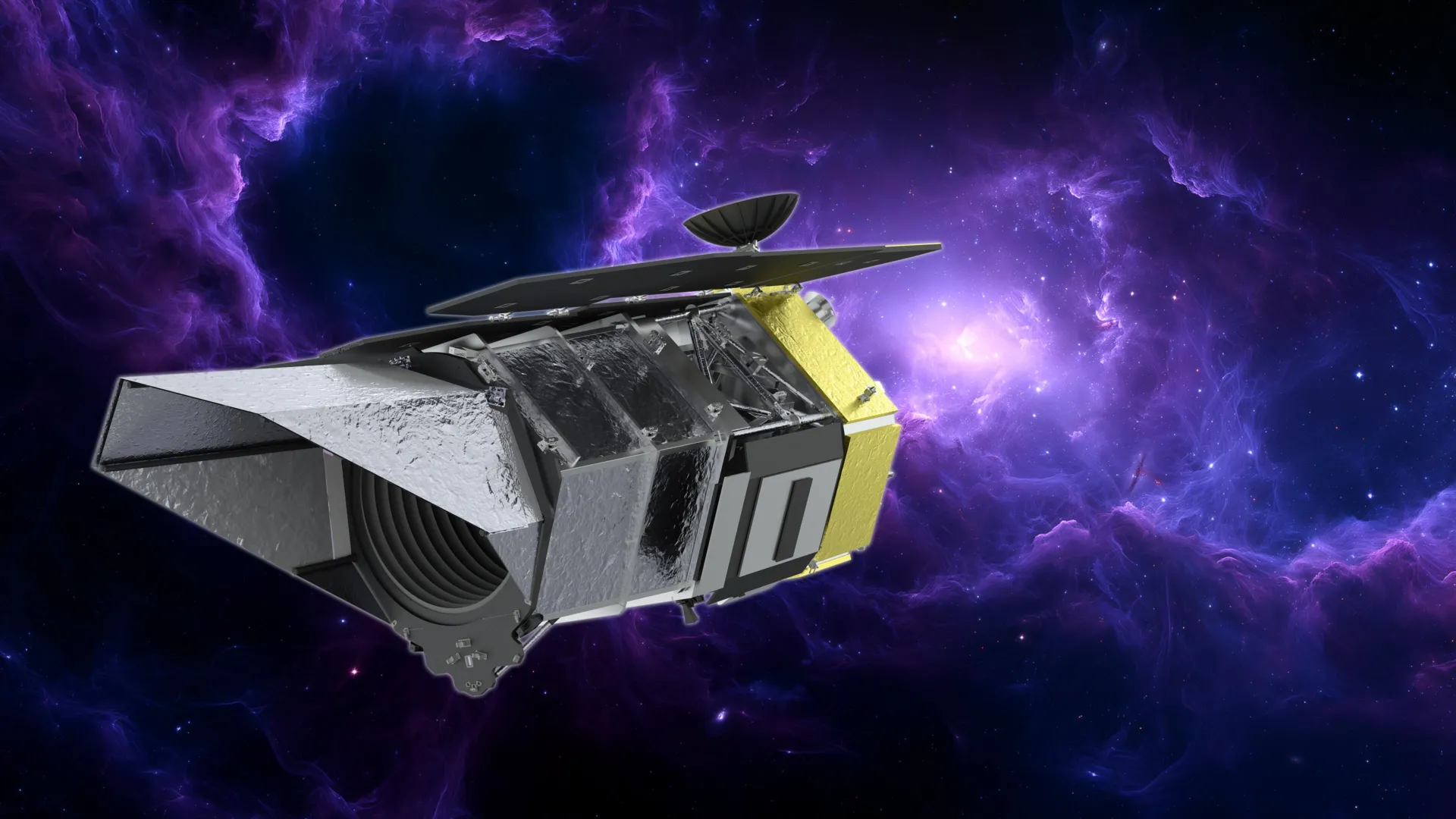
NASA’s Nancy Grace Roman Space Telescope has achieved a significant operational milestone with the activation of its Wide Field Instrument, a sophisticated 300-megapixel infrared camera system. The instrument is engineered to combine expansive sky coverage with the detailed imaging capabilities typically associated with established space observatories. A single image captured by the Wide Field Instrument will encompass an area of sky comparable in size to a full moon as viewed from Earth.
The activation process began following a 10-day decontamination and drying period. On September 11, mission engineers deactivated the instrument’s heater system, allowing the Wide Field Instrument to cool to approximately minus 225 degrees Fahrenheit. Once the proper temperature was achieved, the team successfully activated 18 infrared detectors, which collectively possess a light-sensitive area similar in size to a laptop screen. Subsequent tests verified the functionality of the instrument’s calibration system, focusing mechanism, and element wheel containing filters and optical components designed to separate incoming light into individual wavelengths.
The Wide Field Instrument is intended to enable large-scale cosmic surveys that will advance scientific understanding in multiple research areas. Planned applications include investigations into exoplanets, dark energy phenomena, and the distribution of matter throughout the universe. Scientists anticipate that observations generated by the instrument will also provide valuable datasets applicable to numerous additional scientific inquiries. Mission officials have indicated that the telescope remains on track to release its first science images by early 2027.
In parallel, the Roman Space Telescope’s Coronagraph Instrument completed an early systems checkout. This component represents advanced technology for directly imaging planets around distant stars by suppressing stellar glare through optical masks and deformable mirrors. Ground teams at Caltech/IPAC confirmed successful communication with all major subsystems, including software, thermal controls, mechanisms, and cameras. The coronagraph is designed to operate near room temperature, except for its detectors, which will undergo a separate 30-day decontamination process.
Article Attribution | Read More at Article Source
Article summary produced by Claude AI