

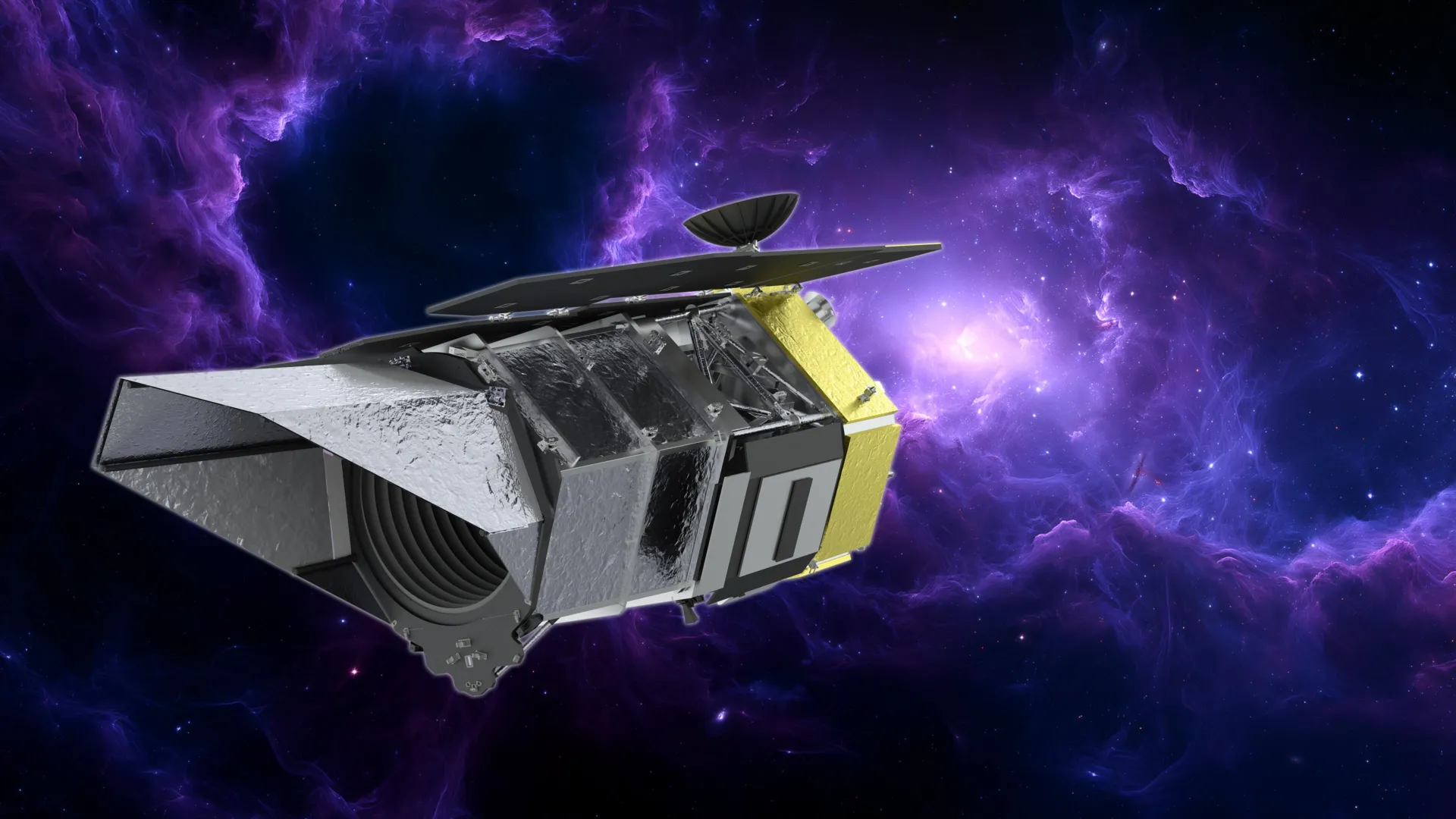
NASA’s Nancy Grace Roman Space Telescope has achieved a significant operational milestone with the successful activation of its Wide Field Instrument, a sophisticated 300-megapixel infrared camera. The instrument is engineered to combine an exceptionally broad field of view with high-resolution imaging capabilities comparable to established space telescopes. A single image captured by the Wide Field Instrument will encompass an area of sky larger than the apparent size of a full moon, enabling comprehensive surveys of the cosmos while maintaining sharp detail.
The activation process began on September 11, when engineers initiated the cooling sequence for the instrument’s detectors, allowing them to reach minus 225 degrees Fahrenheit. Once the detectors reached their operating temperature of approximately minus 300 degrees Fahrenheit, mission teams activated the instrument’s 18 infrared detectors and subsequently began transmitting test data. Over the following days, engineers conducted systematic testing of the element wheel containing optical filters and prisms, as well as the focusing mechanism designed to maintain proper focus across the hundreds of thousands of images the telescope is expected to capture.
The Wide Field Instrument is intended to facilitate extensive scientific investigations, including the study of exoplanets, examination of dark energy mysteries, and analysis of cosmic matter distribution patterns. According to mission officials, the successful activation represents a culmination of years of development and ground-based testing efforts conducted by teams at NASA’s Goddard Space Flight Center, along with industry partners BAE Systems and Teledyne.
In parallel with the Wide Field Instrument’s activation, the Roman Space Telescope’s Coronagraph Instrument completed preliminary system checks. This specialized imaging system uses advanced optics and deformable mirrors to suppress stellar glare, potentially enabling direct imaging of planets orbiting other stars. Ground control teams at Caltech’s IPAC center verified communication with all major coronagraph subsystems and confirmed the instrument’s thermal control systems are operating appropriately.
The Roman Space Telescope continues its transit toward its destination at the second Lagrange point, approximately one million miles from Earth. Mission officials indicate the observatory remains on schedule to release its first science images by early 2027.
Article Attribution | Read More at Article Source
Article summary produced by Claude AI