

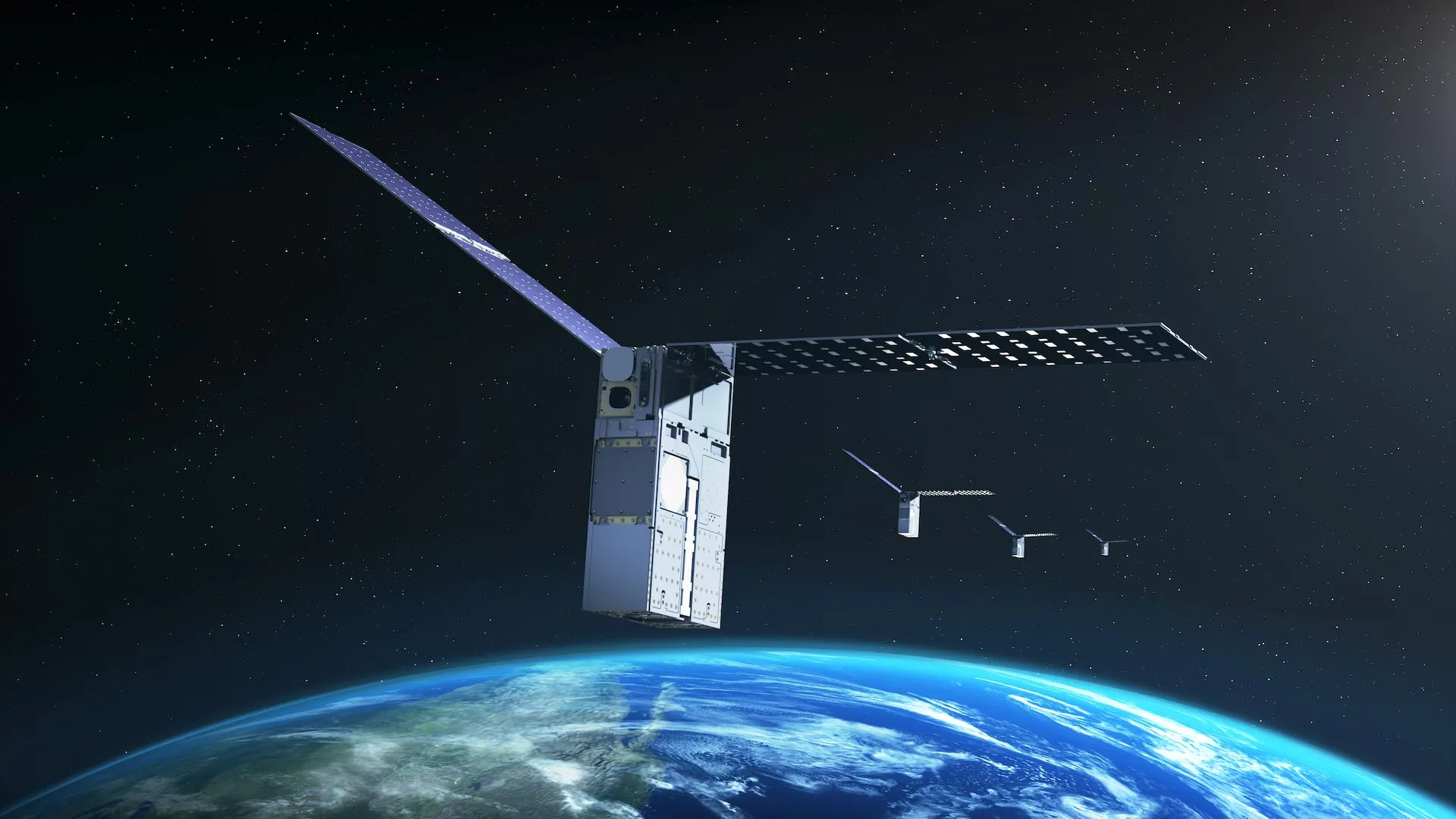
NASA’s Starling mission has achieved a significant advancement in autonomous spaceflight by successfully testing FALCON (Fast Autonomous Lost-in-space Catalog-based Optical Navigation), a system that enables satellites to navigate independently without GPS. The technology was developed as a joint flight experiment between NASA and EraDrive, a Stanford University-originated startup, combining EraDrive’s Era-Core flight software with Starling’s onboard cameras and a catalog of known satellites.
The FALCON system addresses a critical challenge in space exploration: GPS signals become weak, unreliable, or unavailable at significant distances from Earth, particularly around the Moon and in deep space. By allowing spacecraft to determine their position using observable objects in their vicinity, FALCON provides an alternative navigation method that could prove essential for future lunar satellite networks, distributed science missions, and human exploration efforts.
During testing, FALCON used Starling’s star tracker cameras to identify other spacecraft and orbital debris, comparing observations against a publicly available catalog of space objects maintained by the U.S. Department of War. The system then used these identified objects as reference points to calculate Starling’s orbit. In separate experiments, FALCON refined orbital estimates for more than 200 objects over a three-day period without ground station intervention, producing more accurate predictions than existing catalog data.
The demonstration represents a first for optical navigation in space, as no spacecraft has previously determined its own orbit using cameras and relative positions to other objects. The technology has broader applications for space traffic management, distributed satellite networks, and collision avoidance systems. Roger Hunter, program manager for NASA’s Small Spacecraft and Distributed Systems program at NASA’s Ames Research Center, noted the demonstration’s implications for on-orbit monitoring and alternative navigation methods.
Later this year, Starling will expand the FALCON experiment, with the mission’s four spacecraft sharing tracking information to refine their positions collectively. The project also exemplifies how university research can develop into commercial technology, with EraDrive now commercializing its Era-Core software for wider adoption in the space industry.
Article Attribution | Read More at Article Source
Article summary produced by Claude AI