

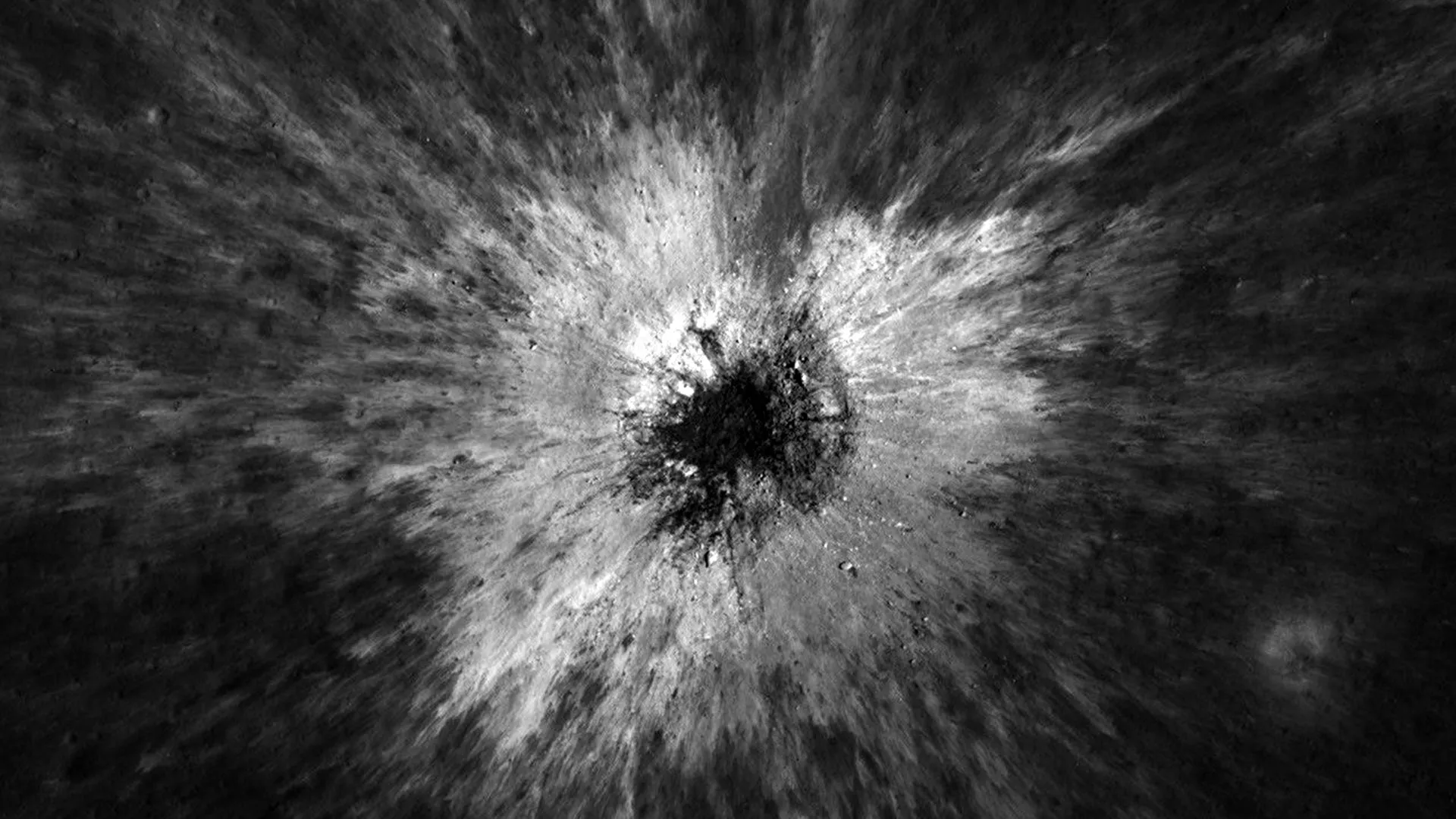
Robert Wagner, an image-processing specialist working with NASA’s Lunar Reconnaissance Orbiter Camera system, made an unexpected discovery while conducting routine analysis of lunar data. He identified an unusually bright patch with a dark halo on the Moon’s surface, indicating recently disturbed material. After comparing older and newer orbital images, Wagner determined the feature was a freshly formed impact crater that had not previously existed.
Scientists reported the findings on September 16 in Science Advances, formally naming the crater McGetchin in honor of pioneering lunar scientist Tom McGetchin. The crater formed when an asteroid or comet approximately three to six stories in size struck the lunar surface sometime between April 11 and May 22, 2024. The impact created a crater 728 feet in diameter and 141 feet deep, making it the largest newly formed crater ever identified in the solar system. Researchers estimate such large impacts occur on the Moon roughly once per century or less frequently.
The discovery underscores the value of NASA’s long-term lunar observation program. The Lunar Reconnaissance Orbiter has circled the Moon for more than 17 years, and during this time researchers have identified at least 1,000 new impact craters and documented approximately 100,000 additional surface changes. Unlike Earth, the Moon lacks an atmosphere to slow or burn up incoming space rocks, allowing asteroids and meteoroids to strike the surface directly. Scientists can reliably detect craters as small as 30 feet across in orbital images.
Beyond the crater itself, the impact created unexpected secondary effects. The Diviner thermal instrument revealed a region roughly 4 miles wide surrounding McGetchin that is approximately 16 degrees Fahrenheit colder at night than nearby terrain. This temperature difference results from the impact churning and loosening the lunar regolith, making it less dense and less able to retain heat. The unexpectedly large cold spot demonstrates that major impacts alter the lunar surface well beyond the immediate crater, with potential implications for future lunar exploration activities.
Article Attribution | Read More at Article Source
Article summary produced by Claude AI