

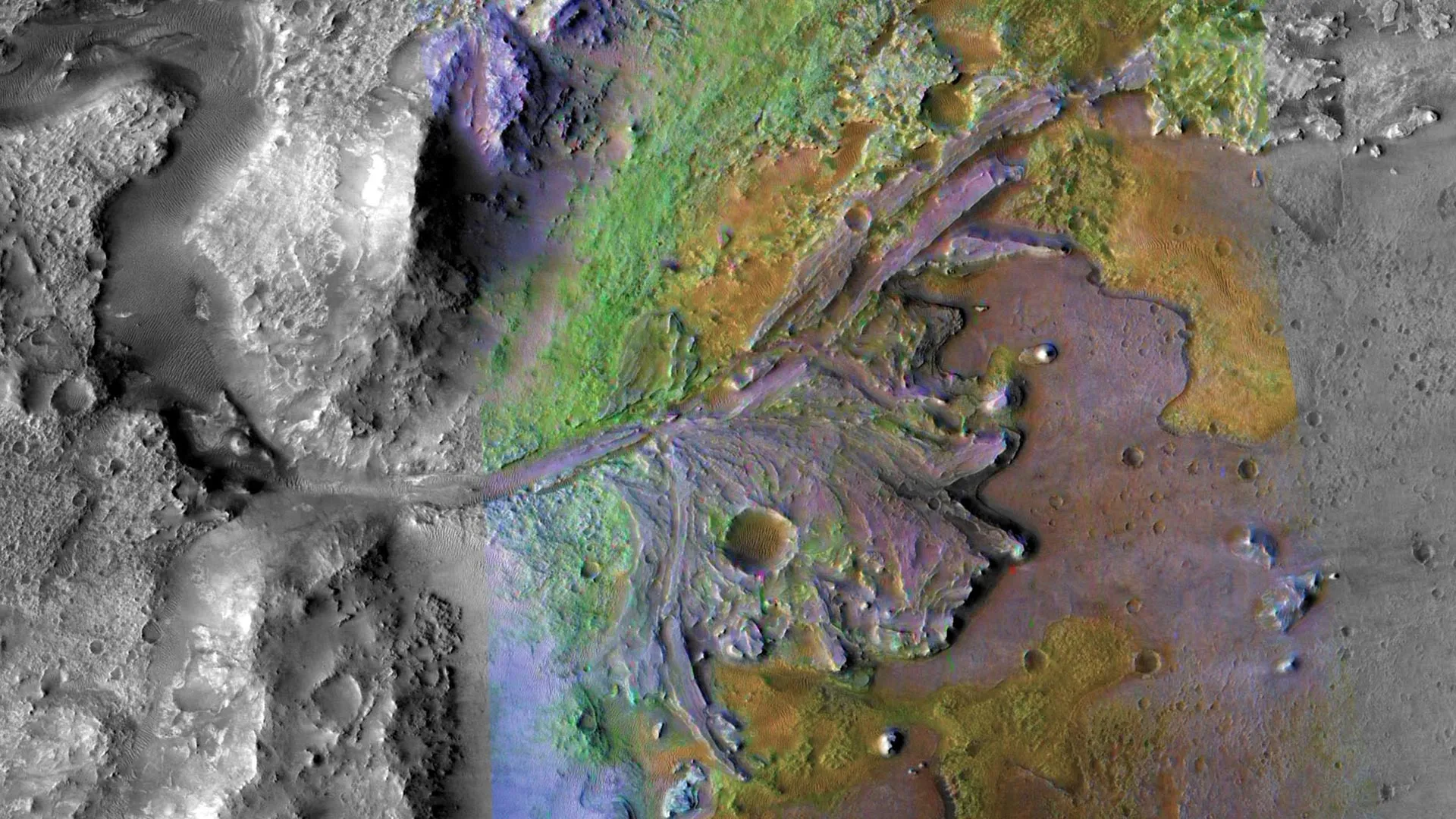
Analysis of geological samples from Jezero Crater’s Margin Unit has revealed a complex aqueous history spanning multiple water-related events rather than a single continuous lake environment. The findings emerged from extensive study using Perseverance’s SuperCam instrument, which identified mineral compositions across more than 185 bedrock targets examined over approximately 870 feet of elevation change.
The initial expectation among mission scientists centered on discovering sedimentary rocks typical of ancient lakeshores, particularly clay and silt formations capable of preserving evidence of past microbial life. Instead, researchers encountered igneous rocks—materials formed from solidified magma—which provided their own detailed geological record through their mineral composition and chemical alterations.
The three distinct water episodes began with groundwater enriched in carbon dioxide that percolated through the rock at lower elevations, chemically reacting with olivine minerals to produce carbonate deposits that filled fractures. Evidence suggests a second phase involved interaction with the ancient lake that once occupied Jezero Crater, during which additional silica accumulated in rocks positioned below the water line. A third and later episode featured heated groundwater circulation that created mineral veins containing calcium sulfate and fluorite, indicating hydrothermal activity occurred after the earlier water interactions.
These discoveries hold significance beyond Jezero Crater itself, as the area sits within one of Mars’ largest exposed carbonate deposits. The research demonstrates that reconstructing Mars’ early climate and habitability requires understanding multiple overlapping water systems rather than single environmental conditions. The findings underscore how orbital observations alone can provide incomplete pictures of planetary geological history, with ground-based rover investigations revealing substantially more complex patterns of past water activity and environmental change.
Article Attribution | Read More at Article Source
Article summary produced by Claude AI