

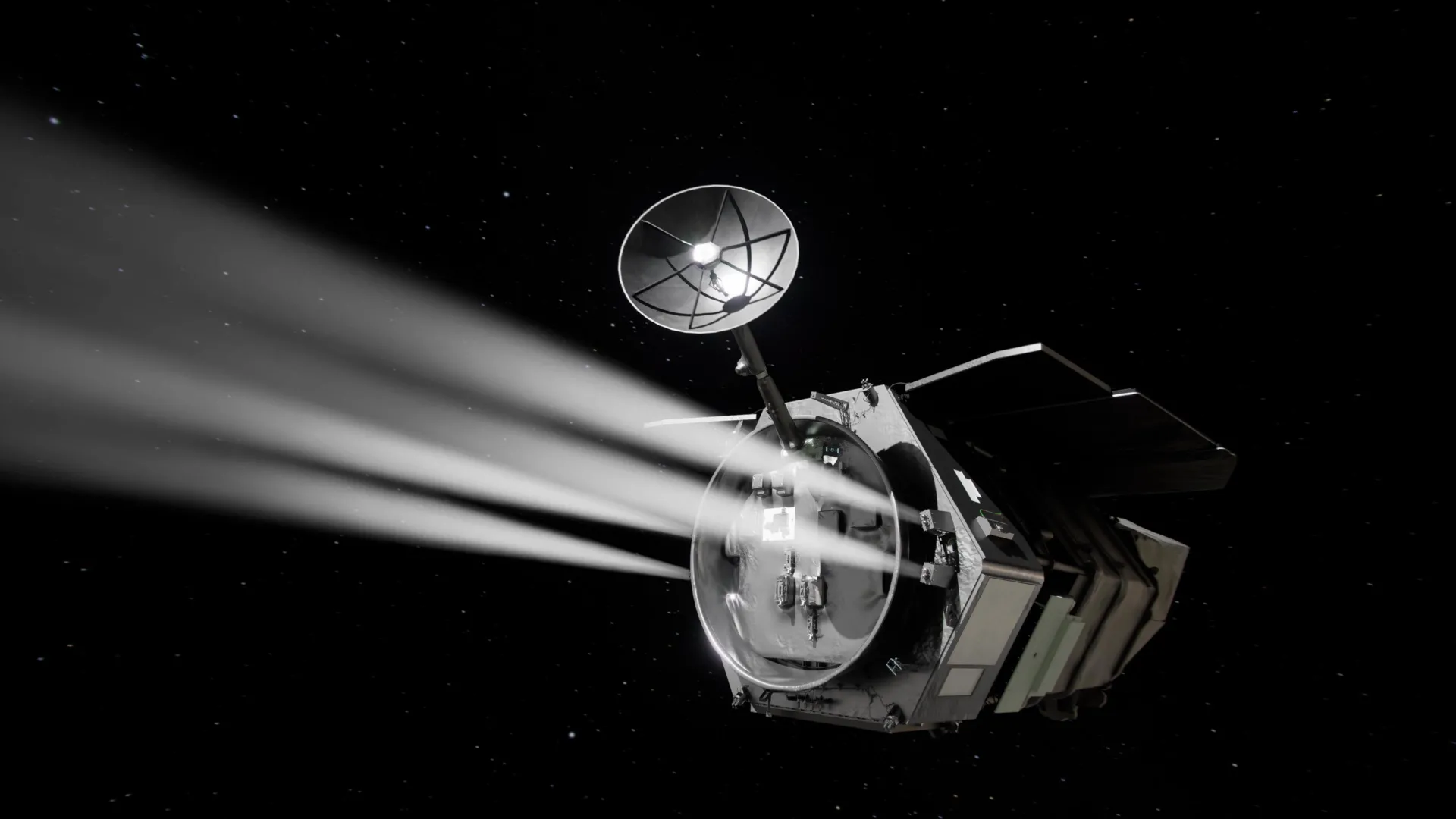
NASA’s Nancy Grace Roman Space Telescope has demonstrated exceptional fuel efficiency during its initial operations, potentially extending its operational lifetime far beyond original projections. The observatory was originally designed with a five-year primary mission and five-year extended mission, providing a total fuel budget for approximately 10 years of scientific work.
The dramatic extension in potential mission duration stems from multiple factors related to fuel conservation. During its first mid-course correction carried out on Aug. 31, the spacecraft achieved over 99% accuracy while using less than 10% of its allocated fuel for that maneuver. Roman consumed approximately 40 pounds of propellant compared to the planned 441 pounds, a significant shortfall that could provide roughly four additional years of operations.
Additional gains came from the spacecraft’s actual launch weight being considerably lighter than the maximum weight used for fuel calculations. Engineers had conservatively budgeted for a maximum mass of 21,605 pounds during design, but Roman ultimately weighed 17,760 pounds at launch. This difference allowed mission planners to fill the propellant tanks to capacity rather than only partially filling them, potentially adding another four years of mission life.
Further fuel savings are anticipated from upcoming maneuvers. The exceptional accuracy of the first correction means the second mid-course correction, scheduled for later this month, can be smaller than originally planned. Both the second correction and subsequent orbital insertion are now expected to require less fuel than budgeted, potentially providing approximately four more years of operations. Once the spacecraft reaches its destination near L2, station-keeping burns will only be required approximately once every 28 days. Mission officials estimate Roman could now operate for at least 22 years, with arrival at L2 expected around early December.
Article Attribution | Read More at Article Source
Article summary produced by Claude AI