

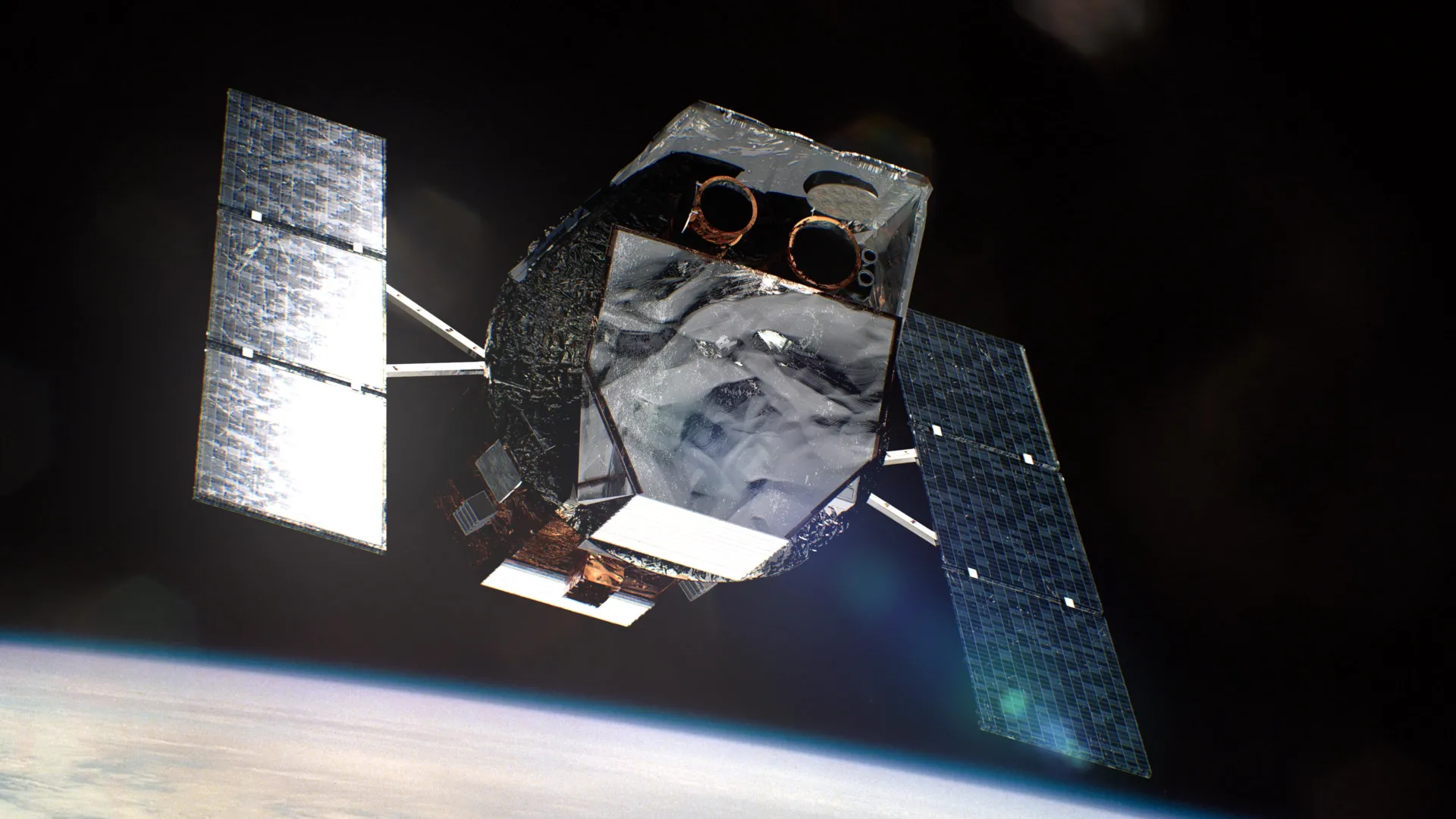
NASA’s Neil Gehrels Swift Observatory has returned to conducting scientific observations using two of its three primary instruments following a decision to abandon plans for an orbital boost. The Ultraviolet/Optical Telescope and X-ray Telescope were reactivated on Aug. 26 after being powered down in February as part of efforts to reduce atmospheric drag. The observatory’s third instrument, the Burst Alert Telescope, remained offline but was expected to resume operations within weeks.
Swift has operated as one of NASA’s most capable observatories for 21 years, conducting multi-wavelength observations of the cosmos and providing rapid response to sudden astronomical events. When the observatory detects cosmic outbursts, it can quickly redirect toward the source and alert ground-based and space-based observatories, enabling astronomers to capture follow-up data on transient phenomena. However, Swift’s location in low Earth orbit makes it vulnerable to atmospheric drag, which gradually reduces its altitude over time. The spacecraft lacks a propulsion system to counter this effect independently.
Increased solar activity in recent years expanded Earth’s upper atmosphere, intensifying the drag experienced by Swift and causing faster-than-expected altitude loss. In September 2025, NASA contracted Katalyst Space to design and launch a specialized spacecraft called LINK that would rendezvous with Swift and boost it to a higher orbit. LINK launched in July but subsequently experienced orientation control problems, leading NASA and Katalyst to abandon the boost attempt on Aug. 19.
Katalyst intends to proceed with a limited mission in which LINK will approach Swift and conduct rendezvous and proximity operations to test technologies for future in-space satellite servicing. Swift’s operating altitude is now expected to drop below the critical 185-mile (300-kilometer) threshold within one to two months. Below that altitude, telescope operations become more challenging and atmospheric drag accelerates, reducing remaining mission time. The observatory will continue gathering scientific data during its remaining time in its current orbit.
Article Attribution | Read More at Article Source
Article summary produced by Claude AI