

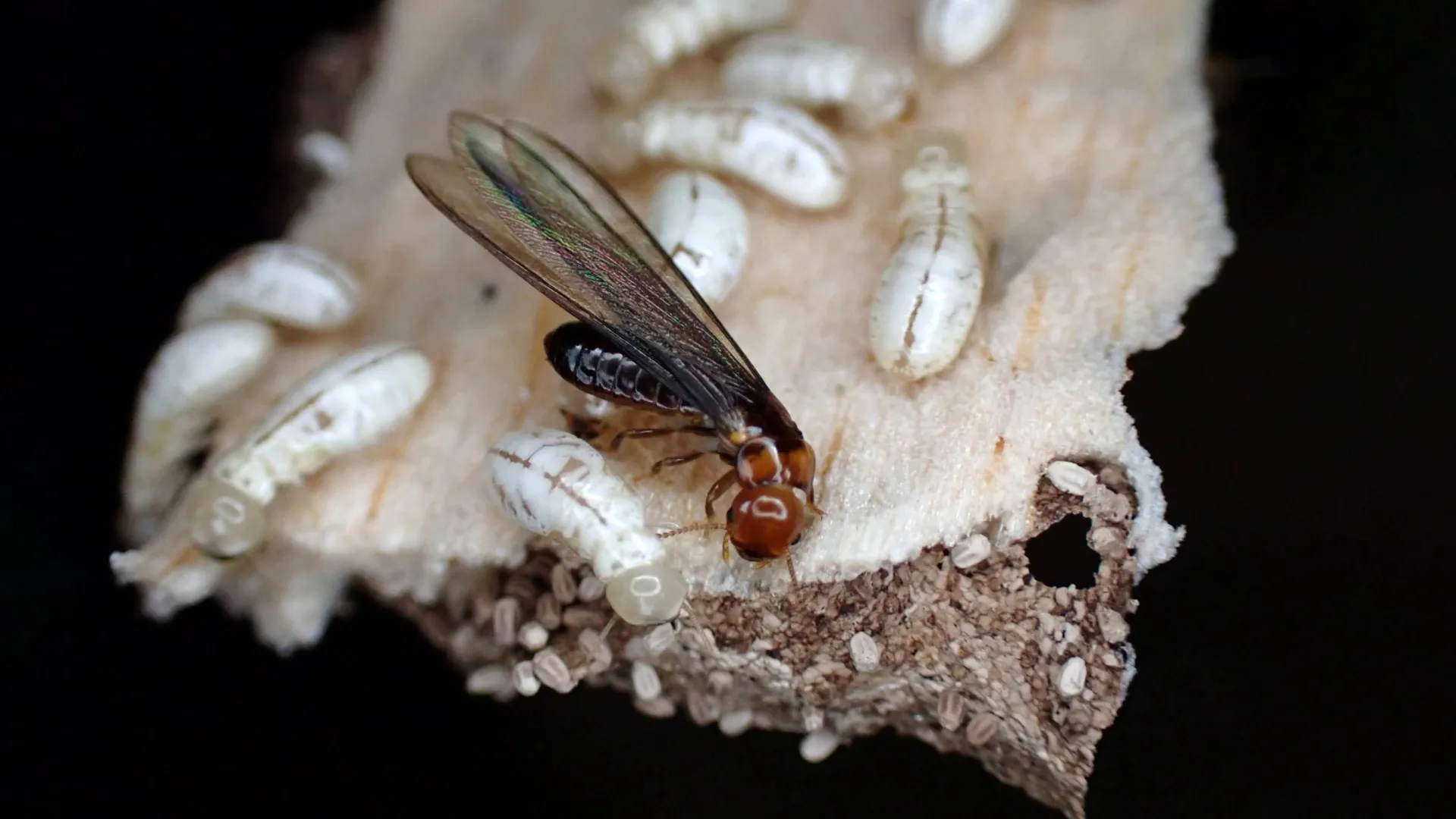
Scientists at the University of California, Riverside have identified a potential new approach to controlling drywood termites through a chemical compound called bistrifluron. The research, published in 2025 in the Journal of Economic Entomology, demonstrates that this insect growth regulator can achieve mortality rates of 95.7 percent when termites have access to both treated and untreated wood, and approximately 99 percent when continuously exposed to treated material.
Bistrifluron belongs to a class of compounds known as chitin synthesis inhibitors. Rather than acting as a fast-acting poison, it targets a biological vulnerability specific to insects: their dependence on an exoskeleton made partly of chitin, a durable natural material. Because this rigid outer covering cannot stretch as the insect grows, termites must molt approximately seven times during their lives to replace their exoskeleton with a larger one. Bistrifluron disrupts the insect’s ability to produce sufficient chitin for the next exoskeleton, causing termites to fail during their molting process. The treatment works selectively on insects and poses no risk to humans or other mammals, which have internal skeletons.
One notable finding involves the social behavior of termites. When researchers exposed a portion of a termite colony to bistrifluron and then placed them with untreated nestmates, the chemical spread through the group via trophallaxis, a feeding behavior in which termites exchange material from one another’s digestive systems. Groups in which only 5 percent of individuals initially encountered the chemical eventually reached 100 percent mortality by day 90. This social transmission could allow a small amount of localized treatment to eliminate larger colonies without requiring extensive application.
The delayed action of bistrifluron, while slower than conventional pesticides, may present practical advantages for pest control. Unlike whole-structure fumigation, which requires residents to vacate buildings and offers no residual protection, a localized spot treatment with this chemical could provide an alternative for accessible infestations. Researchers suggest that such low-impact strategies could become attractive options for homeowners facing drywood termite problems, particularly in California where these pests are significant structural threats.
Article Attribution | Read More at Article Source
Article summary produced by Claude AI