

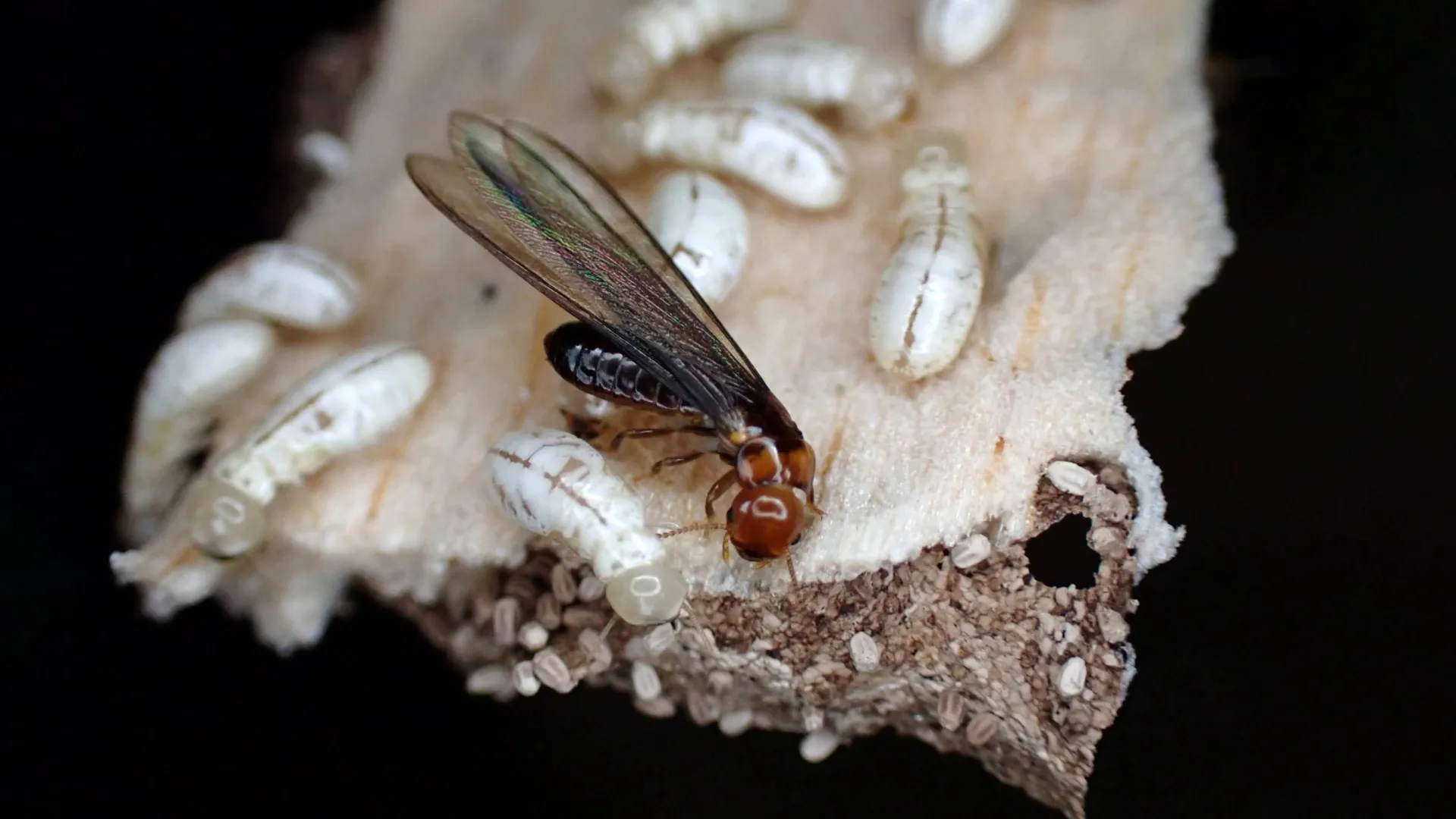
Scientists at the University of California, Riverside have identified a biological vulnerability in western drywood termites that could offer a new approach to pest control. The research, published in 2025 in the Journal of Economic Entomology, focuses on bistrifluron, an insect growth regulator that interferes with chitin synthesis, a critical component of insect exoskeletons.
Unlike conventional fast-acting pesticides, bistrifluron works by disrupting the production of chitin needed for new exoskeletons during the molting process. Drywood termites molt approximately seven times during their lifespans and cannot avoid this process. When exposed to bistrifluron, termites cannot successfully complete their molt and subsequently die. In controlled laboratory settings, the chemical achieved 95.7 percent mortality when termites could choose between treated and untreated wood, and approximately 99 percent mortality under continuous exposure conditions.
A particularly notable finding concerns how termites distribute the chemical through their colonies. Termites engage in proctodeal trophallaxis, a feeding behavior where they exchange food and materials from their hindguts. When researchers exposed only five percent of a termite group to bistrifluron, the chemical spread through social interactions, eventually resulting in 100 percent mortality within 90 days. This social transmission mechanism could allow localized applications to eliminate entire concealed colonies without exposing the entire colony to direct treatment.
Researchers determined that bistrifluron is safer for humans and mammals than traditional termite treatments because it specifically targets insect biology. The chemical works slowly, allowing exposed termites time to interact with nestmates before dying, which facilitates the spread of the substance throughout hidden colonies. This delayed action contrasts with immediate-acting poisons that kill exposed termites before they can transfer material to untreated colony members.
The findings suggest bistrifluron could offer homeowners an alternative to whole-structure fumigation for localized drywood termite infestations. Traditional fumigation requires residents to evacuate, disrupts households, and provides no lasting protection against future infestations. A spot-treatment approach using chitin synthesis inhibitors could provide effective control with minimal disruption and environmental impact.
Article Attribution | Read More at Article Source
Article summary produced by Claude AI