

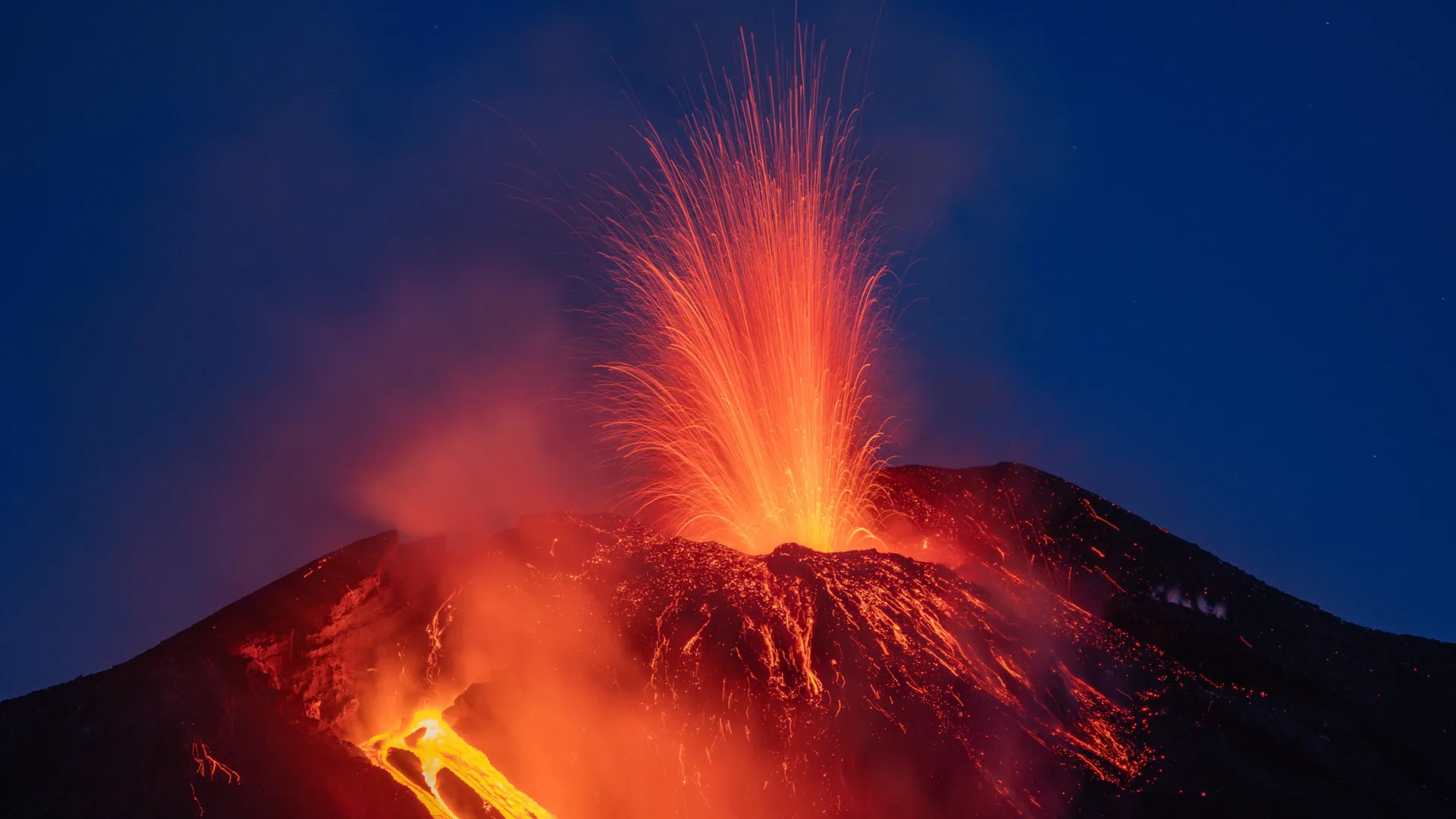
A research team from Cornell University has documented significant variations in how magma travels to the surface at Mount Etna in Italy, according to findings published in Geochemistry, Geophysics, Geosystems. By reconstructing two major eruptions from the volcano’s geological history, scientists determined that magma can follow distinct routes and move at substantially different velocities depending on various underground conditions. These discoveries may enhance scientists’ ability to develop more accurate models for assessing volcanic hazards.
The researchers employed advanced analytical techniques, particularly Raman spectroscopy, to examine microscopic gas bubbles trapped within crystals that formed inside magma chambers. This method enabled them to measure gas density and convert those measurements into estimates of pressure and depth, effectively reconstructing the underground plumbing systems of past eruptions with high precision. The team, led by Esteban Gazel at Cornell University, included collaborators from Columbia University and the University of Hawaii who collected samples directly from Mount Etna.
Analysis of the 122 B.C. eruption revealed that magma began ascending from approximately 22 kilometers below the surface, then slowed considerably and stalled at depths between 2 and 5 kilometers for several weeks before erupting. In contrast, the Fall Stratified event, which occurred nearly 4,000 years ago, demonstrated a markedly different pattern. During that eruption, magma rose rapidly from depths of 24 to 30 kilometers and reached the surface within hours rather than weeks.
The researchers attributed these contrasting behaviors to differences in volatile composition, particularly the balance between carbon dioxide and water. Higher concentrations of carbon dioxide drove rapid magma ascent from greater depths, while higher water content produced slower movement at shallower levels. This finding suggests that the relative abundance of these two gases significantly influences eruption dynamics and explosiveness, with Mount Etna serving as one of few volcanoes globally where both volatile species compete for dominance.
Scientists are now applying these analytical methods to volcanoes in Chile, Hawaii, and other regions to build a more comprehensive understanding of volcanic behavior worldwide. The approach holds potential for improving risk assessment models by determining where magma originates, its ascent velocity, and which gases drive its movement toward the surface.
Article Attribution | Read More at Article Source
Article summary produced by Claude AI