

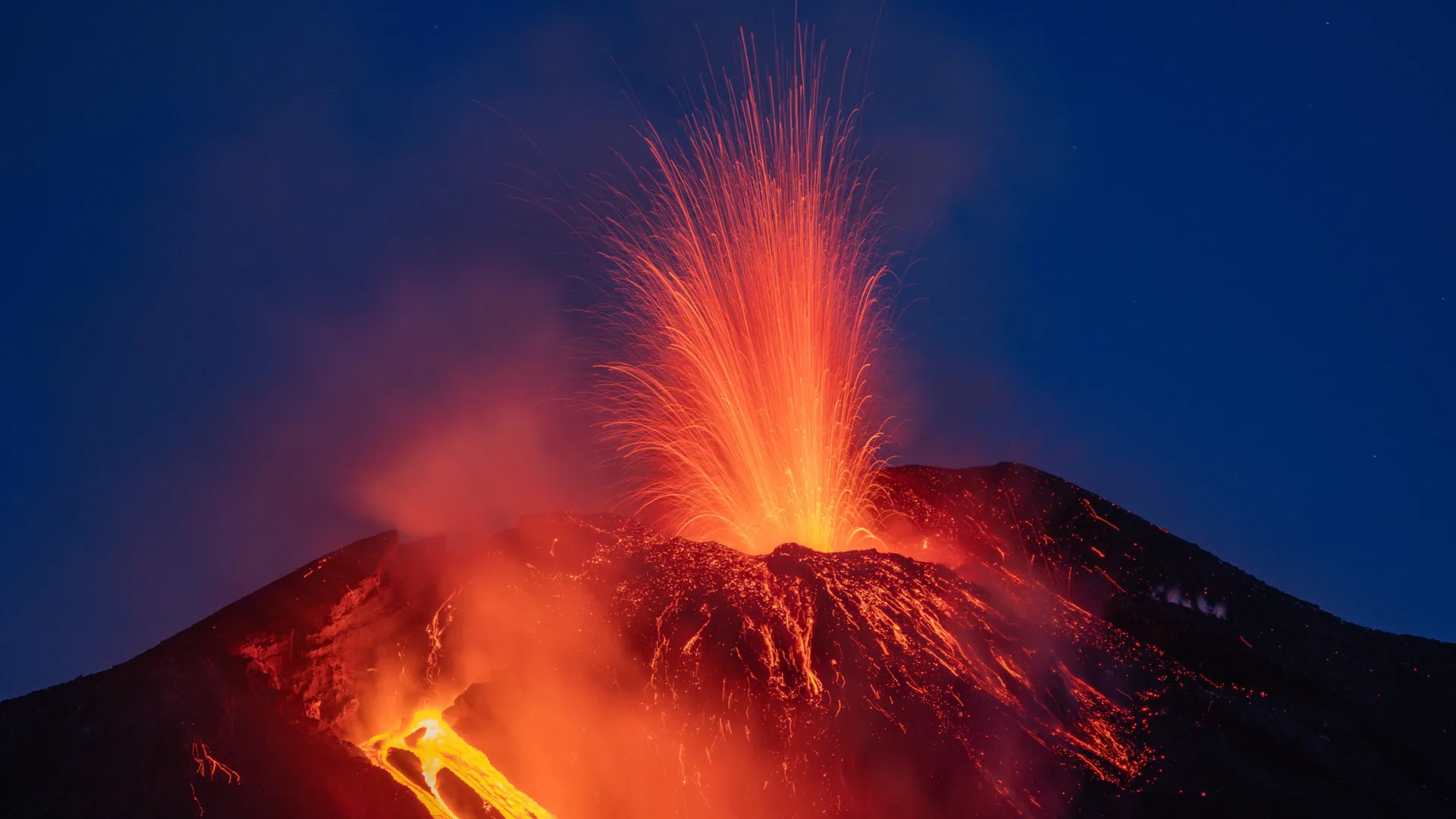
A research team led by Cornell University has identified major differences in how magma traveled to the surface during two distinct eruptions at Mount Etna in Italy, according to findings published in Geochemistry, Geophysics, Geosystems. The study, led by Esteban Gazel of Cornell’s Department of Earth and Atmospheric Sciences, demonstrates that volcanic systems can produce eruptions through substantially different processes, even within a single volcano.
The researchers reconstructed two historical eruptions from Mount Etna’s past using advanced analytical techniques. During an eruption in 122 B.C., magma began rising from approximately 22 kilometers below the surface but moved upward slowly, stalling at a depth of 2 to 5 kilometers for several weeks before the final eruption occurred. In contrast, the Fall Stratified event, which took place nearly 4,000 years ago, followed an entirely different trajectory. In that instance, magma rose rapidly from much deeper in the mantle, beginning at depths of 24 to 30 kilometers, and erupted within just hours.
The key to these findings was a technique using Raman spectroscopy, which allows scientists to examine microscopic gas bubbles trapped within crystals that formed inside magma. By measuring the density of carbon dioxide and water in these tiny bubbles—each only 1 to 10 percent the thickness of a human hair—researchers could reconstruct the underground plumbing systems with unprecedented precision and determine the depth and speed of magma ascent.
The research reveals that the balance between two volcanic volatiles, carbon dioxide and water, strongly influences eruption behavior. Higher concentrations of carbon dioxide drive magma rapidly upward from deep underground, while water becomes more significant when magma spends extended time at shallower depths. Mount Etna is notable among volcanoes worldwide because both volatile species compete there, offering researchers a unique opportunity to study their relative influences.
Gazel’s team plans to apply the same methodology to volcanoes in Chile, Hawaii, and other regions globally. The researchers emphasize that this approach could improve physical models of eruptions that form the foundation of volcanic risk assessment, ultimately helping scientists better estimate hazards posed by future volcanic activity.
Article Attribution | Read More at Article Source
Article summary produced by Claude AI