

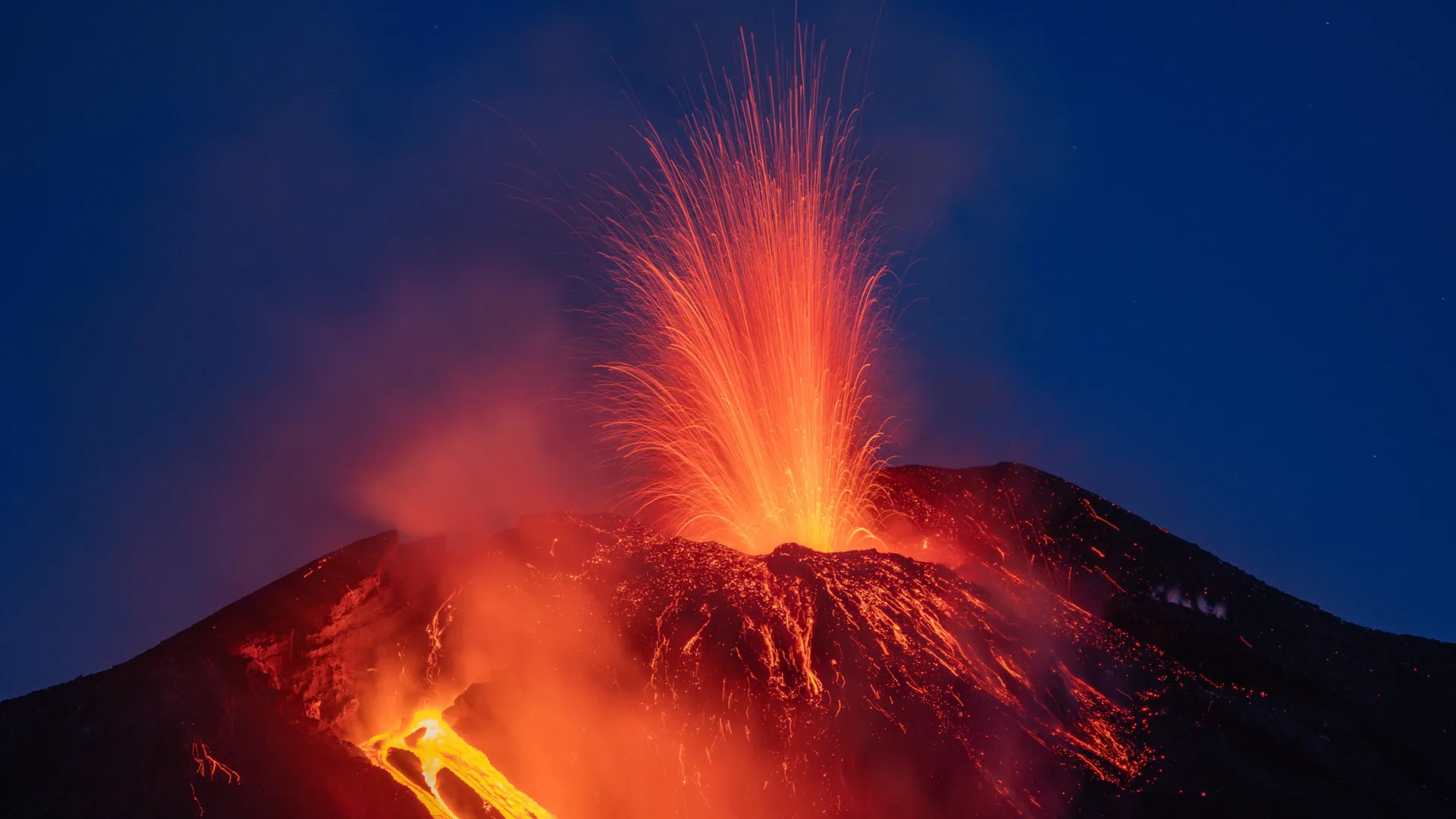
A research team led by Cornell University has published findings demonstrating that Mount Etna’s magma systems can operate through fundamentally different processes, with eruptions occurring at vastly different timescales. The work, authored by former postdoctoral researcher Maxim Gavrilenko under the direction of Esteban Gazel, was recently published in Geochemistry, Geophysics, Geosystems. The researchers employed advanced analytical techniques, including Raman spectroscopy, to examine microscopic gas bubbles trapped within crystals and reconstruct the volcanic plumbing systems with exceptional precision.
The study compared two significant eruptions from Mount Etna’s history. An eruption in 122 B.C. involved magma that began ascending from approximately 22 km depth but moved slowly, stalling at a depth of 2 to 5 km where it remained for several weeks while gradually releasing gas before finally erupting. In contrast, the Fall Stratified event, which occurred nearly 4,000 years ago, followed a dramatically different pattern. Magma in that eruption rose rapidly from depths of 24 to 30 km and reached the surface within hours rather than weeks.
The key difference between the two eruptions appears to be the concentration of volatile gases, particularly carbon dioxide and water. The research revealed that higher concentrations of carbon dioxide drive magma upward rapidly from deep underground, while water becomes more influential when magma spends extended periods at shallower depths. Mount Etna represents one of the few volcanoes globally where these two volatile species compete for dominance in controlling eruption behavior.
The findings have significant implications for volcanic hazard assessment. By determining where magma originates, its ascent rate, and which gases drive its movement, scientists can develop more realistic models of eruption dynamics. Gazel’s team is currently applying similar methodologies to volcanoes in Chile, Hawaii, and other regions worldwide, with the ultimate goal of studying volcanic systems across the planet to improve risk assessment models used in hazard prediction and mitigation efforts.
Article Attribution | Read More at Article Source
Article summary produced by Claude AI