

An international team of physicists has investigated potential connections between quantum collapse models and the fundamental nature of time, with findings published in Physical Review Research. The research was supported by the Foundational Questions Institute and led by Nicola Bortolotti at the Enrico Fermi Museum and Research Centre in Rome.
The study examined two alternative approaches to quantum mechanics that propose wavefunction collapse can occur spontaneously without requiring measurement or observation. These collapse models differ from standard quantum interpretations by predicting physical effects that could theoretically be measured. The researchers analyzed the Diósi-Penrose model, which suggests gravity may cause quantum systems to collapse into definite states, and the Continuous Spontaneous Localization approach. Their analysis established a quantitative relationship between the latter model and gravitational fluctuations in spacetime.
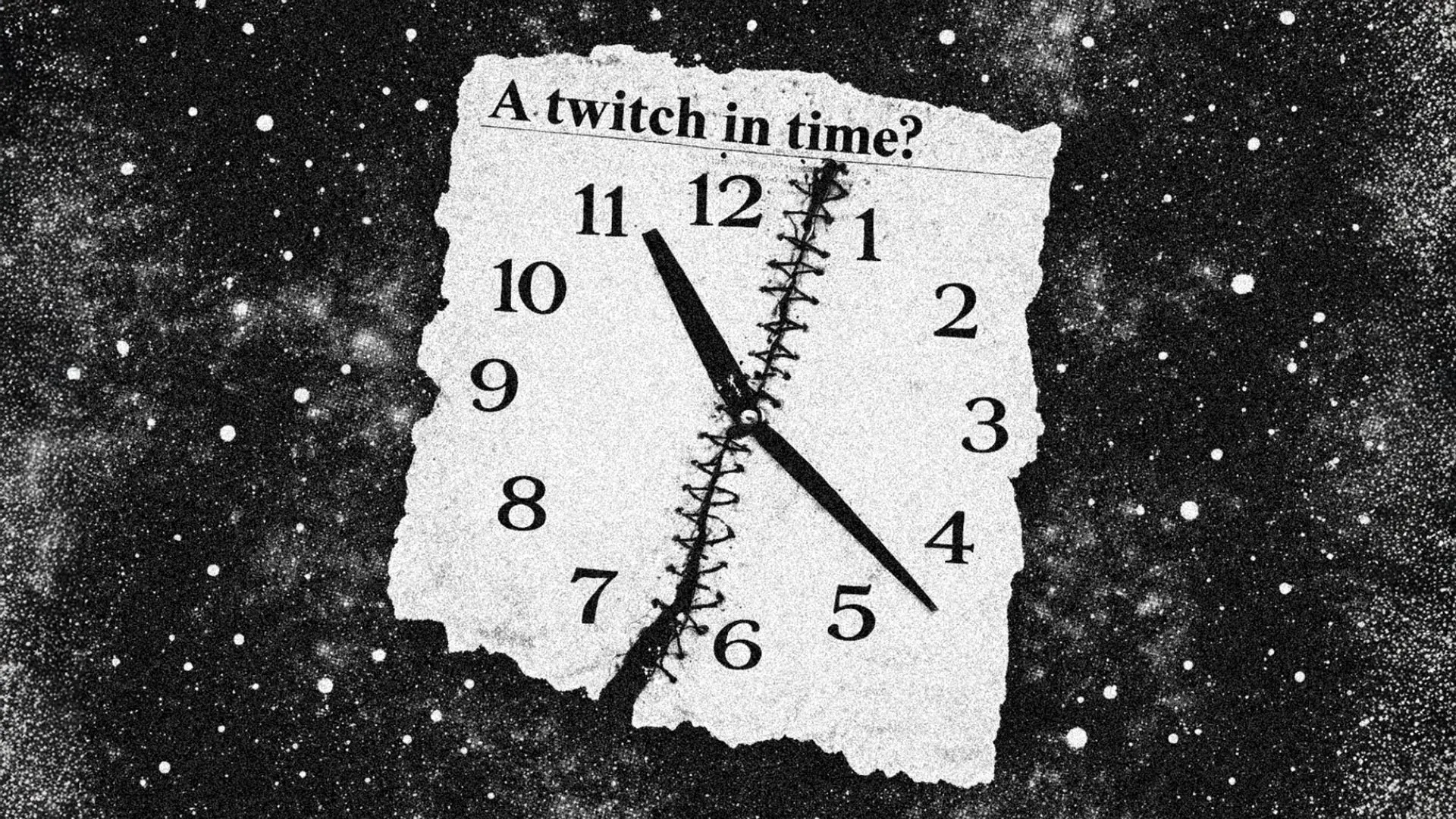
The calculations suggest that if these collapse models accurately describe reality, time itself should contain an extremely small amount of intrinsic uncertainty, implying a fundamental limit to temporal measurement precision. However, this predicted effect is extraordinarily small—many orders of magnitude below what current or foreseeable atomic clock technology could detect. Researchers emphasized that modern timekeeping remains unaffected and that the uncertainty has no practical consequences for everyday applications.
The work addresses a major challenge in modern physics: reconciling quantum mechanics, which successfully describes microscopic systems, with general relativity, which describes gravity and spacetime on larger scales. These theories treat time fundamentally differently, with quantum mechanics viewing it as an external parameter and relativity treating spacetime as a flexible structure responsive to mass and energy. The research suggests collapse models may offer insights into how these disparate frameworks could ultimately be unified into a deeper theory of quantum gravity.
Because collapse models make predictions distinct from standard quantum mechanics, precisely designed experiments could eventually test whether these alternative theories reflect genuine physical phenomena, providing a practical pathway for evaluating unconventional approaches to quantum foundations.
Article Attribution | Read More at Article Source
Article summary produced by Claude AI