

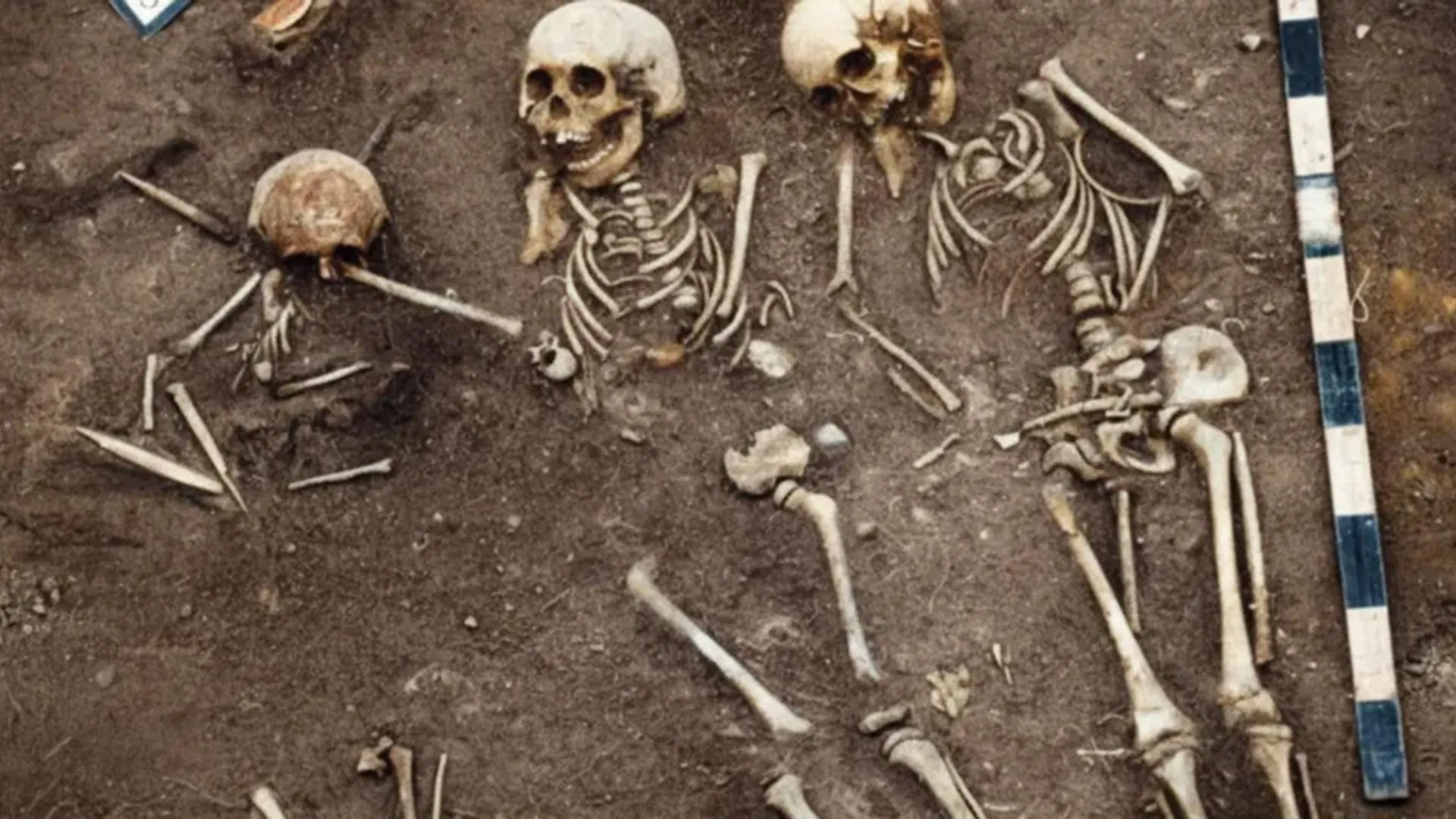
An international research team has identified ancient forms of plague dating back 5,500 years in small, mobile hunter-gatherer populations, according to findings published in Nature. The discovery challenges long-held assumptions about the disease’s lethality in prehistoric times.
The researchers analyzed ancient DNA extracted from human remains at four burial sites in the Lake Baikal region of East Siberia. By sequencing genetic material preserved in teeth, scientists reconstructed ancient bacterial genomes and identified early strains of Yersinia pestis, the bacterium responsible for plague. Testing revealed that nearly 40 percent of the 46 individuals examined carried plague DNA—a detection rate exceeding even some medieval burial sites.
A notable pattern emerged at the two largest cemetery sites: an unusually high proportion of children and young teenagers among those who had died within a short timeframe. Radiocarbon dating indicated many deaths occurred close together in time, with evidence suggesting siblings and family groups may have perished during the same outbreak. This clustering of young victims had puzzled archaeologists for decades until the genetic evidence provided an explanation.
The ancient plague strains possessed genetic features previously thought absent in early forms of the disease. Specifically, researchers identified a distinctive superantigen—a toxin-producing genetic factor not observed in later historic plague strains. Such superantigens can trigger intense immune responses, potentially causing severe inflammation and increased infection severity. The presence of these virulence factors suggests early plague may have been comparably deadly to later historical epidemics, particularly for children, despite lacking the efficient flea-based transmission mechanisms associated with subsequent outbreaks.
The research supports the theory that plague originated in Central or North-East Asia before spreading through wild rodent populations across Eurasia. Archaeological evidence indicates the Lake Baikal hunter-gatherers maintained close contact with marmots, large burrowing rodents that continue carrying plague today. This proximity may have facilitated direct transmission from infected animals to humans, demonstrating that plague could generate severe outbreaks in small communities long before urbanization and crowded conditions became factors in disease spread.
Article Attribution | Read More at Article Source
Article summary produced by Claude AI