

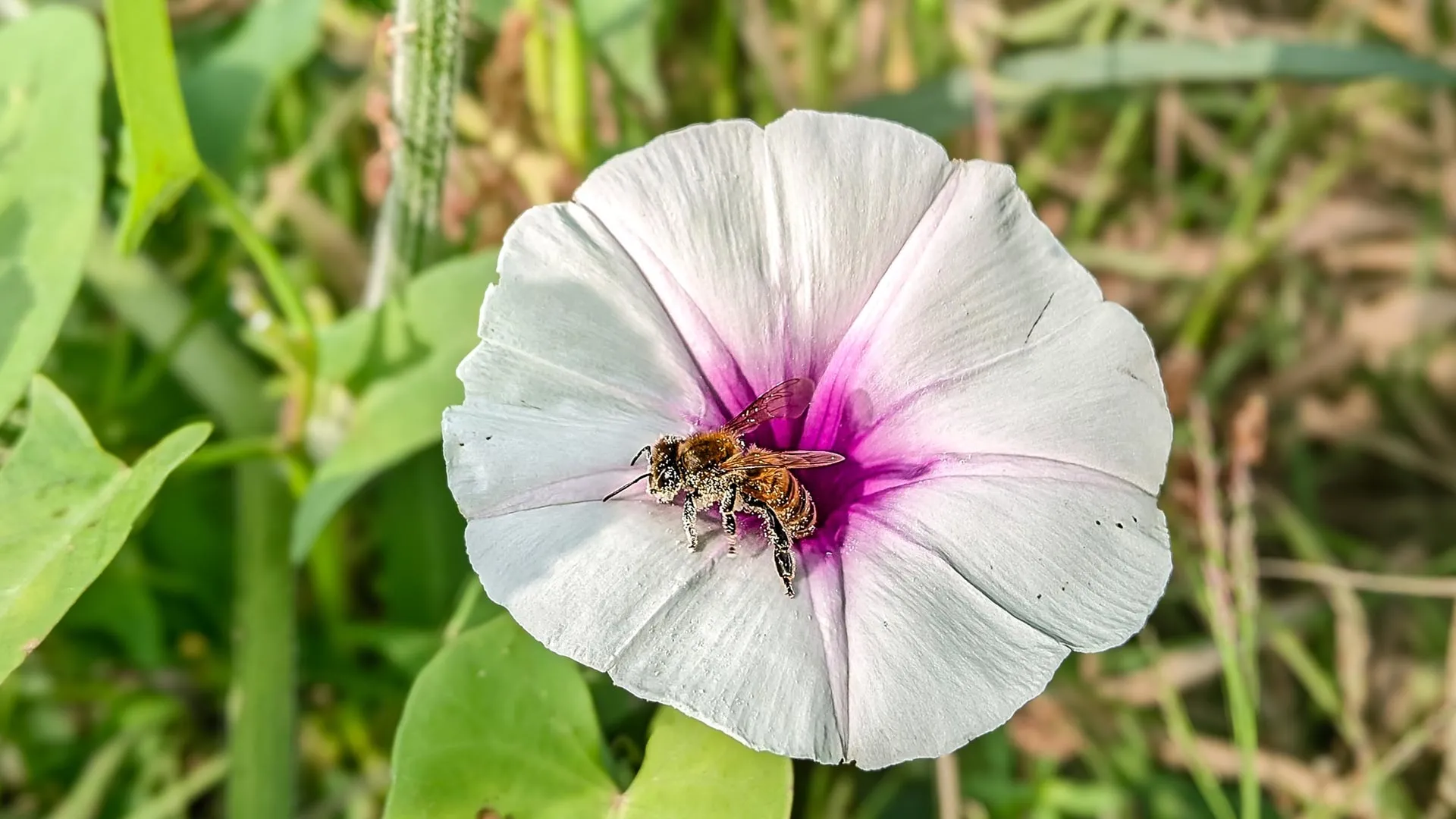
Researchers at the University of Michigan have identified a potential evolutionary dilemma facing plants in a warming world: competing pressures from climate change and pollinator decline may be pushing species in conflicting adaptive directions.
The study, led by recent doctoral graduate Sasha Bishop in collaboration with University of Toronto researcher John Stinchcombe, examined morning glory populations over a nine-year period. By comparing plants grown from seeds collected at two different times, the team measured traits including flowering date, flower size, nectar composition, and flower structure. The results showed a dramatic decline in the population’s overall adaptation rate, falling from approximately 76% of the theoretical maximum to just 9% when accounting for relationships between traits.
The research suggests this slowdown stems from an evolutionary trade-off between two beneficial characteristics. While larger flowers improve pollinator attraction, earlier flowering helps plants respond to changing climate conditions. Over the study period, these traits became increasingly linked in the morning glory population, with selection favoring larger flowers at the expense of flowering time flexibility. This constraint on adaptation occurred despite the population maintaining substantial genetic diversity that should theoretically support continued evolution.
The findings have broader implications for understanding how human-caused environmental changes shape evolution across species. Plants and animals now face multiple simultaneous pressures, including warming temperatures, habitat loss from development, and pollinator decline from agricultural pesticide use. Bishop noted a growing gap between evolutionary theory, which suggests organisms can adapt rapidly to quick environmental changes, and real-world observations showing many wild populations declining or experiencing genetic bottlenecks instead.
For agriculture, the implications of this research remain uncertain. Morning glories are often problematic weeds for farmers, and the evolutionary constraints identified could either increase or decrease their agricultural impact. The study, published in Evolution Letters, underscores how rapid environmental change is creating complex evolutionary pressures that may ultimately limit many species’ ability to survive changing conditions.
Article Attribution | Read More at Article Source
Article summary produced by Claude AI