

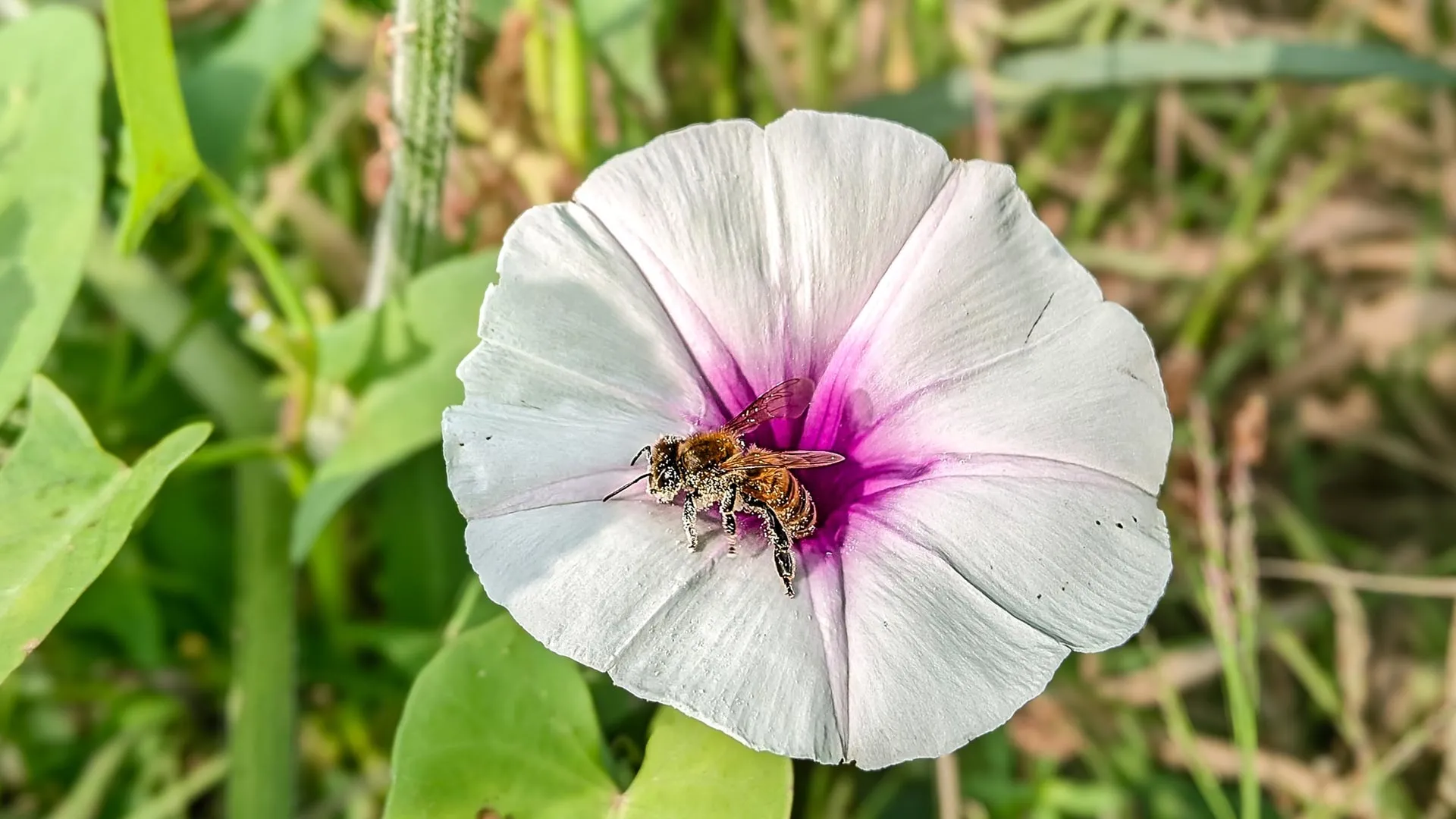
Researchers at the University of Michigan have identified a conflict in plant evolution that may hinder adaptation to climate change. As pollinators decline due to human activities, plants face competing evolutionary pressures: the need to attract the remaining pollinators through larger flowers and the need to adapt to warming temperatures by flowering at different times.
The study focused on morning glory plants, examining populations sampled nine years apart. Researchers measured traits including flowering time, flower size, nectar composition, and floral structure. They found that flower size and flowering time became increasingly linked over the study period, creating what scientists call covariance between traits.
This linkage had dramatic effects on the plants’ overall ability to adapt. The population’s adaptation rate fell from approximately 76 percent of the expected rate to roughly 9 percent over nine years—a 96 percent decline. Flowering time is considered particularly important for climate adaptation, as plants can adjust bloom timing in response to temperature and precipitation changes.
Researchers note that despite this evolutionary slowdown, the morning glory populations retained substantial genetic diversity. The constraint appears to stem not from a lack of genetic material but rather from the plants becoming locked into an evolutionary trajectory favored by pollinator attraction. The research, published in Evolution Letters, highlights a broader mismatch between evolutionary theory and what scientists observe in wild populations facing multiple human-caused environmental pressures simultaneously.
The findings carry implications beyond basic science, as morning glory is often considered a problematic weed in agriculture, and the unpredictable effects of these evolutionary changes on farming remain uncertain.
Article Attribution | Read More at Article Source
Article summary produced by Claude AI