

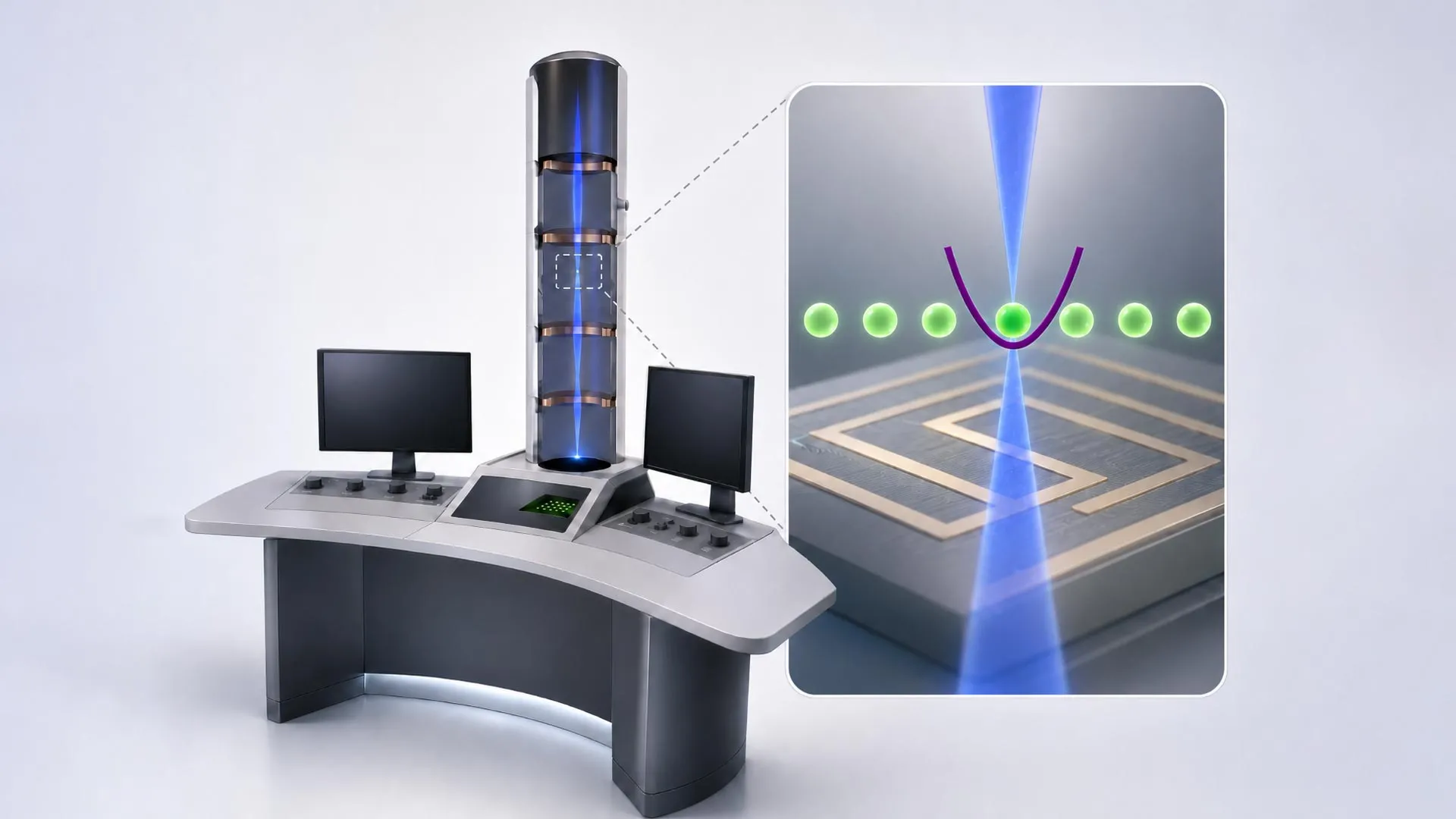
Scientists at TU Wien and collaborating Austrian universities are developing an innovative approach to electron microscopy by integrating quantum computing technology into the imaging system. The initiative aims to address limitations in conventional electron microscopes, which capture only basic information from the electrons used to generate images.
In standard electron microscopy, researchers primarily count electrons to construct visual representations of microscopic structures. However, each electron also carries quantum information that remains unexploited in traditional systems. The research team proposes connecting an electron microscope to a quantum computer based on trapped ions to access this additional quantum data. By extracting and processing previously unused quantum information, the system could potentially generate higher-quality images while exposing samples to fewer electrons.
The quantum-based approach leverages quantum entanglement, a phenomenon in which two quantum systems share information in ways that have no direct classical physics equivalent. When electrons pass through the microscope, they can become entangled with ions held in the quantum computer, allowing information about each electron to be stored and processed by the quantum system. Through carefully designed quantum operations, data from multiple electrons can be combined optimally to produce strong signals despite using comparatively few electrons.
This methodology is particularly valuable for biological materials and delicate samples that can be damaged by excessive electron exposure, such as individual proteins. The team has already demonstrated mathematically that the approach should provide significant advantages. A prototype quantum computer electron microscope is currently under construction at TU Wien’s University Service Center for Transmission Electron Microscopy, with the quantum computer component developed by researchers at the University of Innsbruck.
The consortium, coordinated by the University of Vienna, receives major funding from the Austrian Science Fund through the quantA Cluster of Excellence and the Gordon and Betty Moore Foundation. Researchers anticipate that successful experimental validation could establish an entirely new framework for electron microscopy research.
Article Attribution | Read More at Article Source
Article summary produced by Claude AI