

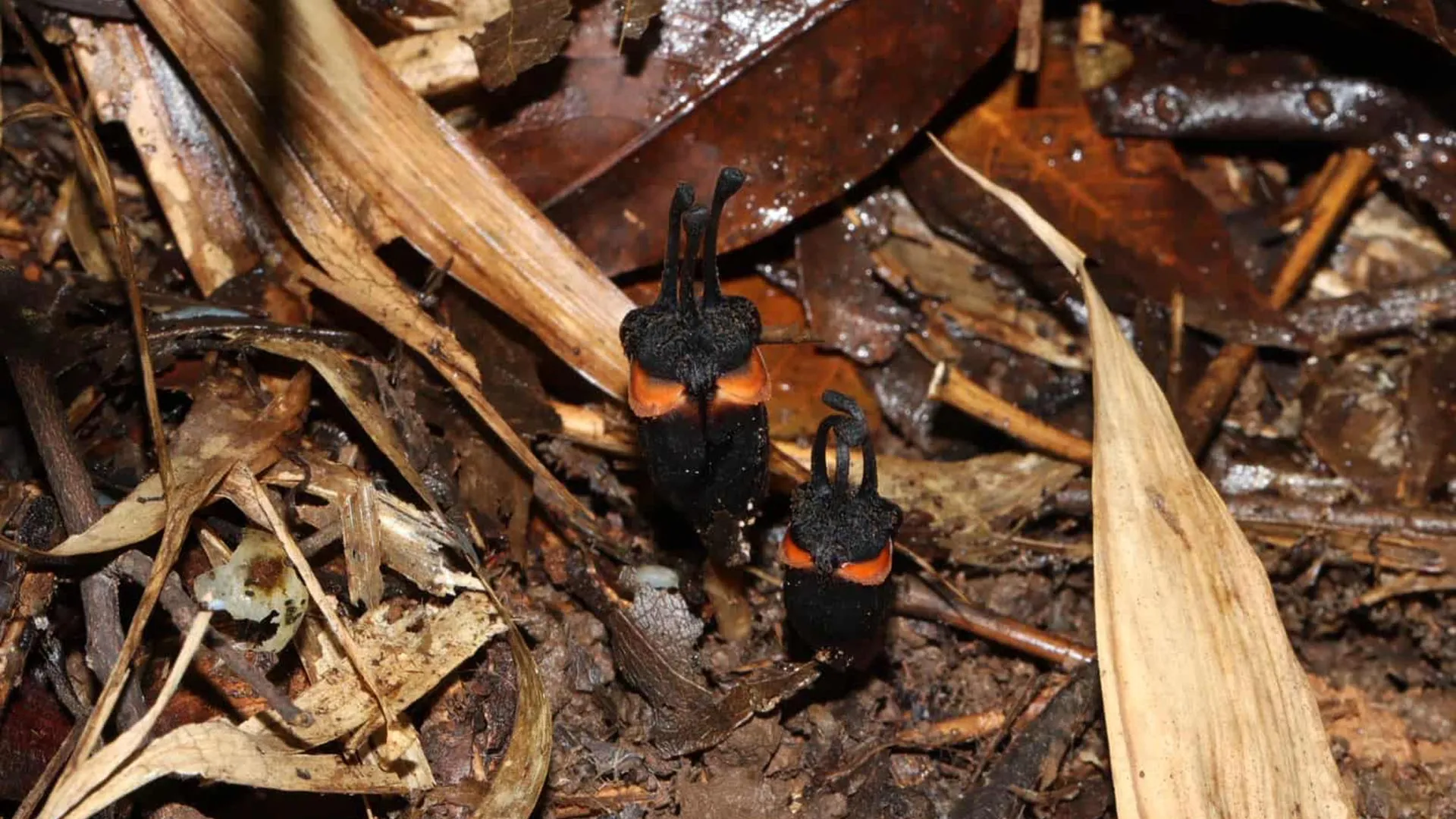
Botanists from Chulalongkorn University and Prince of Songkla University have identified a previously unknown species of flowering plant in Thong Pha Phum National Park in western Thailand. The plant, scientifically designated Thismia daemona and colloquially called the “devil flower,” represents a significant addition to the botanical record and extends the known geographic range of an entire plant section.
Thismia daemona belongs to a genus of tiny, leafless plants that lack chlorophyll and do not perform photosynthesis. Instead, these species obtain nutrients through symbiotic relationships with underground fungi and spend virtually their entire lifecycles hidden beneath layers of forest litter. The discovery of this species in Thailand is particularly noteworthy because it was found at an elevation of nearly 1,000 meters in a seasonally dry montane evergreen forest—conditions atypical for members of the genus, which are customarily found in humid lowland rainforests. The finding extends the known distribution of the entire section Geomitra north from its previously documented range in Peninsular Malaysia, Borneo, and Sumatra.
The species earned its distinctive common name from its unusual morphology. The flower displays predominantly black coloration topped with horn-like projections extending from a dome-shaped structure, while bright reddish-orange patches positioned near the base resemble luminous eyes, creating an overall demon-like appearance that team members felt aptly characterized the plant’s enigmatic and mysterious nature.
Conservation concerns surround the newly identified species, as scientists are aware of only one population consisting of fewer than 50 individual plants occupying an area smaller than a football field. Due to the extremely limited known population, the species has received a provisional assessment of Critically Endangered status. An additional conservation challenge stems from the location of the habitat within a national park that experiences considerable tourist activity. Researchers emphasize that engaging local communities in conservation efforts through sustainable, community-led ecotourism initiatives aligned with UNESCO Man and the Biosphere principles may be essential for protecting both the species and its fragile microhabitat. The research appeared in PhytoKeys, and Thailand’s count of known Thismia species now totals sixteen.
Article Attribution | Read More at Article Source
Article summary produced by Claude AI