

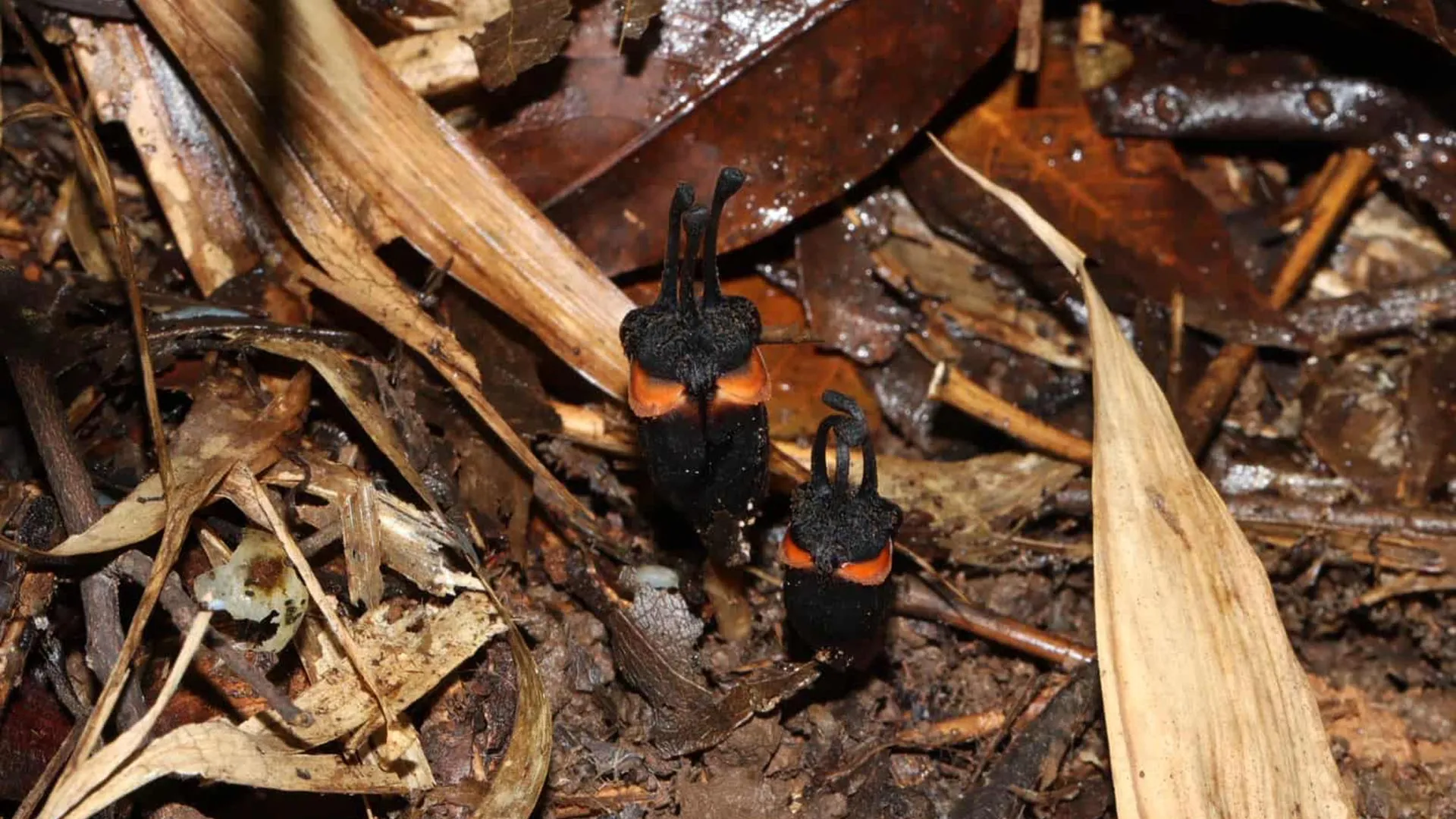
Botanists from Chulalongkorn University and Prince of Songkla University have identified a previously unknown flowering plant species in Thong Pha Phum National Park in western Thailand. The plant, named Thismia daemona, belongs to a genus of small species commonly referred to as “fairy lanterns” and represents a significant addition to the botanical record of the region.
Thismia daemona is a leafless plant that lacks chlorophyll and does not perform photosynthesis. Instead, it derives its nutrients from underground fungi and spends virtually its entire life cycle hidden beneath layers of leaf litter on the forest floor. The discovery was made at an elevation of nearly 1,000 meters in a seasonal montane evergreen forest environment, which represents an unusually high and dry habitat for members of this genus. Thismia species are typically found in perennially humid lowland rainforests, making this discovery unexpected and scientifically significant.
The plant’s distinctive appearance led to its dramatic common name. The flower is predominantly black and features horn-like structures protruding from a dome-shaped crown. Bright reddish-orange patches located near the base of the flower resemble glowing eyes, contributing to its demon-like visual character. Researchers noted that combined with the plant’s hidden, subterranean lifestyle, these characteristics made the “devil flower” designation an appropriate reflection of its enigmatic nature.
The discovery also expands the known geographic distribution of Thismia section Geomitra, which had previously been documented only in Peninsular Malaysia, Borneo, and Sumatra. This finding marks the first time the section has been identified in Thailand, extending its range significantly northward. However, conservation concerns have emerged, as fewer than 50 individuals are known to exist in a single population occupying an area smaller than a football field. The species has been provisionally assessed as Critically Endangered, with particular concern that its habitat lies within a national park experiencing substantial tourist traffic. Conservation specialists have proposed community-based approaches aligned with UNESCO’s Man and the Biosphere concept to protect the species and its microhabitat. The research was published in PhytoKeys, bringing Thailand’s known Thismia species total to sixteen.
Article Attribution | Read More at Article Source
Article summary produced by Claude AI