

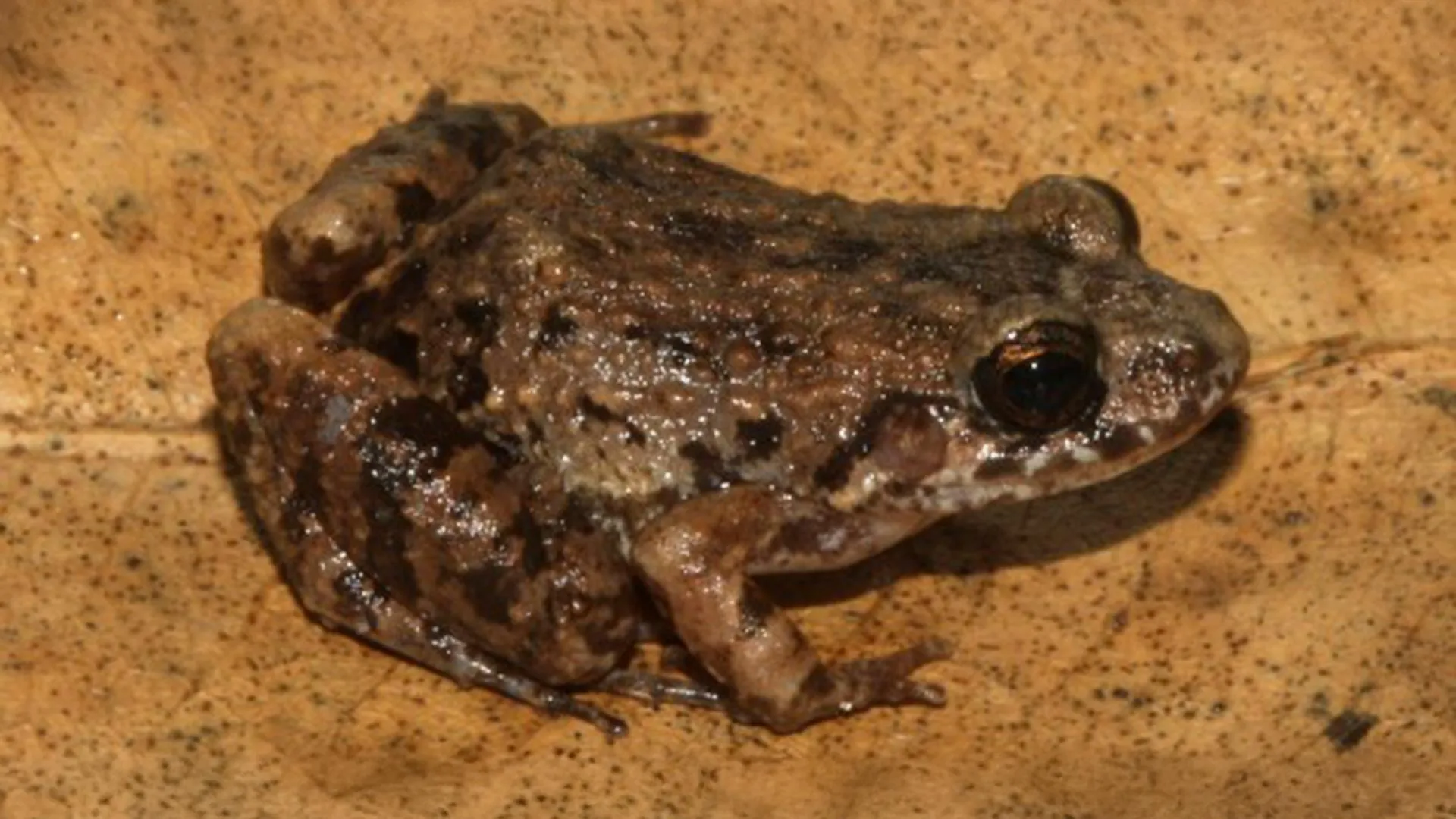
Researchers have described a new frog species living in the western Amazon rainforest, formally naming it Adenomera varcena. The discovery emerged from field expeditions conducted in the Upper Juruá River region of western Acre, where scientists surveyed forest fragments near the Moa and Crôa rivers close to Cruzeiro do Sul. The research team included professors from São Paulo State University and the Federal University of Minas Gerais, both affiliated with the Center for Research on Biodiversity Dynamics and Climate Change.
Identifying the species required comprehensive analysis beyond visual inspection. Scientists compared genetic data, acoustic recordings of mating calls, body morphology, habitat characteristics, and museum specimens to confirm Adenomera varcena as a distinct species. The name references the varcena ecosystem—seasonally flooded Amazonian forests that become submerged periodically. This habitat association represents a notable departure from typical patterns, as members of the Adenomera genus are usually found in dryland forests rather than floodplain environments.
Although Adenomera varcena resembles related frog species closely, distinctive features distinguish it from congeners. These include the absence of a dark spot on the underside of the forearm and a characteristically slow, short mating call with specific acoustic properties. The discovery exemplifies cryptic diversity, wherein organisms appearing nearly identical externally may actually represent separate species. Researchers note that numerous Adenomera lineages remain formally undescribed, indicating substantial work ahead in documenting amphibian diversity across the Amazon.
The species’ dependence on seasonally flooded forest ecosystems creates potential vulnerability to environmental change. Climate patterns that alter flooding dynamics could affect reproductive behavior, though researchers currently lack detailed ecological data about the species’ life history to assess the magnitude of such impacts. The formal description of Adenomera varcena underscores broader conservation challenges, as undocumented species remain absent from threatened species lists and legal protections. Scientists emphasize that taxonomy serves essential conservation functions, enabling species recognition that facilitates protective measures and extinction risk assessments while ecosystem destruction continues to accelerate.
Article Attribution | Read More at Article Source
Article summary produced by Claude AI