

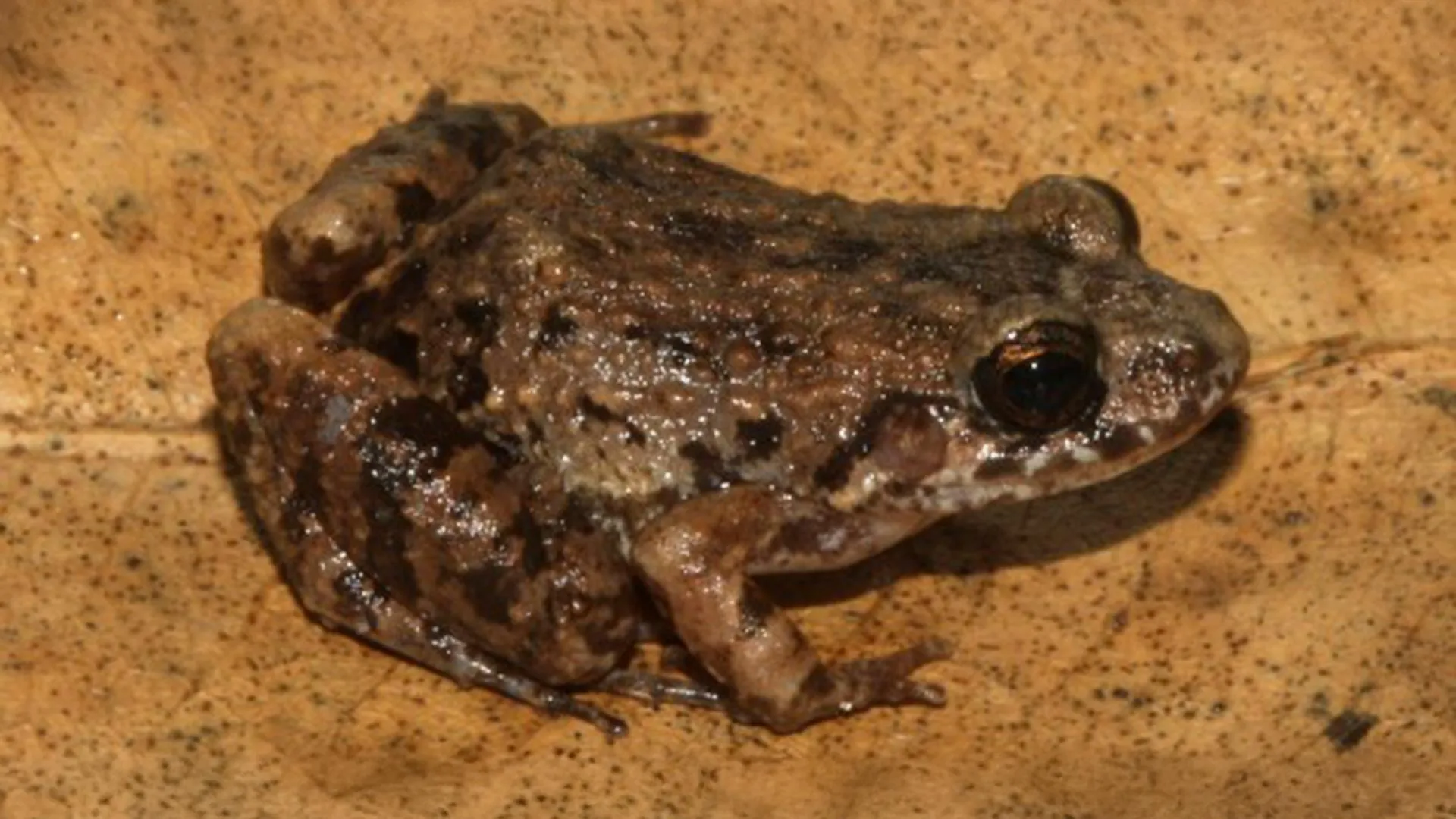
Researchers have formally described a new frog species dwelling in seasonally flooded forests of the western Amazon region. The species, designated Adenomera varcena, was discovered during field expeditions in the Upper Juruá River area of western Acre, near the Moa and Crôa rivers close to Cruzeiro do Sul.
Identifying the frog as a distinct species required examination of multiple characteristics beyond visual inspection. The research team, led by scientists from Brazilian institutions including São Paulo State University and the Federal University of Minas Gerais, compared genetic data, acoustic recordings of mating calls, body morphology, habitat information, and preserved specimens. The frog exhibits physical features distinguishing it from related species, including the absence of a dark spot on its forearm underside, and produces distinctive vocalizations during mating that differ from closely related frogs.
The discovery exemplifies the phenomenon of cryptic diversity, wherein organisms that appear visually similar represent separate species. The finding also reveals an unusual habitat association for the genus Adenomera, as members typically inhabit dryland forests rather than the seasonally inundated floodplain ecosystems where this species was found. The name varcena specifically references these Amazonian floodplain forests that undergo periodic submersion.
Researchers acknowledge substantial uncertainty regarding how environmental changes could impact the species. Because Adenomera varcena appears dependent on the specific flooding dynamics of its floodplain habitat, alterations to seasonal flooding patterns could potentially affect reproductive behavior, though the extent remains unknown. Scientists involved in the research emphasize that formal species descriptions serve critical conservation functions, as undocumented species may be excluded from threatened species lists and environmental protections. They note that ecosystem destruction currently outpaces the capacity for taxonomic documentation, creating urgency for comprehensive biodiversity cataloging before species become extinct without formal scientific recognition.
Article Attribution | Read More at Article Source
Article summary produced by Claude AI