

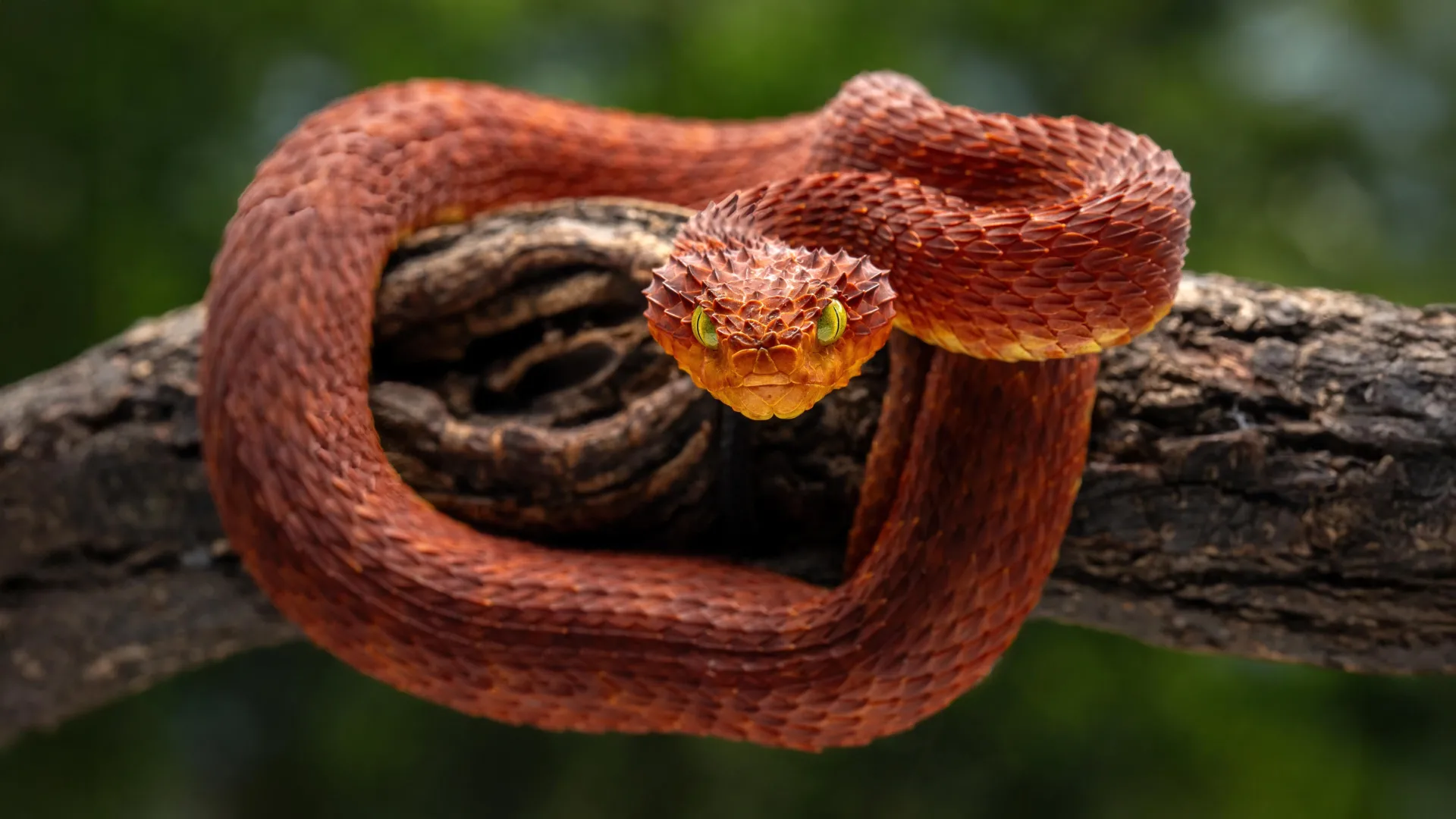
University of Maryland scientists have discovered a new approach to treating venomous snakebites by utilizing proteins naturally present in rattlesnake blood. The research, led by Distinguished University Professor Sean B. Carroll and published in the Proceedings of the National Academy of Sciences, leverages the toxin-blocking proteins that rattlesnakes evolved to protect themselves from venom. The findings suggest a path toward developing more effective antivenoms for a global health challenge.
Snakebite remains one of the world’s most neglected tropical diseases, with the World Health Organization estimating that venomous snakes cause between 80,000 and 140,000 deaths annually, while hundreds of thousands of survivors experience permanent disabilities. Current antivenoms, typically produced by exposing animals to snake venom and collecting resulting antibodies, have significant limitations including variable quality and effectiveness, high manufacturing costs, and potential serious immune reactions in patients. Many people in rural areas where snakebites are most prevalent lack access to effective treatment options.
Previous research conducted in 2022 identified a protein called FETUA-3 in western diamondback rattlesnake blood that could block metalloproteinase toxins found in rattlesnake and other snake species’ venoms. The new study examined how individual FETUA proteins contribute to venom resistance, finding that while each protein could counter specific venom effects, none alone could prevent death from a bite. However, when researchers combined multiple FETUA proteins, protection increased dramatically, with optimized combinations proving approximately 10 times more potent than current sheep-derived rattlesnake antivenom in laboratory experiments.
The complexity of snake venom presents significant research challenges, as individual venoms contain around 100 toxin proteins from multiple families, with composition varying between species. The research team, which included collaborators from Texas A&M University-Kingsville, demonstrated that their protein combinations completely neutralized lethal effects of rattlesnake venom and provided broad protection against venom from multiple viper species. Carroll’s team is expanding this approach to target other toxin families beyond metalloproteinases.
Researchers anticipate that nature-based, recombinant antivenoms could become commercially viable in the near term, potentially first appearing in veterinary medicine before human applications. Such treatments could offer wider protection against multiple venoms while being safer, less expensive, and easier to manufacture at scale than many current options.
Article Attribution | Read More at Article Source
Article summary produced by Claude AI