

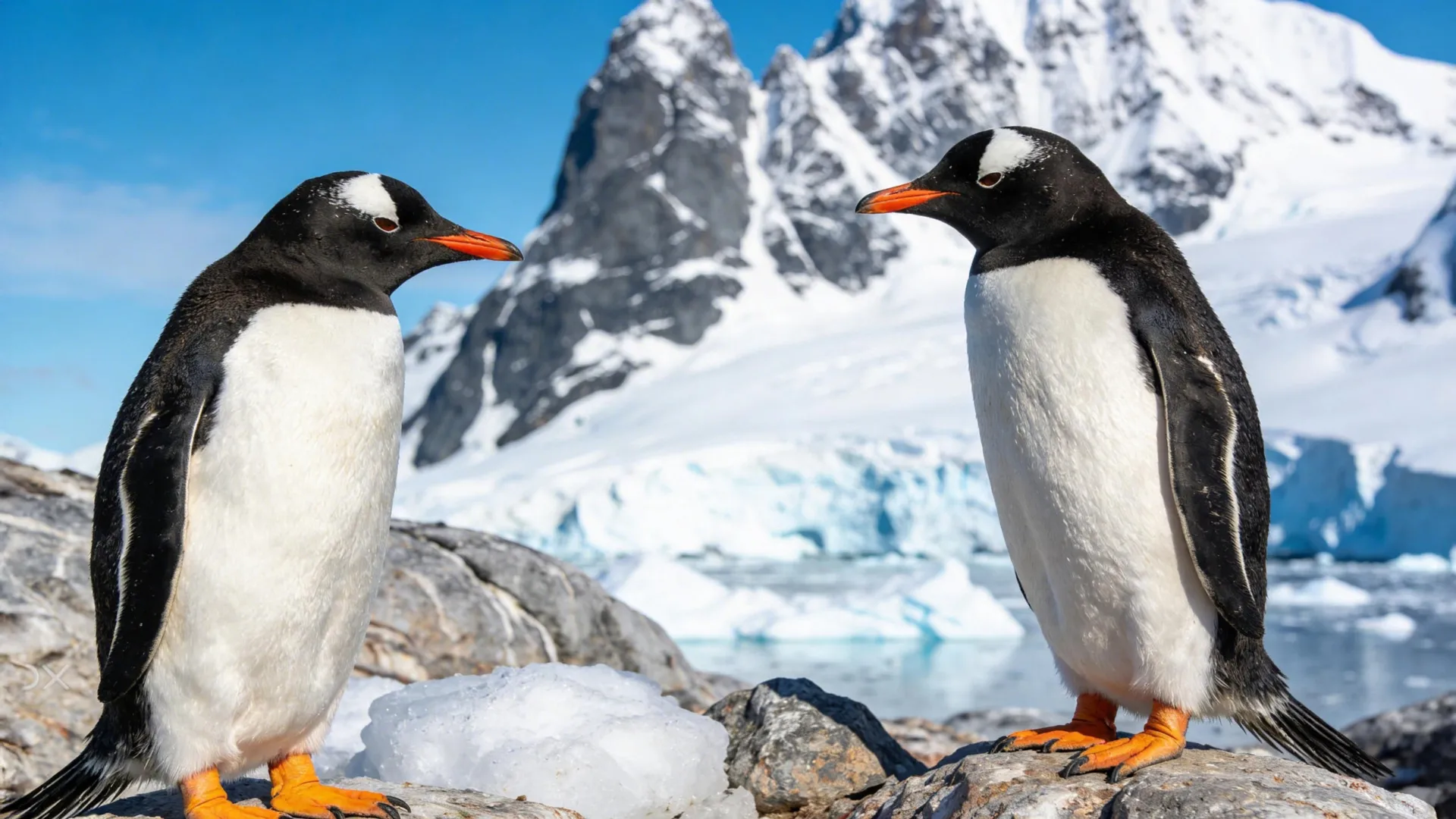
An international research team has formally recognized a previously unknown penguin species living on the Kerguelen Islands in the Southern Ocean, representing the first new penguin species to be identified in more than a century. The discovery emerged from genetic analysis revealing that what scientists had long treated as a single, widely distributed gentoo penguin species actually comprises four genetically distinct species. The newly recognized southeastern gentoo penguin, designated Pygoscelis kerguelensis, lives on the isolated Kerguelen Islands, nearly 2,000 miles from any permanently inhabited landmass.
The research, led by scientists from Chile and the University of California, Berkeley, relied on whole-genome sequencing of 64 penguins collected from 10 breeding colonies across nearly the entire geographic range of gentoo populations. The team combined genetic evidence with analysis of physical characteristics, vocalizations, breeding schedules, diet, and feeding behavior. Apart from subtle differences in body size and calls, the newly identified species closely resembles other gentoo penguins, exhibiting the characteristic white underside and black back. This resemblance places it in the category of “cryptic species,” organisms that appear similar to related species despite significant genetic differences.
The research also reclassified three gentoo populations previously designated as subspecies into full species status. The findings help resolve a century-long scientific debate over gentoo penguin classification, during which researchers had proposed anywhere from two to six subspecies with no universal agreement. The four newly defined gentoo species evolved during the past 300,000 to 500,000 years, with geographic isolation and the Antarctic Polar Front playing major roles in their divergence.
Conservation concerns surround the findings, as three of the four newly recognized gentoo species inhabit the sub-Antarctic region and face potential vulnerability to climate change. The gentoo’s flexible diet, which allows the birds to consume fish, krill, squid, and cuttlefish rather than relying heavily on a single prey species, likely contributed to their speciation and may provide advantages as environmental conditions shift. This dietary flexibility distinguishes gentoos from some penguin relatives, such as Emperors and Adélies, which are experiencing population declines in certain regions.
Article Attribution | Read More at Article Source
Article summary produced by Claude AI