

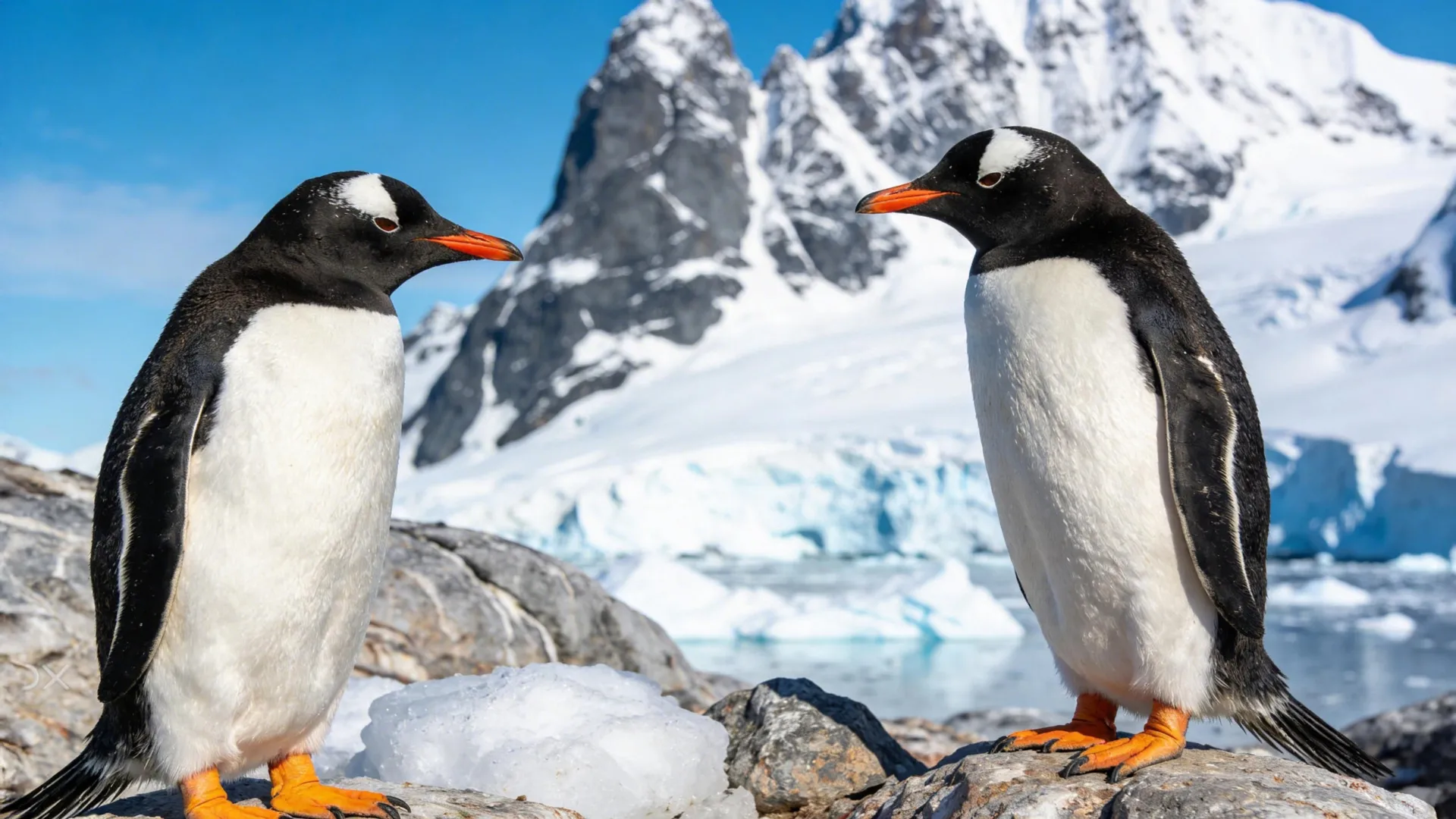
Scientists have identified what was previously an unrecognized gentoo penguin population as a distinct species, representing the first new penguin species to be formally named in more than a century. The population inhabits the Kerguelen Islands, located nearly 2,000 miles from any permanently inhabited landmass in the Southern Hemisphere. The discovery was made by an international research team led by scientists from Chile and the University of California, Berkeley, with findings published in Communications Biology.
Genetic analysis revealed that what was once considered a single, widely distributed gentoo penguin species actually comprises four separate species. The newly recognized southeastern gentoo penguin, designated Pygoscelis kerguelensis, visually resembles other gentoo species with their characteristic white undersides and black backs, but exhibits significant genetic differences that classify it as a cryptic species. In addition to identifying the previously unknown species, researchers determined that three gentoo populations previously classified as subspecies are genetically distinct enough to warrant recognition as full species. The four newly defined species include the eastern, northern, southeastern, and southern lineages, each inhabiting distinct geographic regions across the sub-Antarctic and Antarctic areas.
The research builds on over a century of scientific debate regarding gentoo penguin classification, during which various researchers proposed as many as six different subspecies without reaching consensus. The current study resolved these disagreements through whole-genome sequencing of 64 penguins collected from 10 breeding colonies, supplemented by analysis of physical and behavioral characteristics including coloration, vocalizations, breeding schedules, and feeding patterns. This comprehensive approach covered nearly the entire geographic range of gentoo penguins for the first time.
The gentoo penguin’s dietary flexibility, which allows it to consume fish, krill, squid, and cuttlefish rather than relying on a single prey type, appears to have facilitated speciation. This adaptability permitted populations on isolated islands to remain relatively sedentary, returning to the same breeding sites year after year and becoming increasingly adapted to their local environments over hundreds of thousands of years. Geographic isolation, reinforced by the Antarctic Polar Front—a major oceanic boundary with distinct temperature and salinity characteristics—helped drive genetic differentiation among the populations.
Conservation concerns surround three of the four newly recognized species, as climate change reshapes Antarctic and sub-Antarctic regions. The southern gentoo penguin, the only species living in Antarctica proper, faces relatively less climate-related threat and may even expand its range. However, the three sub-Antarctic species may experience significant impacts, prompting calls for international conservation coordination among the multiple countries governing sub-Antarctic islands.
Article Attribution | Read More at Article Source
Article summary produced by Claude AI