

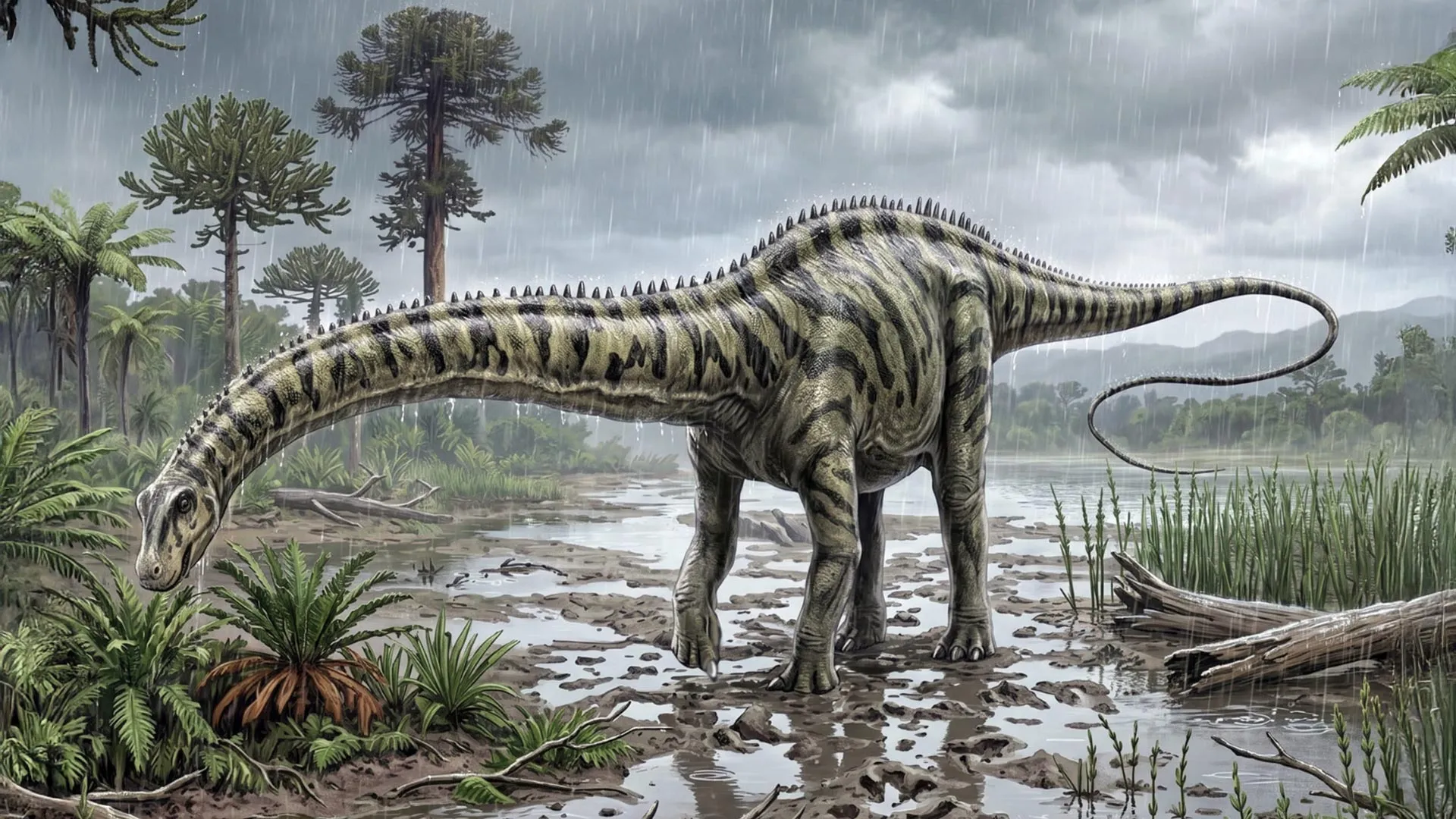
Researchers from the Fundación Conjunto Paleontológico de Teruel-Dinópolis have identified sauropod fossils representing the first confirmed Diplodocus specimen discovered outside of North America. The discovery was made at the La Tejería site in El Castellar, Teruel, Spain, and the findings were published in the peer-reviewed Journal of Vertebrate Paleontology. The excavation yielded 14 well-preserved tail vertebrae and several related bones, constituting one of the most complete diplodocid skeletons ever uncovered in Europe.
Prior to this finding, all confirmed Diplodocus specimens had been located in the Morrison Formation of the western United States. Sergio Sánchez Fenollosa, lead author of the study, described the identification process as involving careful anatomical analysis combined with evolutionary modeling. The research team recognized characteristic features consistent with Diplodocus species through comparative anatomy and phylogenetic analyses, ultimately identifying the specimen as closely related to Diplodocus hallorum.
The Spanish specimen provides significant evidence of animal dispersal between North America and Europe approximately 150 million years ago during the Late Jurassic Period. Scientists propose that temporary land bridges formed when sea levels fell, allowing dinosaur populations to migrate across the proto-Atlantic Ocean. This discovery therefore offers insights into prehistoric biogeographic connections and faunal exchange between the continents during this geological period.
The identified Diplodocus specimen measured approximately 25 meters in length, comparable to its North American counterparts. The fossil joins other giant sauropurs discovered in the Teruel region, including Turiasaurus and Losillasaurus, revealing substantial diversity among sauropod dinosaurs inhabiting Jurassic Iberia. The exceptionally preserved fossils are now housed at the Museo Aragonés de Paleontología at Dinópolis in Teruel for research and public display.
Article Attribution | Read More at Article Source
Article summary produced by Claude AI