

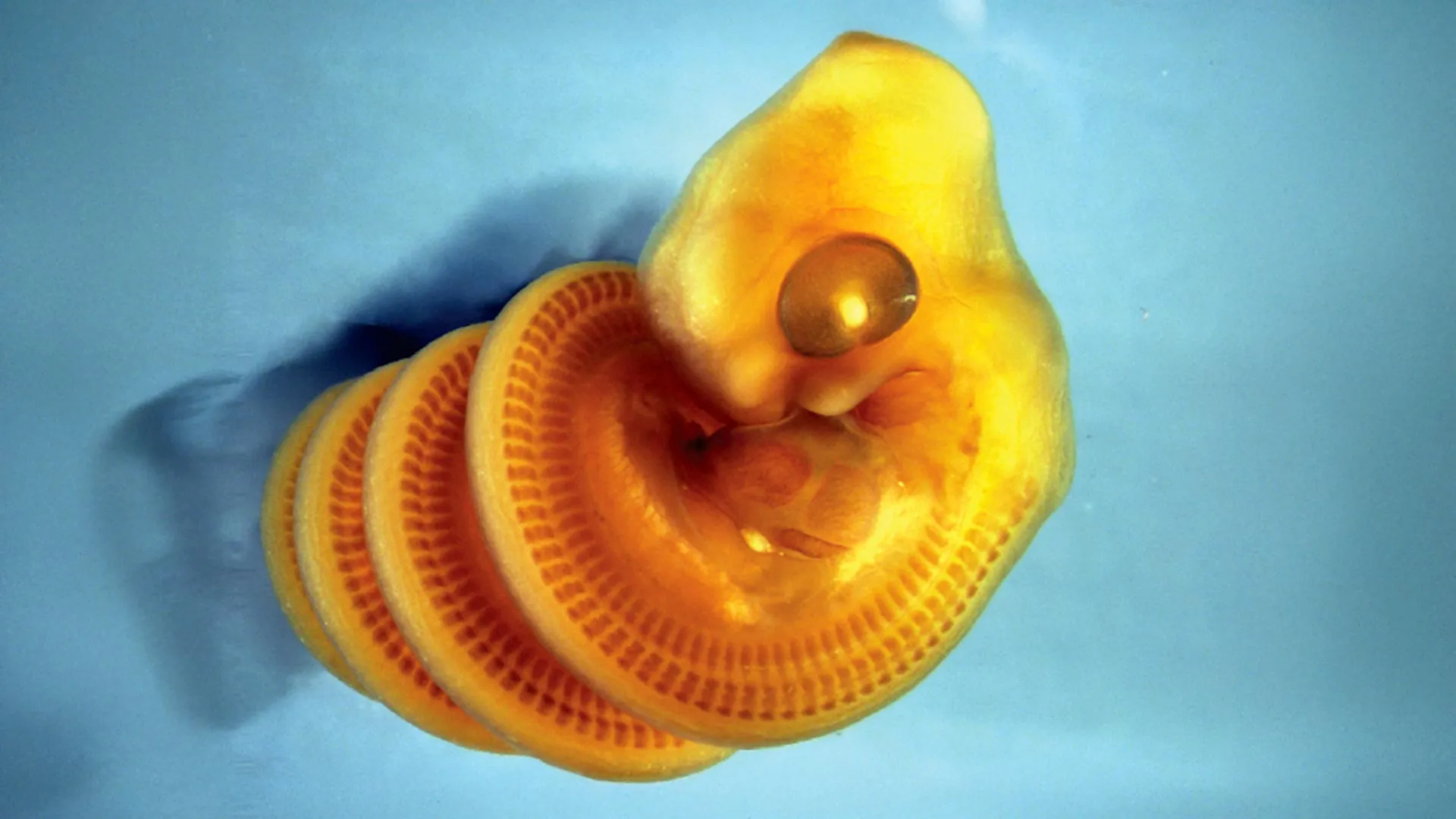
Scientists led by researchers at the Canadian Museum of Nature have identified a physical mechanism explaining why snake embryos develop in tight spiral formations. The findings, published in Current Biology, indicate that as the embryo’s body extends at a faster rate than its gut, the mismatch creates a mechanical constraint forcing the body to buckle and twist into characteristic coils.
The research emerged from an unusual circumstance when Dr. Tetsuto Miyashita, working remotely during a lockdown period, sought a research question his students could pursue with limited laboratory access. The team, led by graduate student Alexandra Weber, examined photographs of more than 900 embryos representing 39 snake and other limbless squamate species from published research and museum databases. Analysis revealed that developing snakes consistently coiled in a right-handed direction during early developmental stages, when the embryos lacked the muscular capability to move intentionally.
Critical insights came from CT imaging conducted by Dr. Raul Diaz at California State University Los Angeles. The scans revealed an unexpected anatomical feature: a pillar of gut tissue stretching through the spiral coiling body, detached from the rest of the developing organism and surrounded by blood vessel tendrils from the yolk. This discovery provided the mechanism underlying the observed coiling pattern, as the slower-growing gut acts as a physical tether while the lengthening body buckles around it.
As embryos progress toward hatching, their relationship to the coiling pattern changes. As the yolk decreases in size and muscles develop, allowing voluntary movement, approximately half of near-hatching embryos retain right-handed coils while others recoil into left-handed configurations. This shift demonstrates that initial coiling direction is determined by developmental anatomy and physical forces rather than muscular control.
The researchers suggest their findings could provide a model for understanding other spiral structures found throughout nature, from intestinal loops to mollusk shells, demonstrating how fundamental mechanical principles shape biological development.
Article Attribution | Read More at Article Source
Article summary produced by Claude AI