

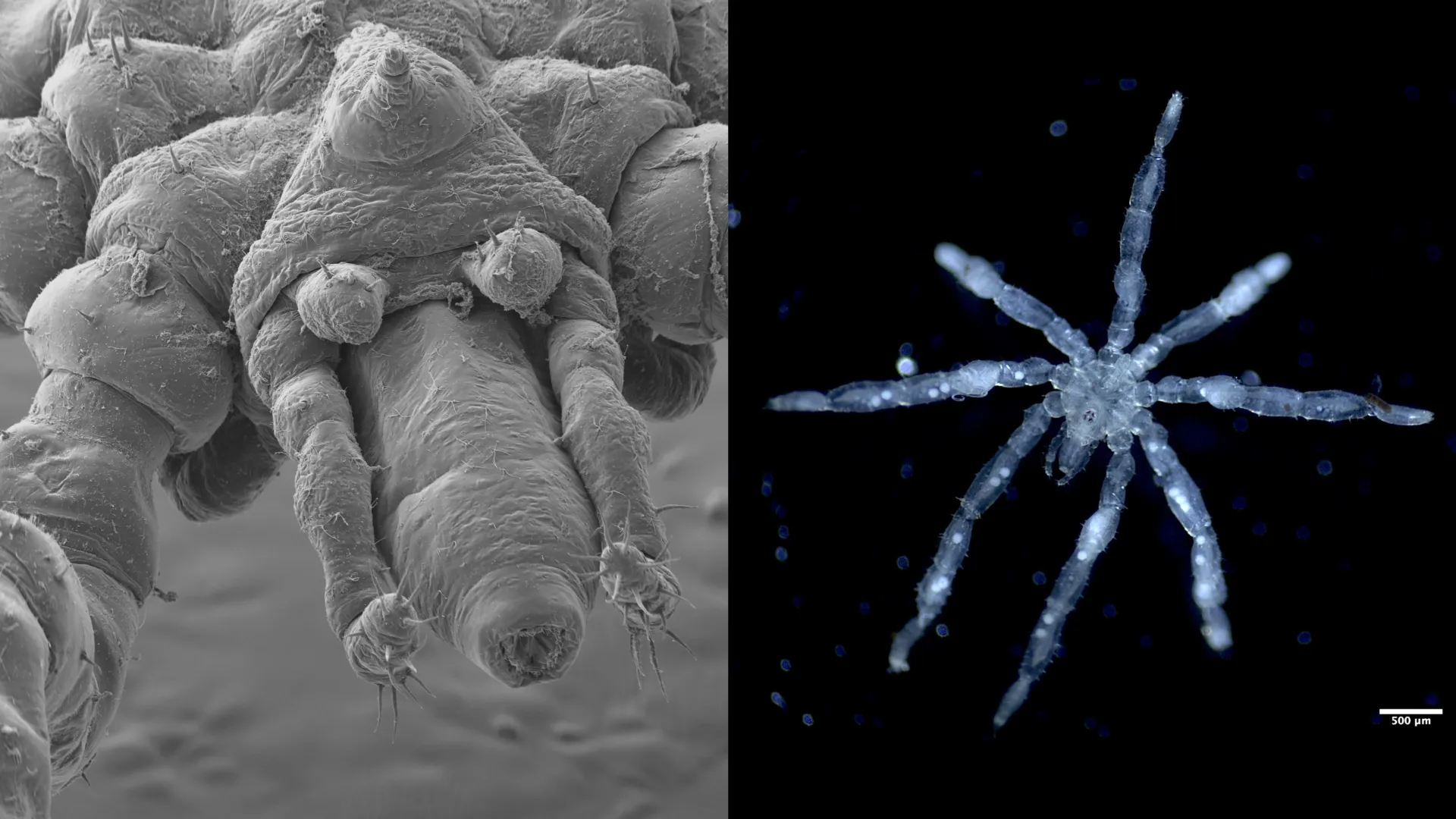
Researchers at the University of British Columbia have formally described two previously unknown species of sea spider from the Salish Sea, representing the first new species identifications from the region in approximately a century. The findings, published in Organisms Diversity & Evolution, combined detailed physical observations with genetic analysis to advance scientific understanding of these marine animals. Lead researcher Cormac Toler-Scott conducted the work as part of his master’s degree in zoology, focusing on how sea spiders are affected by climate change and human disturbance in an ecosystem where marine invertebrates face significant risks.
Sea spiders represent an ancient lineage dating back roughly 500 million years and are related to spiders, scorpions, and horseshoe crabs, though they evolved to remain entirely marine. The animals display unusual biology by arthropod standards, with some species possessing as many as 12 legs and a specialized sucking proboscis for feeding. Size variation among sea spiders is dramatic, ranging from specimens less than a centimeter long to species exceeding 70 centimeters in Antarctic waters. These creatures exhibit distinctive reproductive and physiological characteristics, including direct skin respiration and a reproductive system in which males carry and nurture developing eggs.
One of the newly described species, Callipallene pilosuspedes, takes its name from Latin references to hairy feet, featuring long curved spines on its lower legs. The species possesses red eyes, a short proboscis equipped with claws for food capture, and a triangular mouth surrounded by sensory tendrils. Researchers observed only a single specimen of this species during their fieldwork. The second species, Tanystylum kiixin, is named after an ancient Indigenous village site near where specimens were initially collected. This species exhibits smaller, less flexible egg-carrying limbs and was frequently observed with parasites and debris attached to its body.
Researchers collected specimens between September 2023 and August 2024 during dives reaching depths of up to 18 meters at various marine habitats around Quadra Island, Vancouver, Bamfield, and Victoria. The study marked the first comprehensive investigation of Salish Sea sea spiders to combine detailed imaging with DNA analysis, with genetic sequences generated for several species that had never been previously sequenced. Researchers produced an identification guide to assist scientists in distinguishing sea spider species throughout the region. Both newly discovered species have been registered in a global database, though researchers acknowledge the Salish Sea likely contains additional undocumented species.
Article Attribution | Read More at Article Source
Article summary produced by Claude AI