

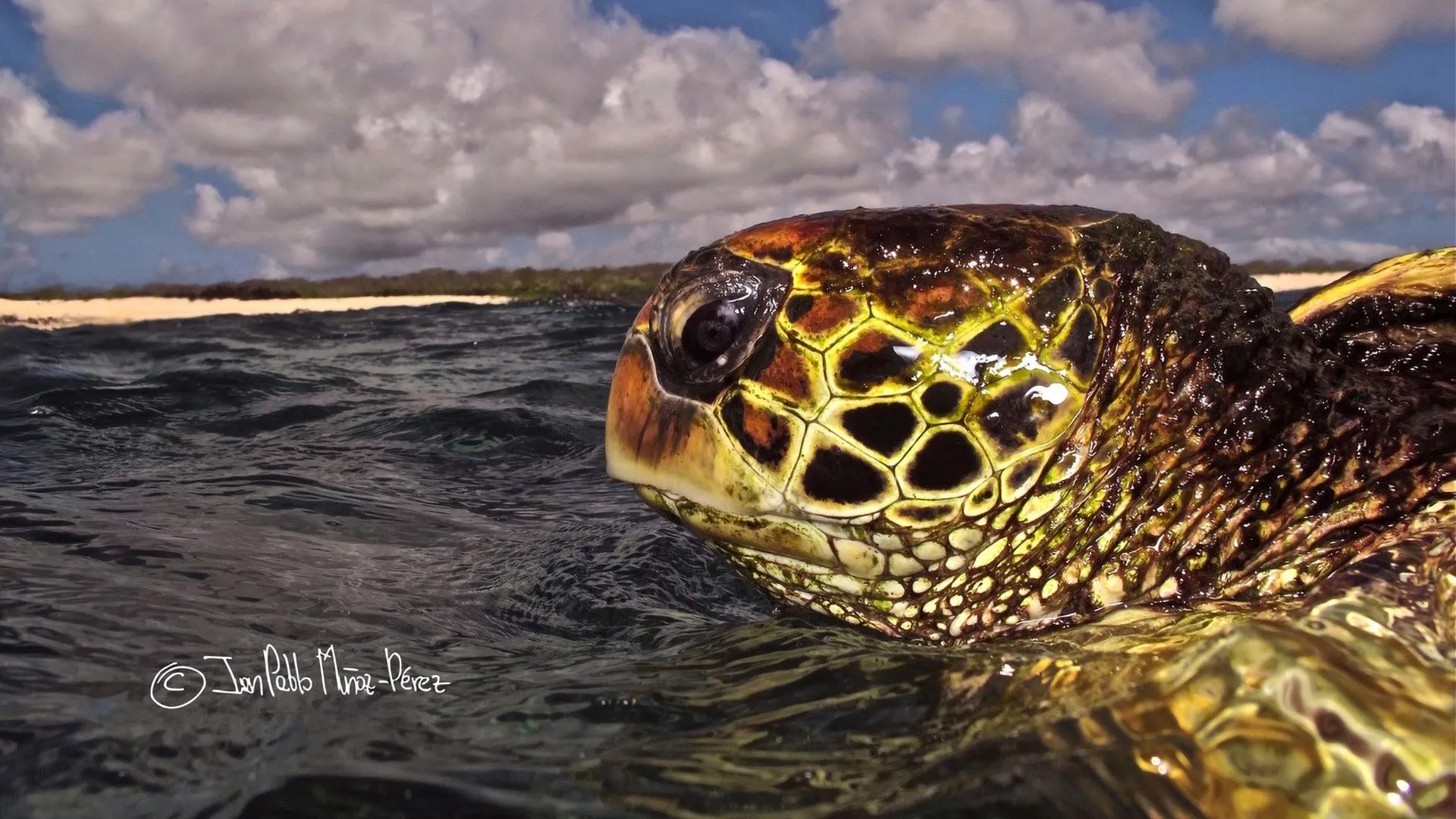
Researchers tracking yellow-morph green sea turtles in the Galápagos Marine Reserve observed behavior that deviated significantly from the typical migratory patterns associated with sea turtles. Rather than traveling vast distances across the ocean to distant breeding grounds, the nine adult turtles monitored during the study remained largely within the archipelago’s coastal waters, according to findings published in Frontiers in Amphibian and Reptile Science.
The research team, led by Dr. John W Rowe of Alma College, attached satellite transmitters to the animals near four islands in 2015. Observations continued for as long as 418 days per individual. The data revealed that most turtles preferred shallow coastal habitats, with the majority staying relatively close to the islands where they were initially tagged. Individual home ranges averaged approximately 1,498 square kilometers, with some turtles remaining primarily near a single island while others traveled between nearby islands. Movement between islands appeared to correlate with seasonal changes, occurring predominantly during the cooler months from April through October.
Green sea turtles have two genetically distinct forms, including the yellow morphs studied in this research and black morphs found in other Pacific regions. The Galápagos represents the unique location where both forms coexist and forage in the same marine environments. Yellow morphs typically inhabit tropical and subtropical areas of the western Pacific, leading scientists to expect these animals would undertake extended migrations to distant breeding beaches. The surprising prevalence of localized behavior during the study period contradicted these anticipations, though researchers noted their observations represent only a limited timeframe in the animals’ lives.
The conservation implications of the findings emphasize the need to protect interconnected habitats throughout the archipelago. Since individual turtles rely on waters around multiple islands as they forage and move seasonally, preserving the quality and connectivity of coastal ecosystems across all islands proves essential for their survival. Protecting isolated feeding areas alone may prove insufficient for maintaining population viability.
Article Attribution | Read More at Article Source
Article summary produced by Claude AI