

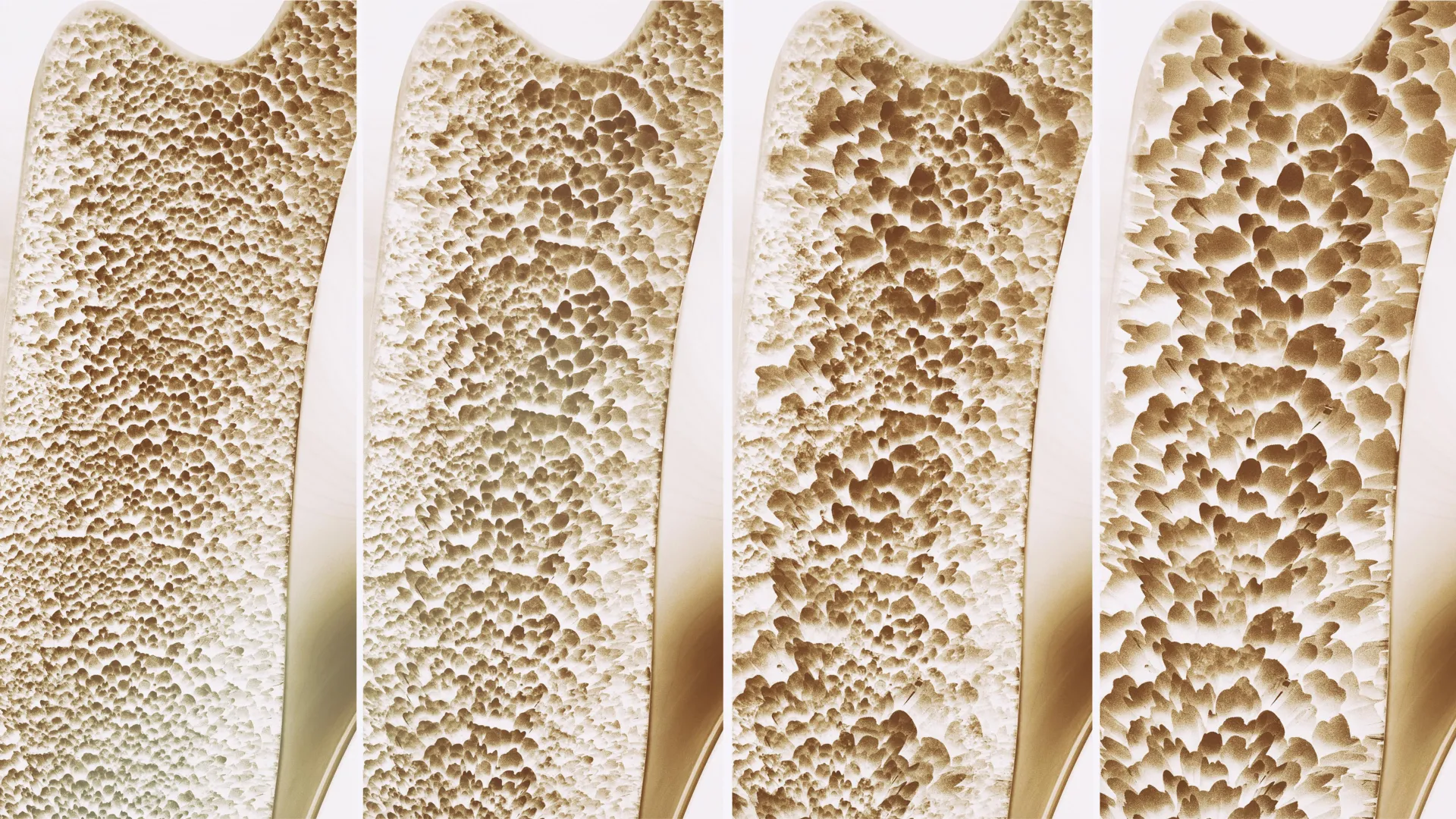
Researchers at Leipzig University have identified GPR133, an adhesion G protein-coupled receptor, as a key regulator of bone health and a potential target for treating osteoporosis. The condition, which weakens bones and increases fracture risk, affects approximately six million people in Germany alone, predominantly women. While existing therapies have limitations and side effects, scientists continue searching for new biological approaches to preserve or rebuild bone tissue.
GPR133 sits on the surface of cells and helps regulate their response to environmental signals. When the receptor is impaired by genetic mutations, mice develop bone density loss similar to human osteoporosis. Researchers used a substance called AP503, identified through computer-assisted screening as a GPR133 stimulator, to test the receptor’s potential. The compound significantly increased bone strength in both healthy mice and those with osteoporosis-like conditions.
The receptor functions by responding to physical forces and interactions between bone cells, influencing the balance between osteoblasts, which build new bone tissue, and osteoclasts, which remove old bone during normal skeletal renewal. Activating GPR133 encourages bone-forming cell activity while reducing bone-resorbing cell activity, thereby strengthening bone structure. AP503 appears to mimic this natural activation process, suggesting potential therapeutic applications, particularly for menopause-related osteoporosis when hormone decline accelerates bone loss in women.
Beyond skeletal benefits, earlier research showed that AP503 activation also strengthens skeletal muscle, making it potentially valuable for aging populations that experience concurrent declines in both tissues. Stronger muscles support mobility and stability, while stronger bones reduce fracture vulnerability. Leipzig University, which has prioritized adhesion G protein-coupled receptor research for over a decade through its Collaborative Research Center 1423, is pursuing additional studies to better understand GPR133’s full functions and explore its applications in other diseases.
Article Attribution | Read More at Article Source
Article summary produced by Claude AI