

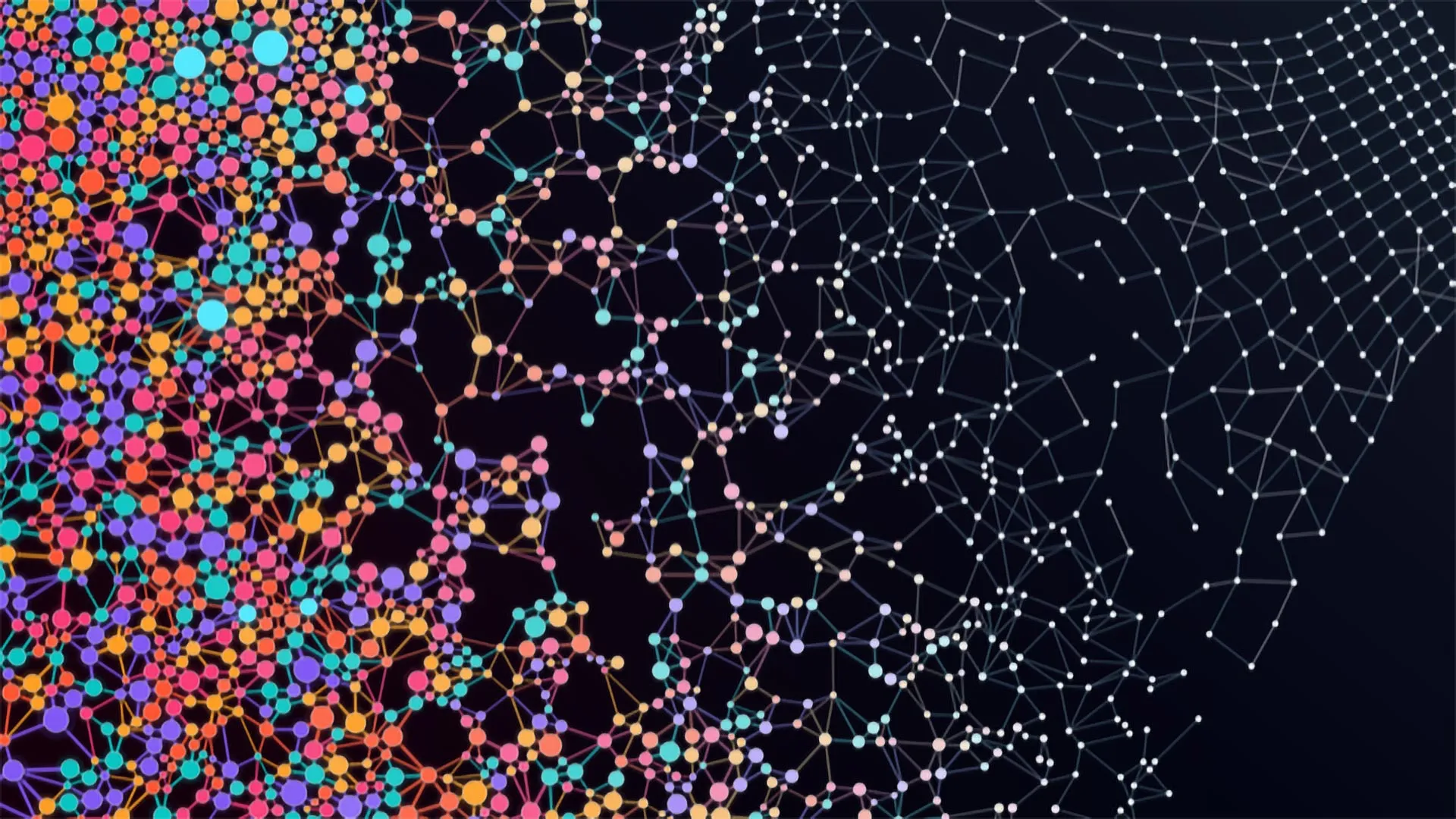
Researchers at Northwestern University have developed a mathematical framework demonstrating that disorder or variation in complex networks can sometimes improve stability rather than diminish it, contradicting the long-held assumption that uniform components produce the most reliable systems.
The study, published Sept. 17 in the journal Science, examined networks across multiple domains including electrical grids, neural systems, biological networks, and engineered materials. The team found that differences among individual components or their connections can make systems more resilient to disturbances. Lead researcher Adilson Motter noted that while earlier studies had identified this effect in specific cases—such as electrical generators synchronizing more effectively when operating differently—the new work reveals how widespread this phenomenon actually is across various physical, biological, and engineered systems.
Traditional network research has long emphasized the importance of uniformity, relying on simplified mathematical models that represent complex real-world behavior with single variables. These approaches overlooked how the richer dynamics of actual systems could benefit from heterogeneity. The researchers developed a more sophisticated framework capable of capturing the intricate interactions found in genuine systems where components and their relationships are considerably more complex than simplified models suggest.
The Northwestern team’s analysis identified two primary mechanisms through which disorder enhances stability: variation can occur within the nodes themselves or within the connections between them. Their findings indicate that the relationship between heterogeneity and stability is not linear—moderate variation can optimize stability, while excessive diversity may eventually reduce it. The researchers also discovered that randomly introduced differences often produced greater stability than perfectly uniform configurations, suggesting that intentional design of variation is not always necessary for systems to benefit from diversity.
The researchers created an interactive website allowing users to visualize how network components interact and form organized patterns by adjusting various parameters, making the framework accessible for further exploration and application across multiple fields.
Article Attribution | Read More at Article Source
Article summary produced by Claude AI