

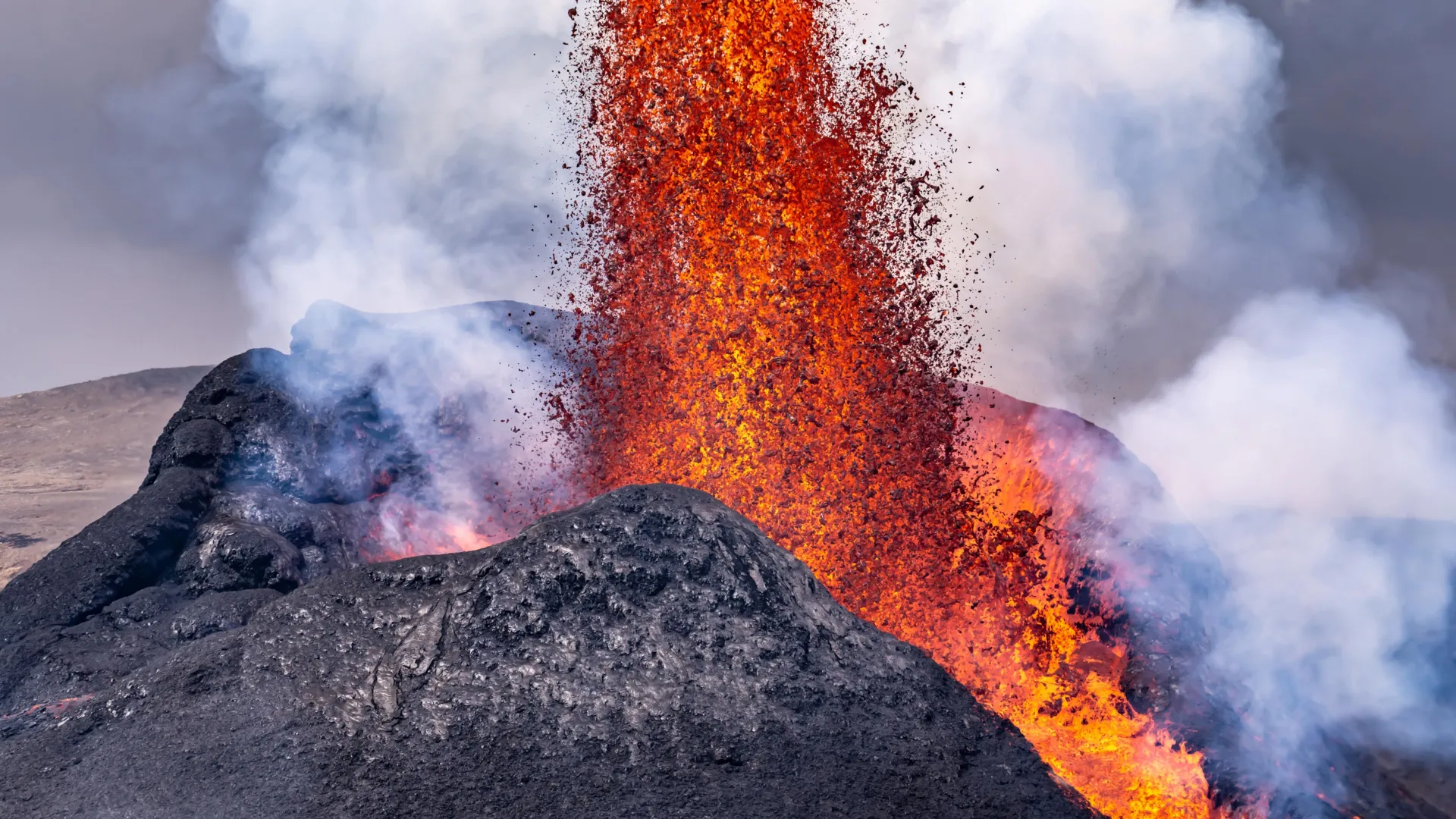
An international research team led by Dr. Eric Vandenburg of Adelaide University has identified evidence suggesting that water played a role in volcanic processes on early Earth more than three billion years ago. The researchers examined ancient volcanic rocks from the Pilbara Craton in Western Australia and published their findings in Nature Communications, indicating that the planet’s surface and interior were exchanging water much earlier than previously understood.
The discovery raises important questions about how Earth’s young surface interacted with its deep interior. Today, plate tectonics facilitates water movement through subduction zones, where oceanic plates descend into the mantle, carrying water that helps generate magma. However, early Earth was too hot for plate tectonics to operate in its modern form, leaving scientists uncertain about how surface water could have reached the mantle billions of years ago.
The research team proposes an alternative mechanism called “dripduction” to explain the water transport. Under this model, dense, water-rich portions of Earth’s cooler outer crust periodically sagged and collapsed into the hotter mantle, carrying water with them. As these crustal sections descended, they released water that facilitated magma generation, eventually leading to volcanic activity and the formation of rocks that have persisted for billions of years.
The Pilbara Craton provides rare geological specimens from the early Earth, allowing researchers to study chemical signatures locked within rocks and reconstruct processes from approximately 3.1 billion years ago. The findings suggest that despite operating under different conditions than the modern planet, early Earth was already dynamic and engaged in recycling water between its surface and interior—a process with significant implications for volcanic activity, continental development, and the availability of ingredients necessary for life.
The study included collaboration from multiple institutions across Australia and international partners, including Cardiff University and the GEOMAR Helmholtz Center for Ocean Research in Germany.
Article Attribution | Read More at Article Source
Article summary produced by Claude AI