

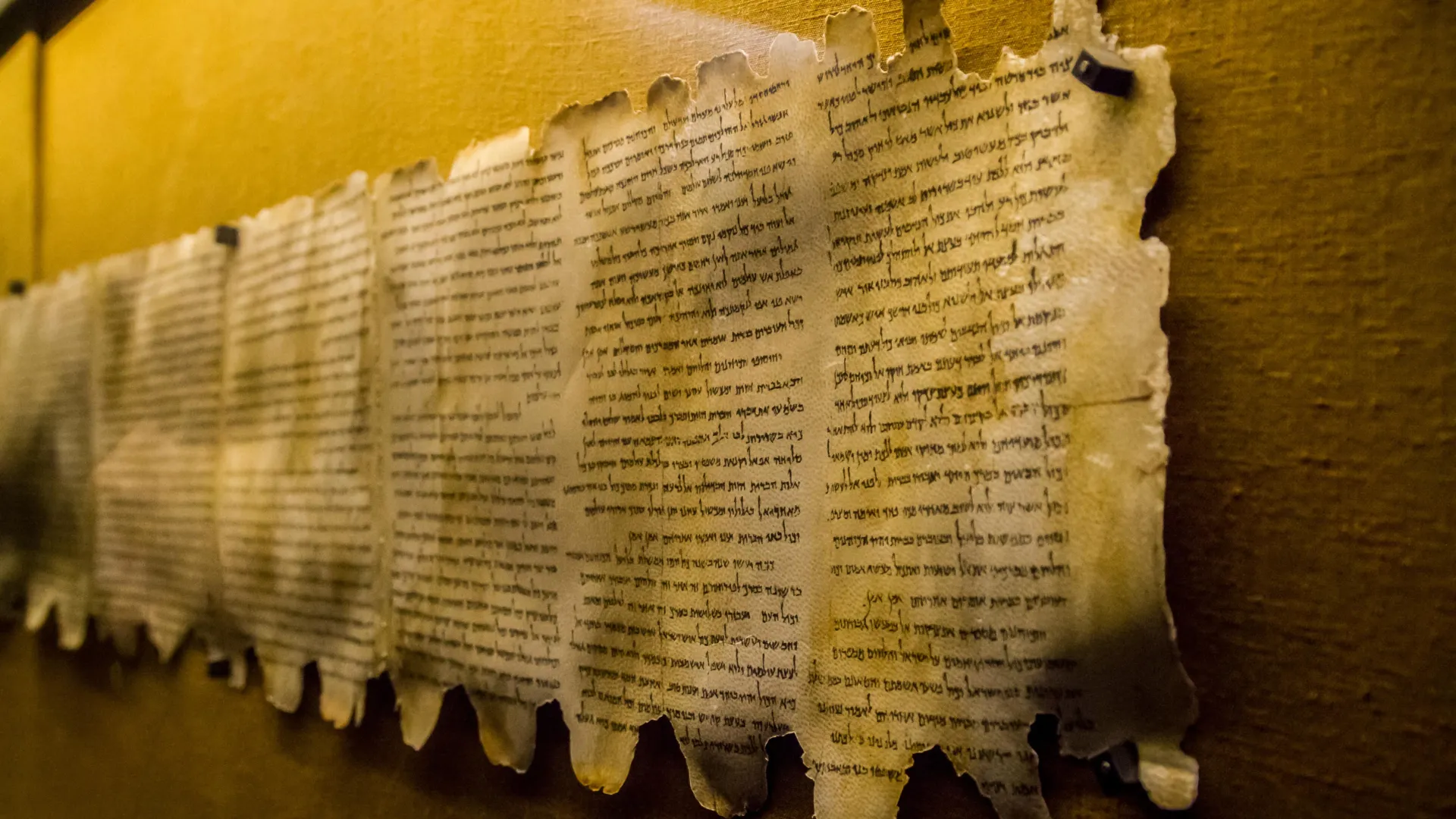
Researchers at Tel Aviv University have proposed a new explanation for a long-standing debate about the Dead Sea Scrolls and the Qumran sect’s calendar system. For decades, scholars have questioned whether the community actually implemented its distinctive 364-day calendar in practice or maintained it primarily as a theoretical and religious concept.
The Qumran calendar operated on a fundamentally different system than the lunisolar calendar used in mainstream Jewish religious practice during the Second Temple period. With exactly 364 days divisible evenly by seven, the system guaranteed 52 complete weeks annually and ensured that religious festivals consistently fell on the same day of the week each year. For the Qumran sect, this orderly structure represented more than mathematical elegance—it reflected what they viewed as a perfect divine system established at Creation. The calendar also carried significant political weight, as it allowed the sect to reject Jerusalem Temple authorities’ control over determining religious dates.
However, the calendar contained a critical flaw. A 364-day year falls approximately one day and a quarter short of the astronomical year. Over extended periods, this discrepancy compounds, causing religious festivals to drift progressively away from actual seasons. After two decades of use without correction, festivals could shift by nearly four weeks. For a community whose observances were closely tied to agricultural cycles and harvests, this seasonal misalignment would have created serious practical problems.
Prof. Eshbal Ratzon of Tel Aviv University proposes that both historical interpretations hold partial truth. She argues the sect likely employed the calendar actively during its formative period in the second century BCE, with disputes over sacred timekeeping intensifying conflicts with Jerusalem religious leadership. However, as the calendar’s astronomical inadequacy became increasingly apparent over time, and as political circumstances shifted—particularly when the ruling Hasmonean dynasty under Alexander Jannaeus adopted positions more aligned with the sect’s religious views—the community may have gradually abandoned practical use of the system. The calendar potentially survived in Qumran thinking as an idealized religious symbol representing a divinely ordained system rather than as a functional timekeeping method.
The research, published in the Tarbiz Quarterly for Jewish Studies, suggests this scenario explains why the 364-day calendar remains so prominent in Qumran writings despite apparently disappearing from historical practice. The interpretation reconciles the apparent contradiction between the calendar’s theological significance and its lack of sustained practical application.
Article Attribution | Read More at Article Source
Article summary produced by Claude AI