

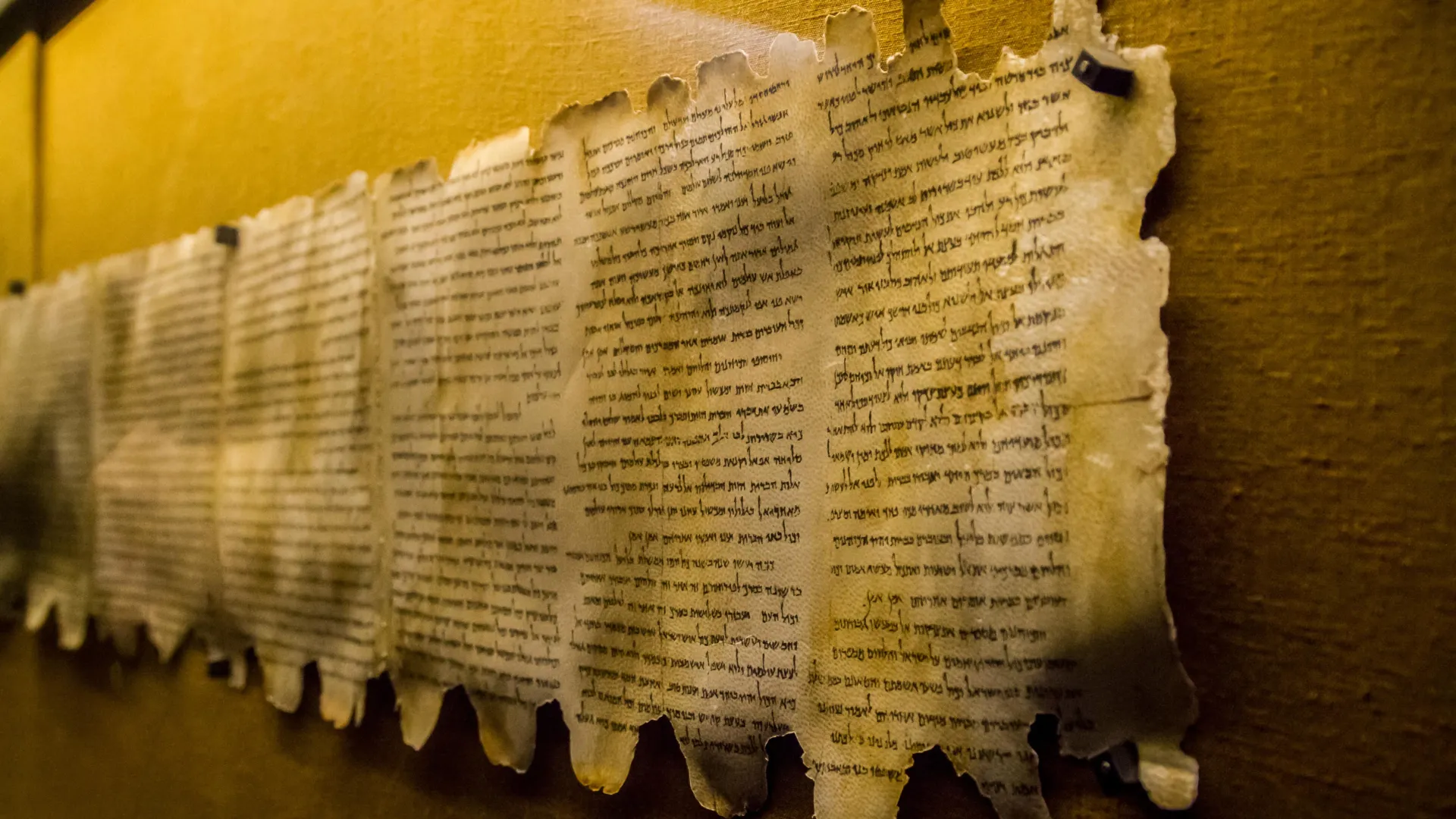
A study from Tel Aviv University offers a new explanation for a longstanding debate about the Dead Sea Scrolls regarding whether the Qumran sect actually implemented its distinctive 364-day calendar system. Prof. Eshbal Ratzon of Tel Aviv University argues that the calendar was likely used during the sect’s formative period but was eventually abandoned for practical and political reasons.
The Qumran calendar differed fundamentally from the lunisolar calendar used during the Second Temple period. It contained exactly 364 days, which divided evenly into 52 complete weeks, ensuring that religious festivals always fell on the same day of the week. The sect viewed this orderly structure as reflecting a perfect divine system rather than a mere mathematical convenience. The calendar also held political significance, as the Qumran community rejected the Temple authorities’ power to determine religious dates, believing instead that such dates had been established by God during Creation and should not be altered by human leaders.
However, the elegant 364-day calendar contained a critical flaw. A year of 364 days is approximately one and a quarter days shorter than the actual astronomical year. Over time, this discrepancy would accumulate, causing religious festivals to drift relative to the seasons. After twenty years without correction, festivals could shift by nearly four weeks. For a community whose religious practices were closely tied to agriculture and seasonal cycles, this progressive misalignment would have created increasingly severe practical problems.
Ratzon’s research suggests that the Qumran sect initially implemented the calendar as a core element of its religious identity and as a point of conflict with Jerusalem authorities during the second century BCE. However, as the calendar’s astronomical defects became more apparent over decades, and as political circumstances shifted—particularly when relations improved during the reign of Alexander Jannaeus—the sect abandoned its practical use of the system. Rather than disappearing entirely, the 364-day calendar may have survived as a religious ideal and symbol of identity, representing an ancient perfect system and expectations for the future.
This interpretation potentially resolves the paradox that has confused scholars for decades: why the 364-day calendar remained so prominent in Qumran writings despite apparently vanishing from actual use. The calendar may have functioned as a practical tool during a specific historical period before transitioning into an idealized religious concept.
Article Attribution | Read More at Article Source
Article summary produced by Claude AI