

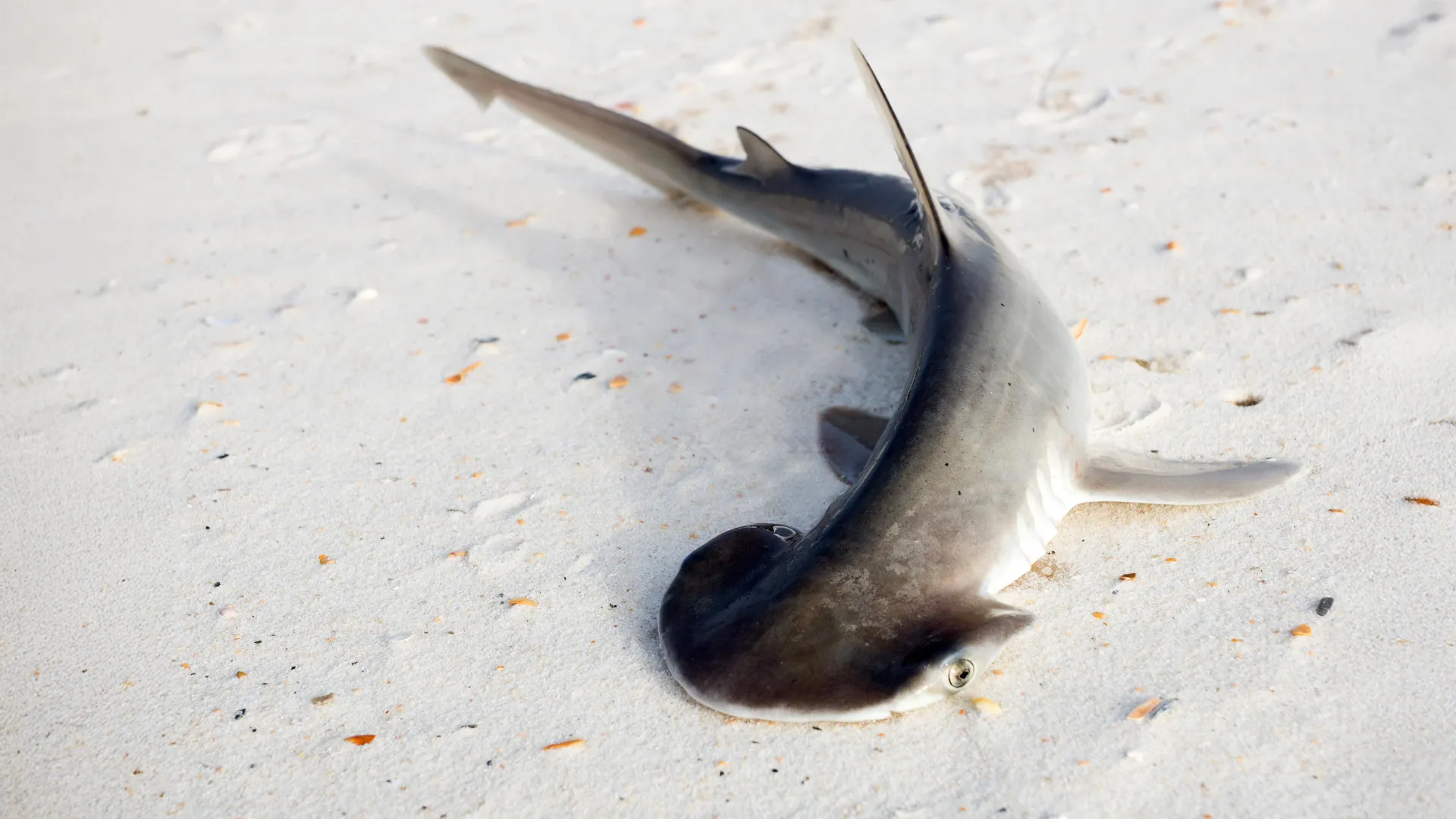
Researchers from the University of Miami Rosenstiel School examined bonnethead sharks from Biscayne Bay and Tampa Bay to understand the development of sexual dimorphism in their head shapes. The investigation contradicts an earlier theory suggesting that males develop pointed snouts upon reaching sexual maturity. Instead, the team discovered that both younger males and females possess more pointed heads, which become increasingly rounded as the animals mature, with this transformation being especially pronounced in female sharks.
The research team also investigated whether differences in diet and foraging behavior might explain the divergent head shapes between sexes. By analyzing muscle tissue samples and examining stomach contents, scientists found that bonnetheads from Biscayne Bay and Tampa Bay occupy distinct food webs, with dietary changes occurring as sharks grow. However, within the same bay, males and females rely on largely similar food sources. These findings provided no evidence that diet or foraging practices drive the development of sex-specific head shapes.
Between May 2022 and May 2023, researchers sampled 105 sharks from Biscayne Bay and 39 from Tampa Bay. Each animal was measured, photographed against a grid board, and released quickly. The team used specialized software to analyze head curvature with precision. Chemical analysis of muscle tissue revealed isotope signatures showing the two populations inhabit ecosystems with different environmental characteristics, though this does not necessarily indicate consumption of entirely different prey species.
Scientists remain uncertain about the functional advantage of the bonnethead’s distinctive head shape. One hypothesis suggests the pointed head may facilitate more efficient swimming in younger, smaller sharks, with this advantage potentially diminishing as females grow larger to accommodate reproduction. The researchers indicated that future studies on swimming performance and embryonic development could test this explanation and determine when male-female head shape differences first emerge.
The findings were published in the journal Integrative Organismal Biology. Scientists noted that similar photographic techniques could be applied to bonnethead populations in other geographic regions, potentially revealing additional variation and providing conservation value through identification of population-specific biological differences.
Article Attribution | Read More at Article Source
Article summary produced by Claude AI