

Researchers at UCLA have published two complementary studies examining how radial glia, specialized stem cells crucial to human brain development, make critical cellular decisions during fetal development. These cells are responsible for generating many of the neurons and support structures that form the cerebral cortex, the brain region associated with thought, memory, and language. The work provides new understanding of how the human cortex achieves its distinctive size and complexity compared to other species.
The first study, published in Cell, created a detailed metabolic map of the developing human cortex by analyzing donated tissue and brain organoids derived from stem cells. Researchers discovered that metabolism actively influences which cell types radial glia produce, rather than simply providing passive background support. The team found that radial glia heavily depend on the pentose phosphate pathway, a glucose-based metabolic process that supplies materials for rapidly dividing cells. When glucose availability was reduced or this pathway was disrupted, the stem cells began producing different cell types than they normally would at that developmental stage. These findings may help scientists understand how maternal nutrition, metabolic disorders, and other environmental factors affect brain development.
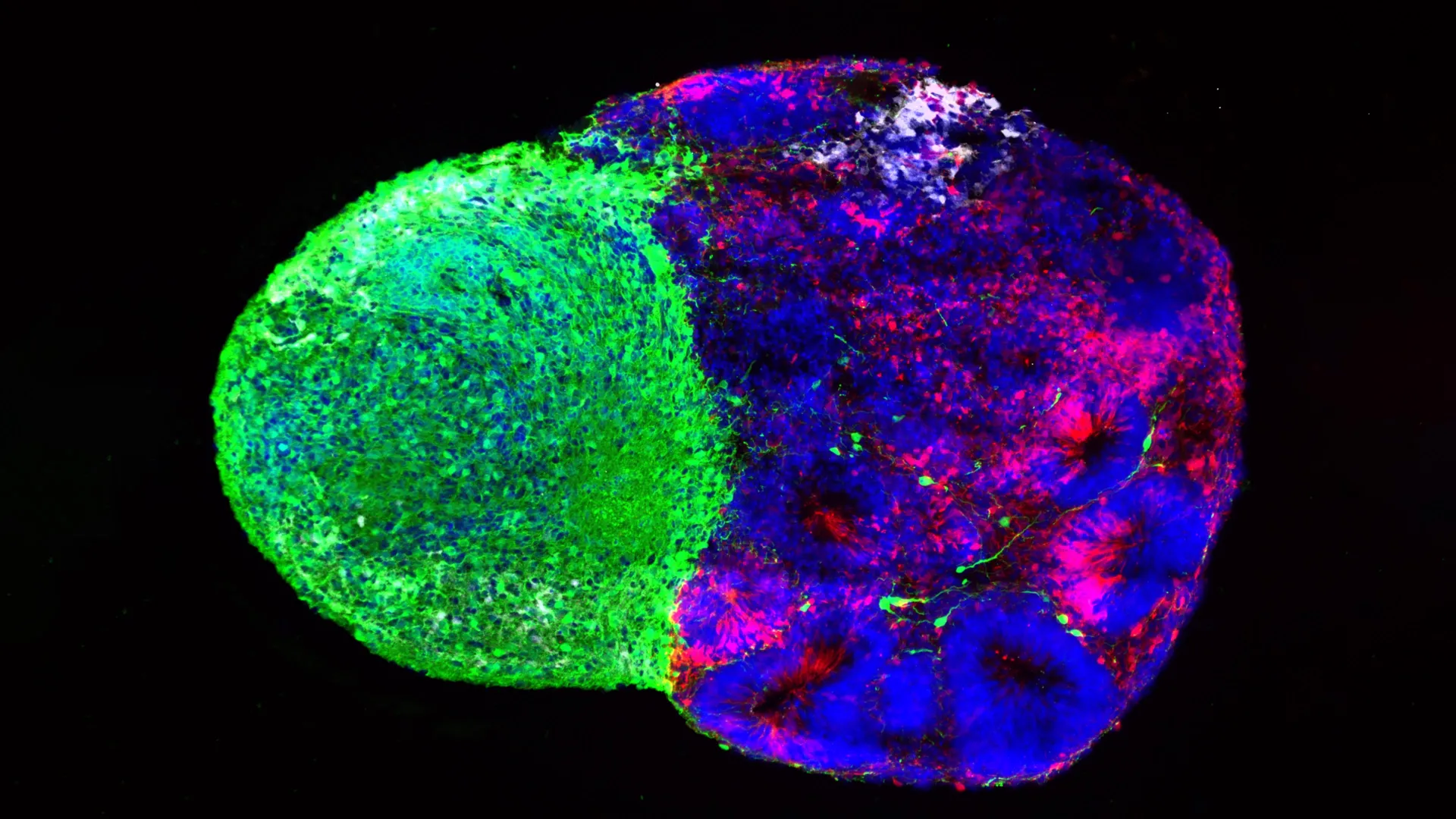
The second study, published in Science, examined signals originating from the thalamus, a brain structure that relays information throughout the nervous system. Using brain models derived from human stem cells, researchers found that thalamic nerve fibers physically contact radial glia during development, long before those fibers establish their permanent connections in the cortex. This direct physical contact causes the stem cells to generate more excitatory neurons, particularly upper-layer neurons that are notably expanded in human brains. The researchers linked this interaction to NRXN1, a gene involved in forming neuronal connections and previously associated with autism spectrum disorder. When they examined cells from patients carrying NRXN1 mutations, the thalamic signals behaved differently, altering the balance between stem cells and newly generated neurons.
Together, the studies demonstrate that radial glia continuously respond to multiple environmental signals rather than following pre-set developmental instructions in isolation. Both research projects highlight how advances in organoid technology have transformed the study of human brain development, enabling scientists to investigate neural stem cell behavior in laboratory settings in ways not previously possible. The findings suggest that metabolism and physical cellular connections should be understood as active drivers of brain development rather than as passive background processes.
Article Attribution | Read More at Article Source
Article summary produced by Claude AI