

Researchers at UCLA have published two complementary studies examining how radial glia, specialized stem cells critical to human brain development, make decisions that shape the cerebral cortex. These cells are responsible for generating the neurons and support structures that constitute much of the cortex, and their unique properties contribute to the distinctive size and complexity of the human brain compared to other species.
The first study, published in Cell, constructed a detailed metabolic map of the developing human cortex using both donated tissue and brain organoids derived from stem cells. The research team discovered that metabolism actively influences which cell types radial glia produce, rather than simply providing passive support. Specifically, the cells rely heavily on the pentose phosphate pathway, a metabolic process that helps rapidly dividing cells generate necessary materials from glucose. When researchers reduced glucose availability or disrupted this pathway, the stem cells altered their output, producing more inhibitory neurons and other cell types typically appearing later in development. These findings may help explain how maternal nutrition, metabolic disorders, and environmental factors affect brain development.
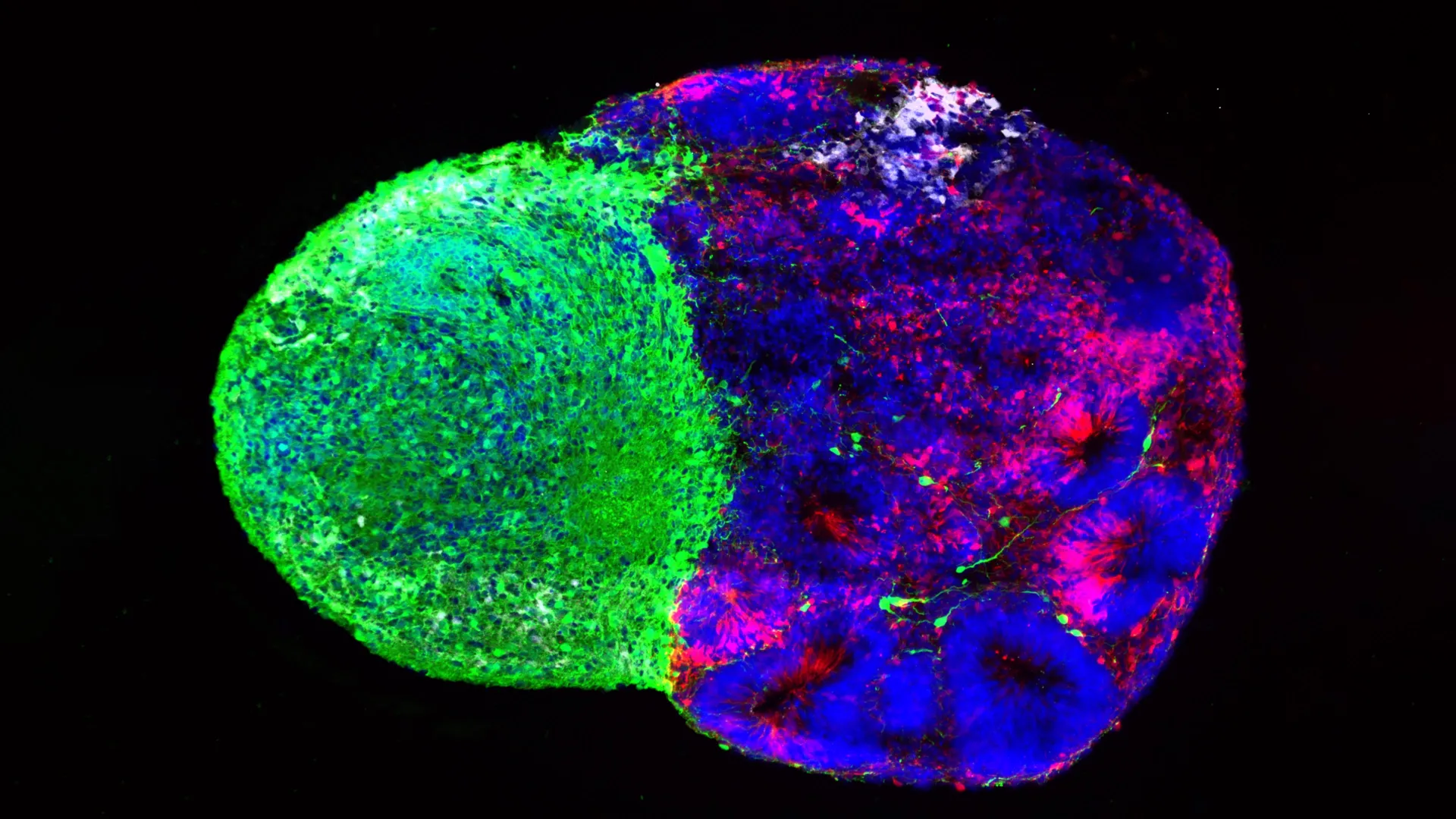
The second study, published in Science, investigated signals originating from the thalamus, a deep brain structure that relays information throughout the nervous system. While scientists previously knew that thalamic neurons send long projections toward the cortex, the researchers discovered these projections arrive much earlier than their final connections establish. Using stem cell-derived brain models, the team found that thalamic projections make direct physical contact with radial glia during development, causing them to produce more excitatory neurons, particularly upper-layer neurons that are notably expanded in human brains.
The researchers connected this physical interaction to NRXN1, a gene involved in neural connections whose mutations have been associated with autism spectrum disorder. When they created models using cells from patients carrying NRXN1 mutations, the thalamic signals functioned differently, altering the balance between stem cells and generated neurons. Together, both studies demonstrate that radial glia continuously respond to multiple environmental signals rather than operating independently, reshaping understanding of how human cortical diversity emerges during development.
Article Attribution | Read More at Article Source
Article summary produced by Claude AI