

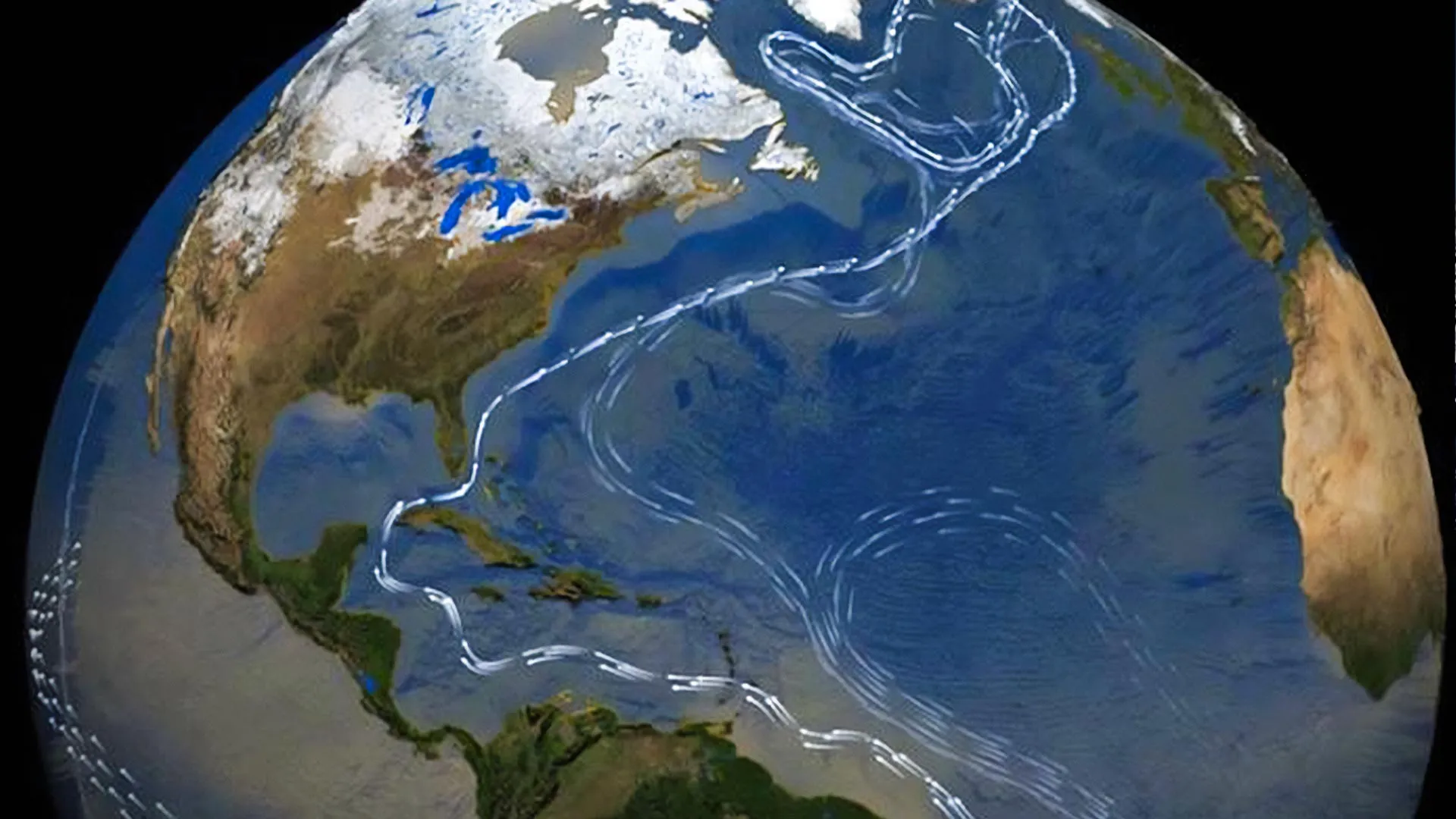
Researchers at the University of Miami’s Rosenstiel School have documented a significant decline in the Atlantic Meridional Overturning Circulation (AMOC), a vast system of ocean currents responsible for distributing heat throughout the Atlantic Ocean and regulating Earth’s climate. The circulation moves warm water northward along the ocean surface while transporting colder, denser water southward at greater depths, influencing regional temperatures, precipitation patterns, sea level, and weather systems across multiple continents.
The study examined data from four monitoring arrays positioned along the western edge of the North Atlantic, spanning from tropical regions to higher latitudes. These installations use seafloor-anchored instruments that continuously measure pressure, temperature, density, and ocean current strength. By analyzing pressure readings at ocean depths below 1,000 meters across multiple locations and time periods, researchers were able to identify persistent changes in the overturning circulation rather than isolated fluctuations.
The analysis revealed a consistent pattern of weakening across a broad geographic region extending from about 16.5°N to 42.5°N latitude. The researchers emphasize that the decline appears across such a large area that it represents a fundamental shift in Atlantic circulation rather than temporary regional variation. This distinction is significant given AMOC’s role as a major planetary heat-distribution system, with potential impacts on climate conditions far from where the currents are directly measured.
Continued weakening of the system could result in changes to European winter temperatures, shifts in rainfall distribution, alterations to hurricane activity, and modifications to coastal sea levels. Scientists indicate that measurements along the Atlantic’s western boundary may serve as an early warning indicator of broader circulation changes. Long-term ocean observations prove especially valuable for distinguishing temporary variability from persistent underlying shifts, helping governments and communities prepare for potential environmental changes in coming decades.
Article Attribution | Read More at Article Source
Article summary produced by Claude AI