

Access to safe drinking water remains a significant global challenge, with approximately 2.2 billion people lacking reliable supplies according to United Nations estimates. Many arid and water-stressed regions rely on desalination technology to convert seawater into usable fresh water. However, conventional desalination methods such as reverse osmosis and thermal distillation present substantial limitations. These approaches typically require considerable energy consumption, often necessitate chemical treatment of water before and after processing, and generate highly concentrated salty byproducts called brine. When brine is returned to marine environments, it can alter salinity levels and reduce oxygen availability, potentially harming ocean ecosystems.
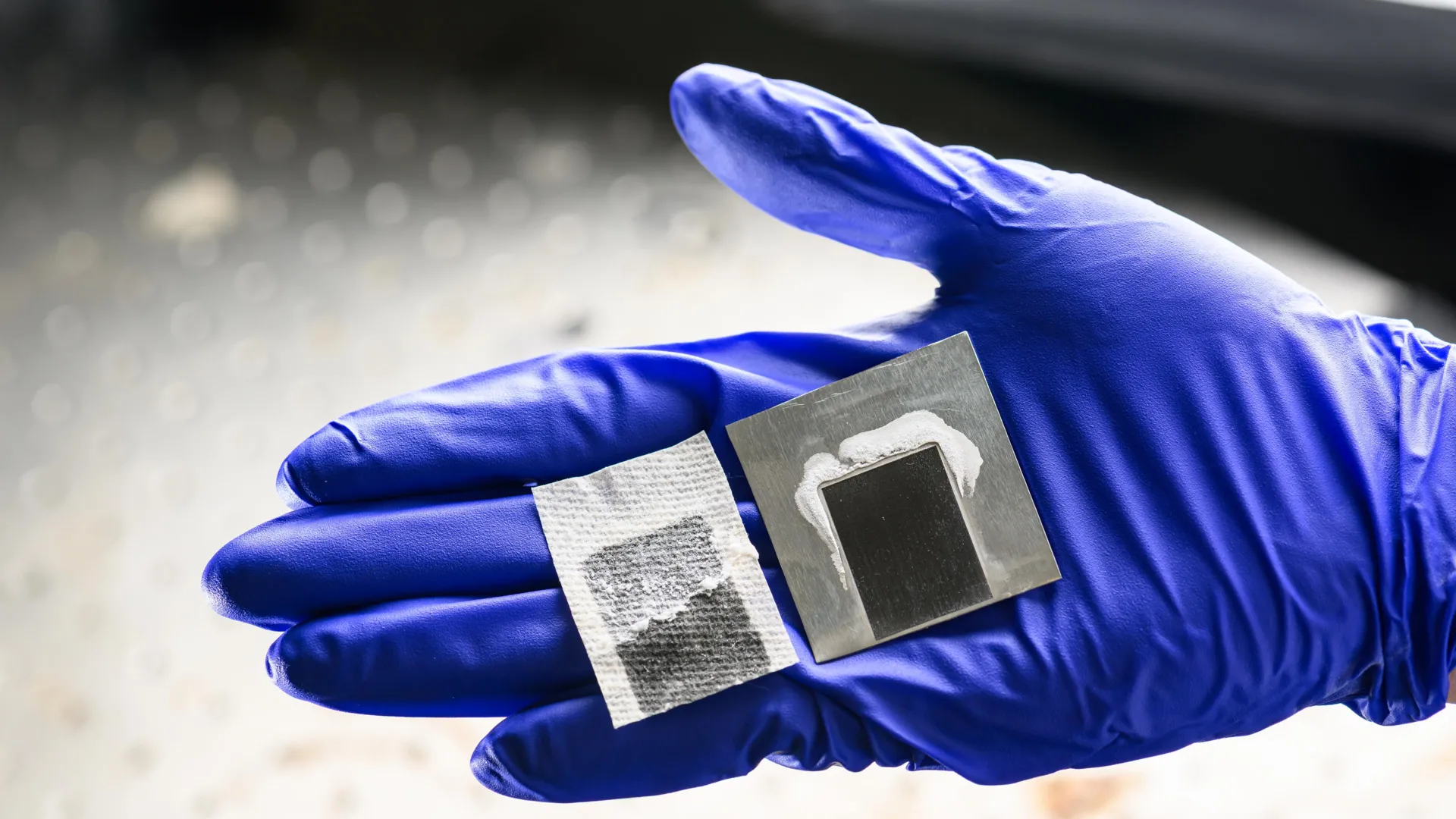
Scientists at the University of Rochester’s Institute of Optics have created an alternative desalination approach designed to overcome these obstacles. The system employs solar thermal technology that produces fresh water without creating liquid brine or requiring chemical additives for water pretreatment. The research, led by Professor Chunlei Guo of the optics and physics department, utilizes specially treated black metal solar panels. Using femtosecond lasers—pulses lasting one quadrillionth of a second—researchers alter the metal’s surface at a microscopic level. This treatment enables the material to absorb nearly all incoming solar radiation while creating superwicking properties that allow water to spread rapidly across the surface.
The panel’s design incorporates an active region where thin layers of seawater evaporate when heated by solar energy. Rather than accumulating where evaporation occurs, salts and minerals are directed toward untreated passive regions along the panel’s edges through carefully engineered microscopic grooves. This movement mechanism addresses a critical challenge in solar desalination: mineral buildup that can impede water flow and reduce efficiency. Real seawater presents particular difficulties because it contains hundreds of dissolved substances beyond sodium chloride, including magnesium and calcium compounds that form dense, hard deposits.
The research team tested their system using actual seawater samples from the Pacific, Atlantic, and Indian Oceans. Results demonstrated that the surface effectively cleaned itself while maintaining desalination efficiency, with mineral buildup successfully directed to passive regions. A significant advantage of this approach is that it recovers nearly 100 percent of dissolved salts in solid rather than liquid form. This solid output can potentially become a resource rather than waste, with possible applications ranging from table salt to extraction of valuable materials like lithium, which is increasingly demanded for battery production in electric vehicles and consumer electronics.
Article Attribution | Read More at Article Source
Article summary produced by Claude AI