

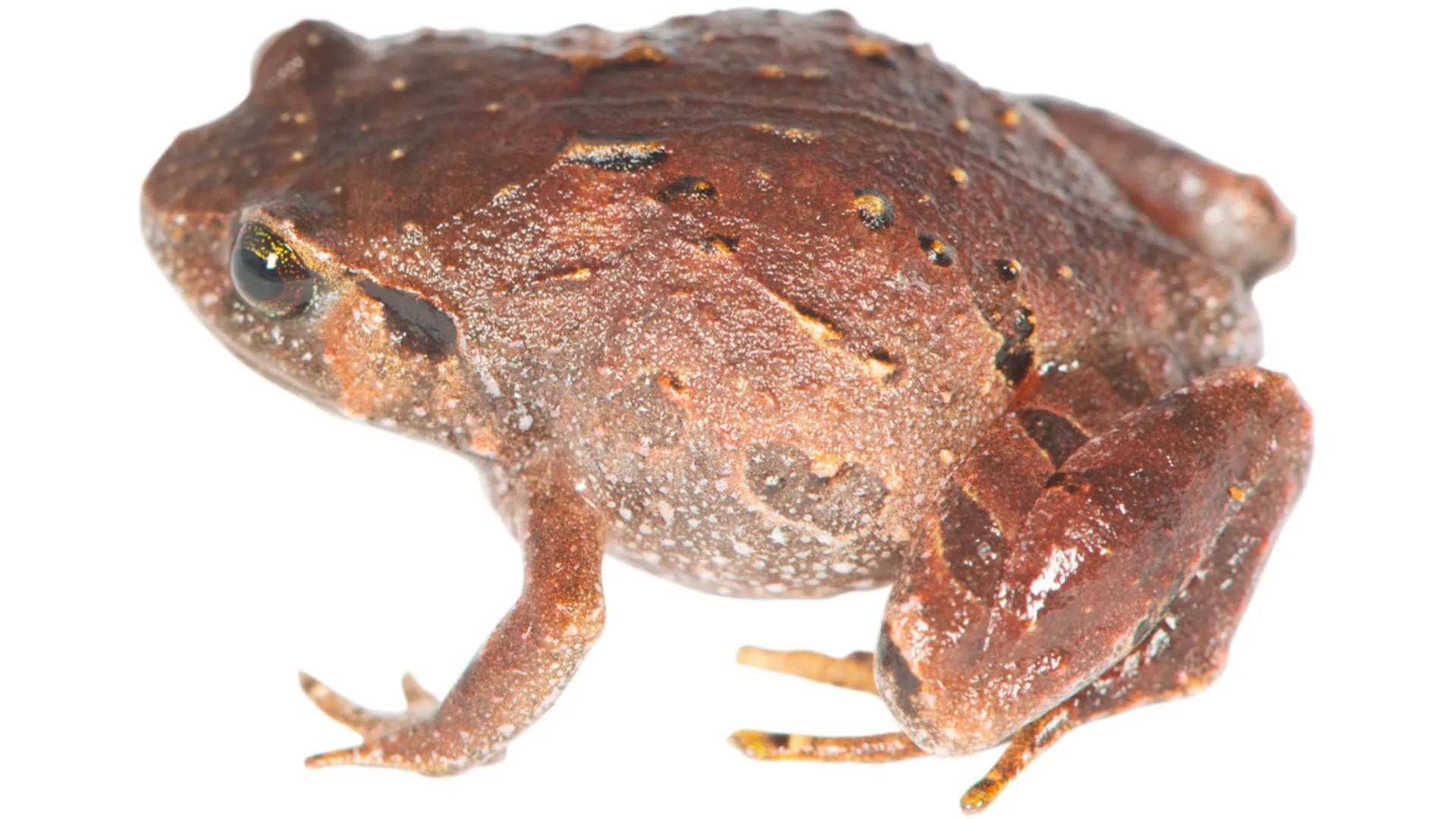
An international research team has announced the discovery of seven previously unidentified species of diamond frogs (Rhombophryne) native to Madagascar. The findings, which represent a significant expansion of known species diversity within this amphibian group, were made possible through a combination of field observations, examination of museum specimens, and genetic analysis.
The research effort required over twelve years of investigation to resolve longstanding taxonomic questions. Researchers encountered repeated difficulties matching historical species names with modern genetic lineages, creating confusion that persisted for decades. A major advancement came through museomics, a technique involving DNA sequencing of historical specimens held in museum collections. By comparing genetic material from both historical and newly collected frogs alongside external features, skeletal anatomy, and vocalizations, the team successfully connected older species designations with their corresponding evolutionary lineages.
Diamond frogs are among Madagascar’s most distinctive amphibians, displaying remarkable variation in appearance and behavior. Some species are extremely round and spend most of their lives beneath leaf litter, while others possess longer legs adapted to moss-covered environments. Many species display cryptic coloration that obscures vivid markings—including bright orange or bold black and white patterns—that become visible only when the frogs move, potentially serving as a startle defense against predators.
The identification of these seven new species brings the total number of known Rhombophryne species to 27. The findings carry direct implications for conservation efforts in Madagascar, where forests face rapid deforestation and fragmentation. In March 2026, several newly described species, including Rhombophryne quentini, informed proposals at a protected area planning workshop aimed at expanding Madagascar’s network of protected lands as part of the country’s Biodiversity 30×30 Program.
Researchers emphasize that despite these discoveries, additional undescribed diamond frog species likely remain undiscovered. Scientists note that many species’ basic biological characteristics—including breeding behavior, population dynamics, and ecological requirements—remain poorly understood, presenting ongoing challenges for comprehensive conservation assessment and protection strategies.
Article Attribution | Read More at Article Source
Article summary produced by Claude AI