

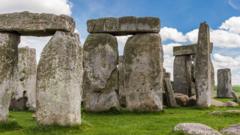
An archaeological team has identified what researchers believe to be a precursor to Stonehenge situated in the village of Bulford, approximately 3 miles from the famous prehistoric monument. The site consists of two post holes that once held wooden structures, estimated to stand between 2 and 4 meters high and positioned 120 meters apart. Analysis indicates these posts were precisely aligned with solar events—specifically the summer and winter solstices—in a manner similar to the alignment principles evident at Stonehenge itself.
Radiocarbon dating places the Bulford structure at approximately 5,000 years old, making it roughly 500 years older than Stonehenge’s primary construction phase. The original holes were discovered over a decade ago during ground clearance for military housing, though detailed analysis of the astronomical alignment has only recently been completed. This required reconstructing the celestial positions as they appeared 5,000 years ago, accounting for the gradual changes in the positions of celestial bodies over centuries.
Excavation at the site yielded multiple artifacts surrounding the post pits, including decorated pottery fragments, flint tools, antler implements used for digging, and carved animal bones. Among the notable finds was a distinctive disc-shaped Neolithic knife displaying exceptional craftsmanship, discovered in an upright position that suggests deliberate placement. These artifacts indicate that the location served as a gathering site for prehistoric communities.
Archaeologists suggest the Bulford site may indicate where people involved in constructing Stonehenge’s initial phases were based or gathered seasonally. The alignment of both structures with solar phenomena reflects the significance of seasonal cycles to early farming societies whose survival depended on understanding and marking critical agricultural periods. Researchers note that while modern visitors associate Stonehenge primarily with summer solstice observation, ancient communities may have placed greater emphasis on the winter solstice as a ceremonial marker of the year’s turning and the anticipated return of spring.
Article Attribution | Read More at Article Source
Article summary produced by Claude AI