

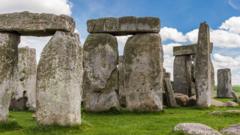
Researchers working in the village of Bulford have identified what they believe to be a predecessor to the famous Stonehenge monument, located approximately three miles from the well-known site. The structure, which dates to approximately 5,000 years ago, predates Stonehenge by roughly 500 years and consists of two post holes that once held wooden supports estimated to stand between 2 and 4 meters high and positioned 120 meters apart.
The discovery occurred a decade ago during ground clearing for military housing, though detailed analysis of the site’s astronomical alignment was only recently completed. Researchers determined that the wooden posts aligned precisely with the summer solstice sunrise and winter solstice sunset, mirroring the solar alignments that characterize Stonehenge’s famous stone formations. The analysis required reconstructing the positions of celestial bodies as they appeared 5,000 years ago, accounting for the gradual shifts in solar and lunar positions over centuries.
Excavations surrounding the two primary post holes revealed numerous artifacts that have aided in dating and understanding the site. Recovered items included flint tools, decorated pottery fragments, and animal bones, including an antler used for digging and a specially crafted disc-shaped Neolithic knife that showed exceptional workmanship. Radiocarbon dating analysis of these artifacts confirmed the site’s age and suggested it served as a gathering place for prehistoric communities.
Experts propose that the Bulford site may represent an early phase of activity associated with Stonehenge’s initial construction period. They suggest the prehistoric inhabitants were early farmers whose seasonal activities and construction work were closely tied to solar cycles. The discovery offers insights into how ancient communities understood and marked the passage of seasons, with evidence indicating that winter solstice may have held particular significance, as it represented a critical period when communities sought to encourage the return of spring and ensure the survival of crops and livestock.
Article Attribution | Read More at Article Source
Article summary produced by Claude AI