

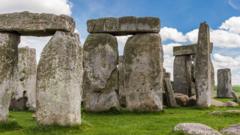
Researchers have identified what they believe to be an earlier precursor to Stonehenge, located approximately 3 miles from the well-known prehistoric site in Bulford. The structure consists of two post holes that once held wooden posts estimated to measure between 2 and 4 meters in height and positioned 120 meters apart. Analysis indicates these posts were precisely aligned with solar events—specifically summer and winter solstices—mirroring the astronomical orientation of Stonehenge itself.
The site has been dated to approximately 5,000 years ago through radiocarbon analysis, making it roughly 500 years older than Stonehenge’s earliest construction phases. Archaeologist Phil Harding from Wessex Archaeology, who led the excavation, described the find as among the most significant discoveries of his career. The actual wooden posts have long since decomposed, leaving only the holes where they once stood. The alignment was confirmed through detailed celestial reconstruction, accounting for the slow changes in the positions of celestial bodies over millennia.
Excavations at the site, which occurred following ground clearance for military housing a decade ago, yielded numerous artifacts surrounding the post pits. These discoveries included decorated pottery fragments, flint tools, carved animal bones, and an antler implement used for digging. Notably, researchers uncovered a rare Neolithic disc-shaped flint knife displaying exceptional craftsmanship, found in an upright position suggesting deliberate placement. These artifacts indicate that prehistoric communities gathered at the location, possibly for seasonal activities.
Specialists propose that the Bulford structure and Stonehenge may be connected, with early farming communities potentially inhabiting or seasonally visiting the area during the monument’s initial construction phases. The orientation of both sites toward solar events likely reflected the dependence of ancient agricultural societies on seasonal cycles. Historians suggest that the winter solstice may have held particular significance for these communities as a time to mark the year’s darkest period and anticipate the return of spring.
Article Attribution | Read More at Article Source
Article summary produced by Claude AI