

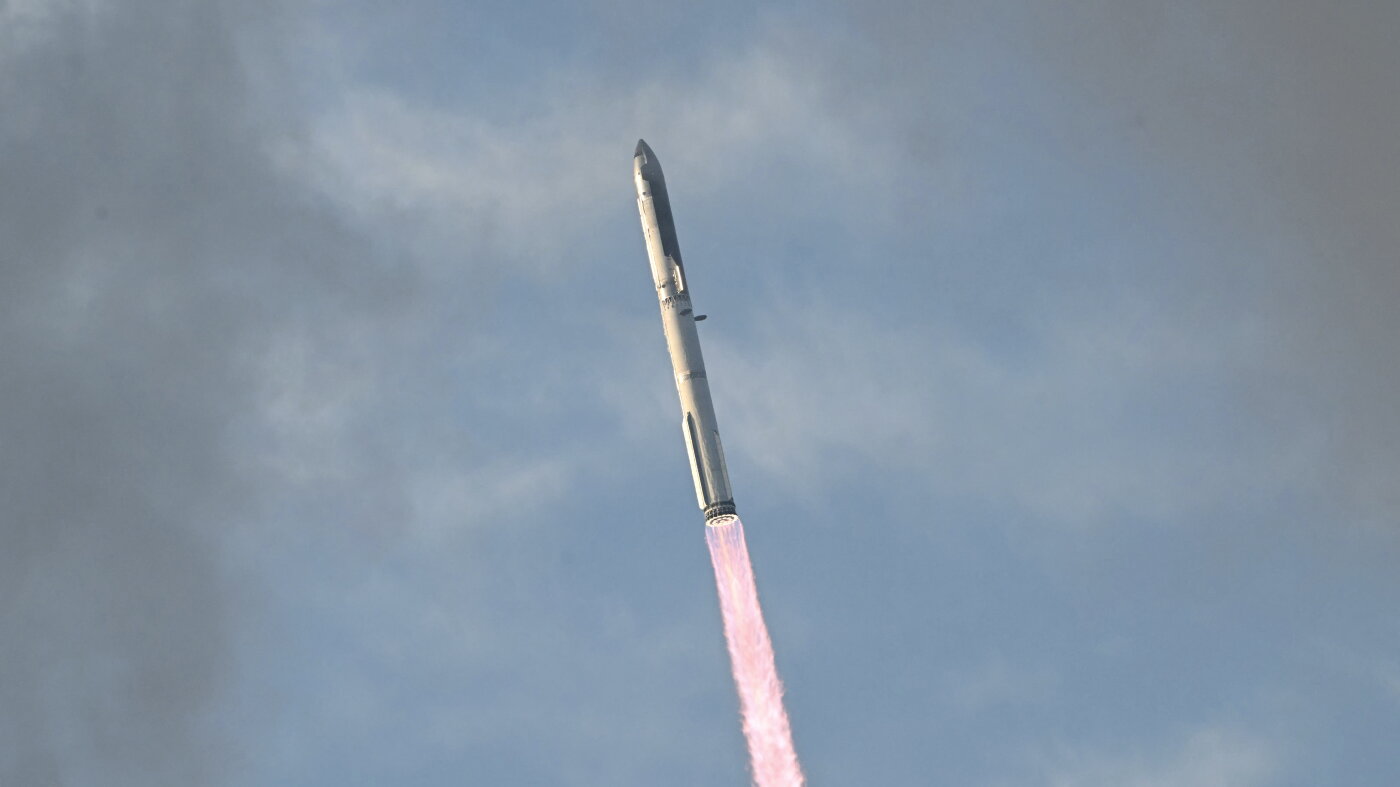
SpaceX conducted its 14th Starship flight on Monday, marking the first time the 171-foot-tall spacecraft reached orbital velocity. The Super Heavy booster ignited its 33 engines at 7:48 a.m. CT from the company’s Starbase facility at Boca Chica Beach in Texas. The vehicle separated from its booster after two-and-a-half minutes of flight and continued into space, though one of Starship’s six engines failed during ascent. Mission controllers determined it was safe to proceed with the orbital flight approximately 22 minutes into the mission.
The original flight plan called for a 10-hour mission involving six orbits at an altitude of roughly 170 miles, but controllers reduced the duration to three hours out of caution following the engine issue. Starship achieved orbital speeds of about 17,500 mph and splashed down north of Hawaii. The Super Heavy booster was tested in a simulated offshore landing in the Gulf of Mexico as part of SpaceX’s ongoing development of software and hardware upgrades. Previous Starship flights had remained suborbital.
During the mission, SpaceX deployed 26 Starlink V3 next-generation satellites into its broadband constellation. Three of the deployed satellites carried cameras to gather data on Starship’s heat shield during reentry, a critical component for the spacecraft’s reusability plans. The successful orbital test represents progress toward SpaceX’s broader growth strategy, which depends on Starship’s ability to launch larger satellite versions and achieve the necessary launch cadence and capabilities.
Starship holds significance beyond commercial operations. NASA has selected the vehicle as its lunar landing system for future Artemis missions, with plans to test docking procedures between the Orion capsule and Starship during Artemis III, scheduled for late next year. SpaceX also announced plans for a new Louisiana facility featuring dozens of launch pads, with an estimated $100 billion investment supporting operations beginning in 2029.
Article Attribution | Read More at Article Source
Article summary produced by Claude AI